
Automotive History: Duesenberg (1920–1937), Fast American Cars That Won the French Grand Prix and 4 Indy 500s

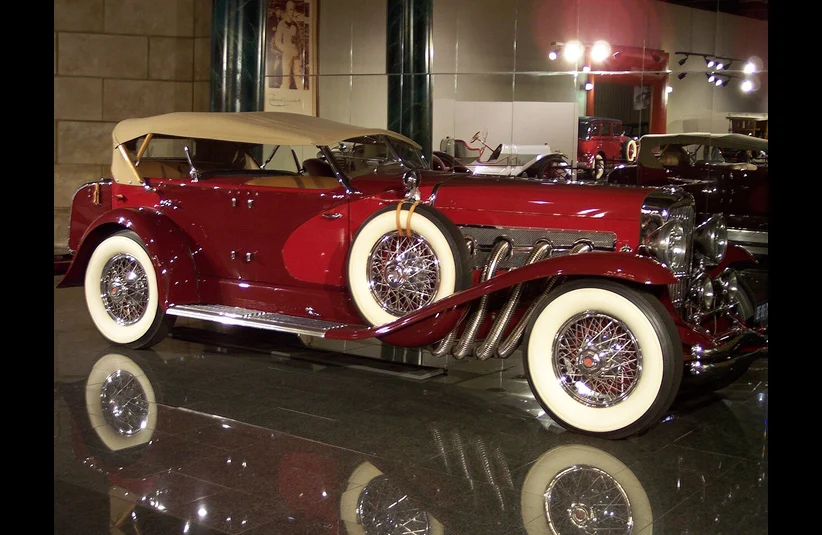
Duesenberg Automobile & Motors Company, Inc. was an American automobile manufacturer founded in Indianapolis, Indiana, by brothers Fred and August Duesenberg in 1920. The company produced racing and luxury cars, with an emphasis on racing. A Duesenberg car won the 1921 French Grand Prix. Duesenbergs then won the Indianapolis 500 in 1922 (when eight of the top ten finishers were Duesenbergs), 1924, 1925, and 1927.
The company was bought by Errett Lobban Cord, a transportation executive who also owned the Auburn Car Company, in 1924. The company failed in 1937. It was a casualty of the great depression, which killed many a proud American company. This one probably produced too many race cars. Though it is hard to fault them, they were very successful on the race track. Did you think this company was that successful?
Dusenberg Automobile Company in Three Series
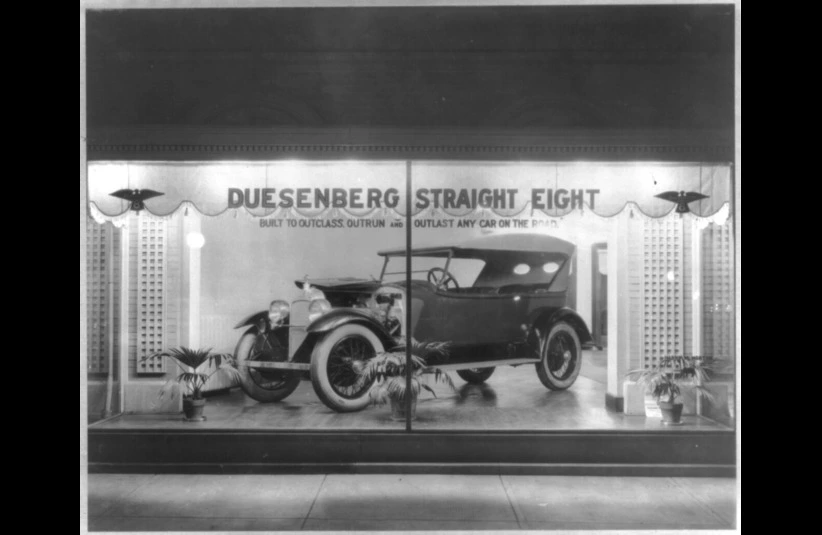
The Duesenberg was basically a racecar. It was built in three series before the company failed in 1937. However, there was a revival in the 1970s and 1980s.
Model A (1921-1927)
The first car produced by the company was the Model A. The engine was the straight-8. It was the first car to be mass-produced with a straight-8, perhaps foreshadowing the car’s fast future. The car cost $6,500 at the time. There were several new features in the car: overhead camshaft, four-valve cylinder heads, and the first four-wheel hydraulic brakes offered on a passenger car. The Model A featured one of the most advanced engines of its era.
The Duesenberg Model A had delays going from prototype to production, and deliveries to dealers did not start until December 1921. Sales lagged, and only 40 Duesenbergs were sold. The company could not meet a 100-vehicles-per-month quota. In 1922, 150 Duesenberg Model As were built, and only 650 were built over six years.
Model X (1926–1927)
The Model X had a longer wheelbase and chassis and generated 100 horsepower. The car was fast. It reached 100 miles per hour. The most obvious difference between the models A and X was that the latter had hypoid differentials and all its valves were on one side.
The Model X chassis was an upgrade in terms of chassis, engine, overhead cam, crankshaft, valve train, improved pistons, and a superior intake manifold. The car was able to produce 100 horsepower and could still max out at 100 miles per hour. Improved leaf springs were mounted above the frame rails, thus lowering the center of gravity. Only 13 Model Xs were to be produced, but only 4 were built, leaving it one of the rarest Duesenberg vehicles.
Model J (1927-1937)
The first Model J prototype was created in 1927, and delivery began in 1929, shortly before the onset of the Great Depression. About 300 Model Js were built by 1930, short of the original 500-vehicle goal. This car was fast. It had a 420-cubic-inch engine based on the company’s racing engines. It produced an impressive 265 horsepower. It had dual overhead camshafts and four valves per cylinder, making it the most powerful car of its time. The Model J had a top speed of 116 miles per hour.
The Model J was available in two versions of chassis with a different wheelbase: a longer one, 153.54 inches, and a shorter one, 141.73 inches. There was a supercharged Model J, which had a top speed of 135–140 miles per hour. Zero-to-60 miles per hour in about eight seconds and 0–100 miles per hour. There were only 36 cars of this type produced. It was known as the Mormen Meteor.
The company was undone by the stock market crash of 1929. However, some pretty famous people owned the car. Actors Gary Cooper and Clark Gable got special editions that were even faster in 1935. The SSJ reportedly produced 400 horsepower and could go 0 to 60 miles per hour in less than 8 seconds. Cooper’s SSJ sold for $22 million in 2018, making it the most expensive American car ever sold at auction at the time.
Parting Shots
This car had a double whammy in terms of sales. First, it was basically a racecar. This made it unappealing to consumers. Second, the company failed during the Great Depression. Nevertheless, the car was produced, and it had some famous owners. There is no denying that this car continued the inexorable march of the American car toward faster and more capable models.
