
Automotive History: The Packard V12: A Rolling Work of Art from America’s Luxury Era

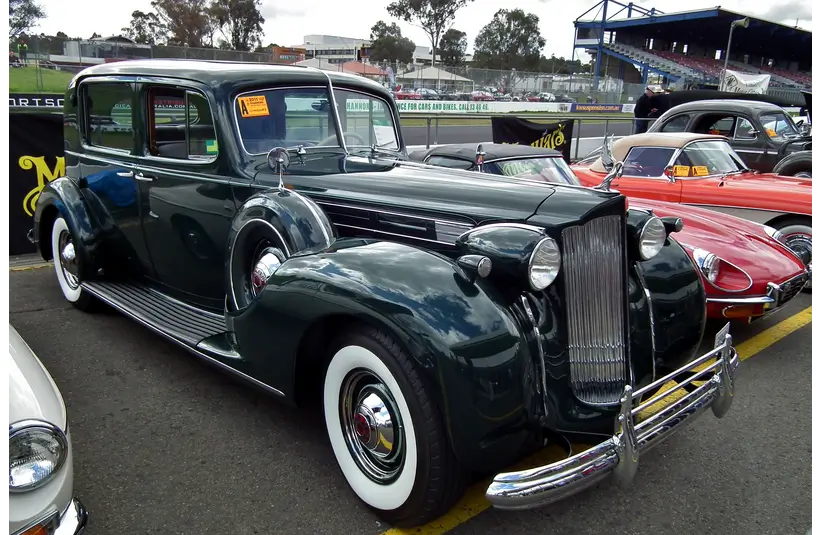
The Packard V12 touring car produced an amazing 160 horsepower and was the coachwork of the time. Top-of-the-line Packards were both beautiful to look at and rode like dreams. The cars produced an elegance not found in cars today. They were noted for the swan that was on the radiator cap.
The Packard V12 was very beautiful to look at. It was tasteful and elegant in every detail. The chrome was expertly placed on the hubcaps and the spare tire cover. The paint job was also great. It had a craftsmanship that is not replicated in cars produced today. Do you think that classic cars are more elegant than modern ones?
Packard V12 Elegance and History
The car was produced in two iterations, from 1916 to 1923 and from 1933 to 1939. The car was built by the Packard Automobile Company in Detroit, Michigan. This was a luxury car with a front engine placement. It was rear-wheel drive. This car was introduced to compete with other luxury cars of the time, like the Pierce-Arrow, Cadillacs, and Lincolns.
The company first produced the V12-engined car in 1916. When the car was first produced, not only was it ahead of its time in power, but it was also available on two wheelbases: 125 and 135 inches. The wheelbases were standardized in 1921. There was a standard color. Packard blue with cream-colored striping on the body and door panels.
There were ten different body styles available. The car was produced in three series from 1916 until 1923. The variation in the series was due to the wheelbase length. In total, in these series, the company produced 30,941 cars. The price of the cars averaged $3,050 to US$5,150. In 1919, the car was the pace car for the Indianapolis 500.
Second Generation
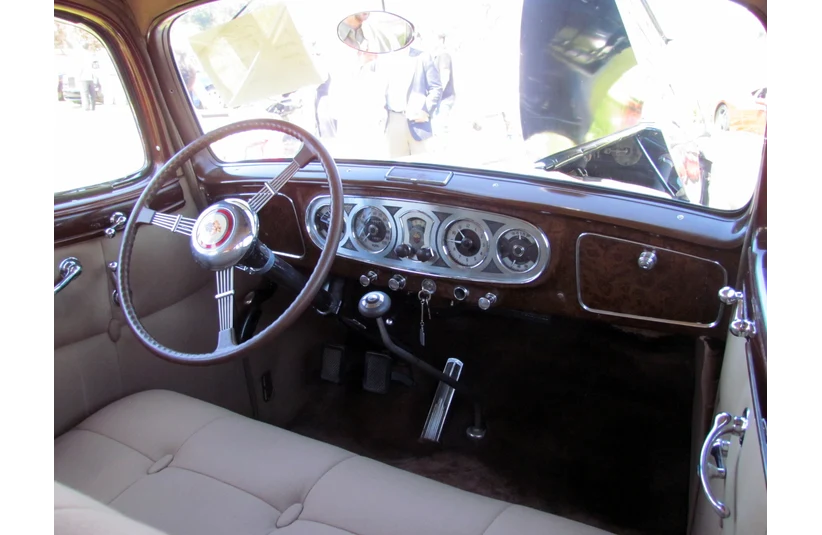
When the car was reintroduced in 1933. It was again produced with two separate wheelbases. The car was officially renamed the Packard 12. The car’s technical specifications are important because it was so powerful. The cylinder blocks were at a sixty-seven-degree angle, and the bore and stroke were between 3 and 4 inches. A 445.5 cubic-inch displacement resulted, with a maximum power of 160 horsepower at 3200 revolutions per minute. This massive output exceeded that of cars of the time. It attracted consumers, who wanted a powerful car.
There were some important changes to the model in the mid-to late 1930s. In 1934, the 11th series of the model was introduced. It had a shorter, 135-inch wheelbase. For the 12th Series of 1935, the engine now had aluminum heads and was even more powerful, increasing displacement to 473.3 cubic inches. Power was 175 horsepower, and a high compression version with 180 horsepower was available. In October 1935, American President Franklin D. Roosevelt gave Joseph Stalin an armored Packard Twelve, which became the dictator’s favorite automotive vehicle for many years.
There were no changes to the car’s design in 1936. In 1937, the car received hydraulic brakes and front-hinged doors. In 1938, a shorter wheelbase was introduced. The fenders were of a heavier design than on previous years’ models, while a column shift became an option alongside the center-mounted shifter. In 1939, the last year of production for the car, there were no changes to the model.
Parting Shots
This was a luxurious car that catered to wealthy clients. The car had great success; not only was it powerful and elegant, but it had a couple of claims to fame. First, the car was used as the pace car in the 191 Indianapolis 500. The second generation of the car is also noteworthy, as it was given as a gift by President Franklin Delano Roosevelt to Josef Stalin. The car became the state car of the Soviet Union.
