
Automotive History: The Pierce-Arrow from 1901-1938 a Historic Car

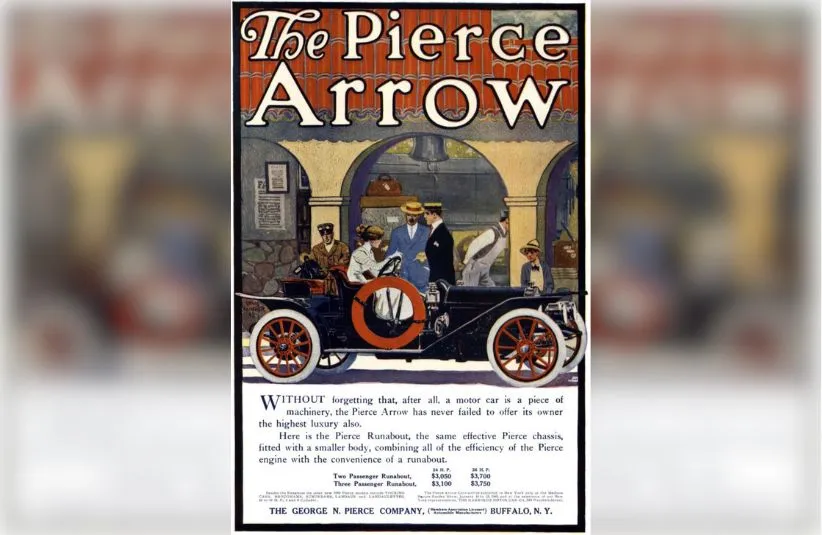
The Pierce-Arrow was a specific type of car produced by the Pierce Automobile Company. The company produced cars between 1901 and 1938. Several versions of the arrow were produced. They all had fancy names, like the Green Arrow and the Great Arrow. The company was based in Buffalo, New York, and George Pierce, who owned it from 1872, sold it in 1907 and died three years later.
In 1909, President Howard Taft bought two Pierce-Arrows, and they became the first presidential cars. Before the company produced cars, it produced several consumer items. The oddest were gilded bird cages. Did you think it was possible for a company that produced bird cages to produce cars?
The History of the Pierce-Arrow
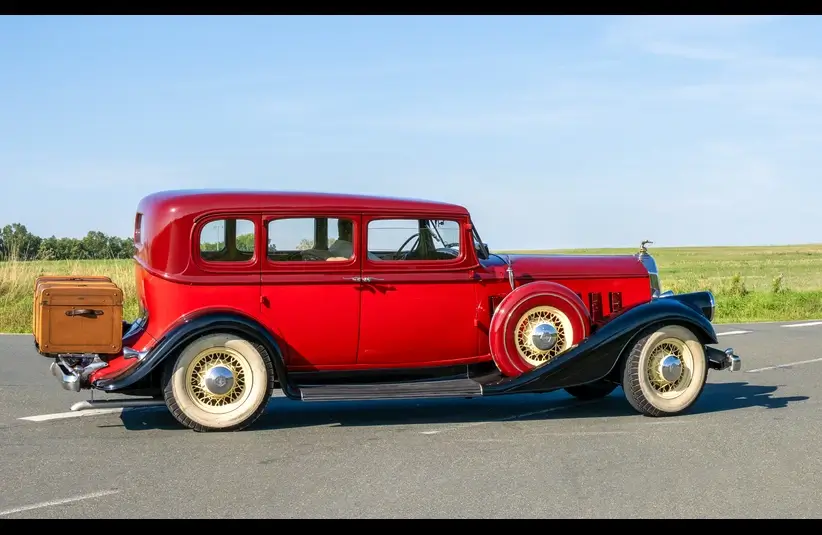
Interestingly, the Pierce-Arrow was produced by a company with a long history of producing other consumer items. Immediately preceding the car, the company produced bicycles. In 1904, the Green Arrow was produced. It was the company’s first car. It was also the company’s most successful commercial production. A four-cylinder version of that car won the Guilded Tour in 1905. It was a race from Brenton Woods, New Hampshire, to New York City.
In 1909, President Taft bought a Pierce touring car. Presidents Harding and Coolidge also owned Pierce-Arrows. The car was a bit of a status symbol, as it was owned by tycoons, royalty, and Hollywood actors. Maybe the most famous of these was Frank Galbreath, who was the father of the authors of “Cheaper by the Dozen.” Accordingly, the car appeared in that 1950 film.
In 1910, the company’s owner, George Pierce, died. Herbert M. Dawley also joined the company. He was later an actor and director on Broadway. He stayed with the company until it folded in 1938. The company produced motorcycles until 1914. Also in 1914, there was an innovation in the car’s design. This is when the Pierce-Arrow adopted its most enduring styling hallmark: moving its headlights from a traditional placement at the radiator’s sides into flared housings molded into the front fenders of the car. At night, the car appeared to have a wider stance.
In the 1920s, the company branched out into the production of trucks and fire trucks. However, this diversification did not prevent the company from being purchased by Studebaker. The Silver Arrow was produced in 1933, and the company began producing campers in 1936. Some of the large cars were converted into railcars. However, these innovations did not save the company, which declared bankruptcy in 1938.
The Engine
The Pierce-Arrow’s engine displacement started at 453 cubic inches and grew over time to an 824 cubic-inch version. It is by far the largest Otto engine offered in any production automobile in the world. In 1910, Pierce focused exclusively on 6-cylinder-engined cars until 1929. Starting in 1918, Pierce-Arrow adopted a four-valve-per-cylinder T-head inline-six engine (Dual Valve Six) with three spark plugs per cylinder, one of the few, if only, multi-valve flathead design engines ever made. The company did not introduce an 8-cylinder engine until 1929.
Marketing the Pierce-Arrow
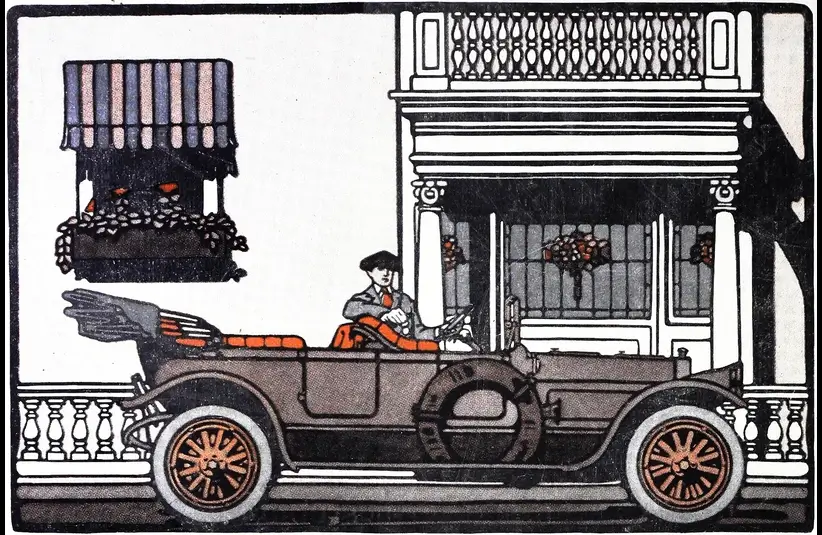
Pierce-Arrow marketing was understated. This was unusual for car advertising, and the company instead relied on the fact that so many famous individuals owned the car. In the advertisements, the car was in the background rather than the foreground, with only part of it visible. The car was usually depicted in elegant and fashionable settings in advertisements.
Parting Shots
The Pierce-Arrow is now part of the automotive history of the United States. This car helped progress the production of cars in America to larger and larger chassis and engines. Interestingly, the company was based in Buffalo. That probably helps explain the big old houses in the town.
