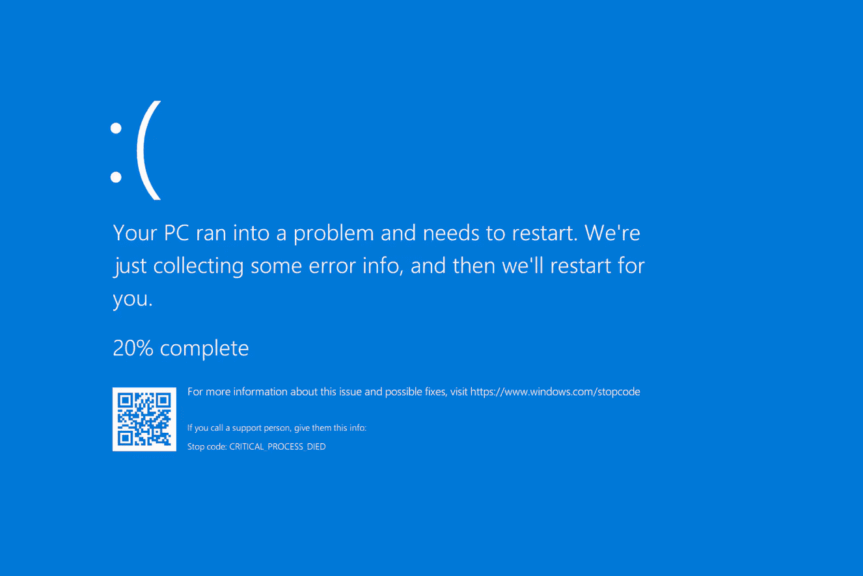
Farewell, BSOD! We knew you well. What Windows user hasn’t seen the infamous Blue Screen of Death? Its appearance has always been accompanied by groans and frequently by curses. But soon, like it or not, we’ll be saying goodbye to the familiar “unexpected restart screen.”
Windows BSOD
Blue screens with white messages go all the way back to 1985. In 1993, with the introduction of NT, the blue screen was designed to provide information that helped diagnose the issue, but it wasn’t particularly useful for the average user. In 2012, with Windows 8, the sad face appeared along with the notice that the computer had an unexpected issue and needed to restart. The QR code arrived in 2016.
The BSOD is, in reality, an indication of a critical error that Windows couldn’t recover from. So the computer has to restart. The error message displayed gives some clues to the cause of the issue.
What’s Changing
New Windows unexpected restart screen courtesy of MicrosoftBuried in a very long blog post, Microsoft has told us that the Windows 11 24H2 release includes updates that “reduced downtime during an unexpected restart to about two seconds for most users.” Along with the update, “later this summer,” the familiar blue screen is being replaced with a simplified black screen. All of the changes are reportedly about making the operating system more resilient, and they’re calling it “The Windows Resiliency Initiative.”
The Microsoft VP of Enterprise and Security said the change to the crash screen “improves readability and aligns better with Windows 11 design principles, while preserving the technical information on the screen for when it is needed.”
Is it a Positive Change?
Maybe. But users are familiar with the blue screen and its frowning face. It has never meant anything good, but will a black screen with tiny writing be received more positively? Probably not. There are some predictions that the blue will be back once users start complaining that they don’t like it. After all, end users aren’t well known for quietly accepting change to something that’s been the same for as long as they can remember.
Will we just call this new screen the Black Screen of Death? That sounds cringe. Microsoft should really think this through. Make the information more useful, yes. Change from blue to black? Not so much.
 Don't stop here
Every Score. Every Story. One Home.
Breaking sports, entertainment and news from across the Total Apex network, updated all day.
Get the Full Story →
Don't stop here
Every Score. Every Story. One Home.
Breaking sports, entertainment and news from across the Total Apex network, updated all day.
Get the Full Story →