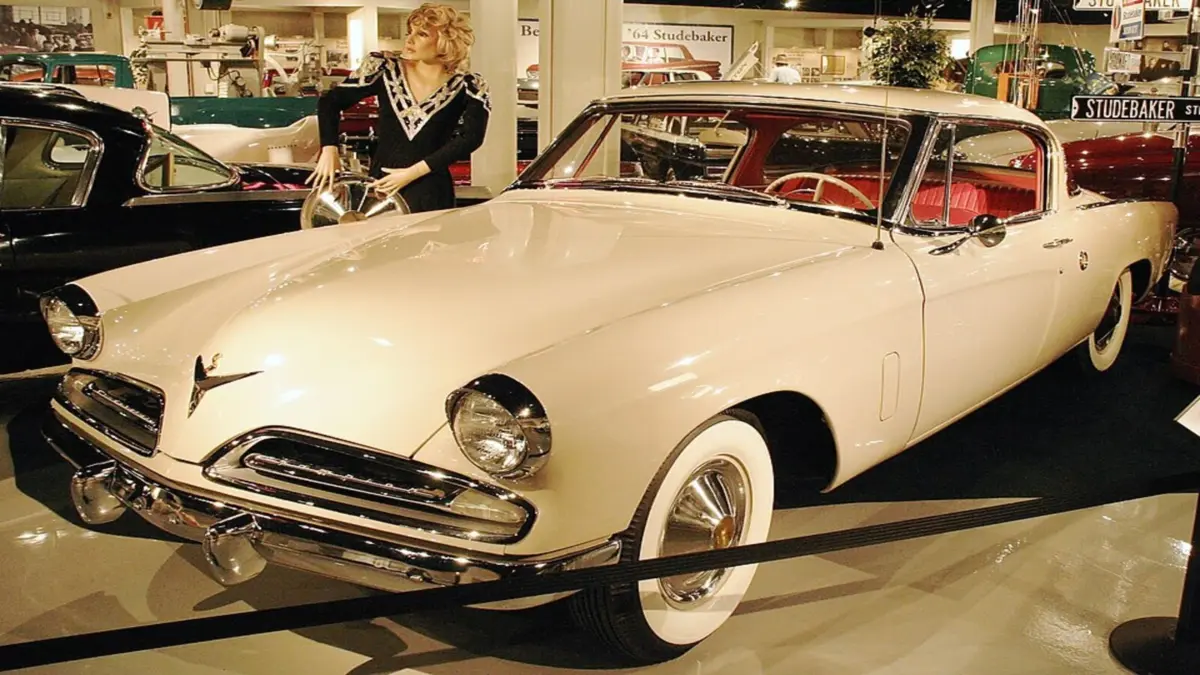
Studebaker Commander history runs from the 1920s to the 1960s, and this automobile is important in American automotive history. Studebaker started using the Commander name in 1927. The name was not used in 1936 or from 1959 to 1963. However, the name came back in 1964 and was used until 1966. From 1947 through 1954, the Commander was the top of the Studebaker line. Don’t confuse it with the Studebaker Champion, the smaller, more affordable car that debuted in 1939 and was built through 1958.
The first Commander appeared in 1927. It grew out of the Special Six, which debuted in 1918. By 1928, the GB Commander was using Studebaker’s proven 354-cubic-inch six-cylinder engine. In the fall of 1927, three Studebaker Commanders made history at the Atlantic City Speedway, a board track in New Jersey. Two roadsters and a sedan each ran 25,000 miles, and the roadsters did it in less than 23,000 minutes, averaging about 65 miles per hour. Do you find this surprising?
Studebaker Commander History
Studebaker Commander history includes the aforementioned speed record and a four-decade run as one of Studebaker’s most important nameplates. Studebaker used those achievements on the track in its advertising for years. The nameplate saw a temporary hiatus in 1936, when Studebaker sold the Dictator and President instead, but it came back right after, in 1937.
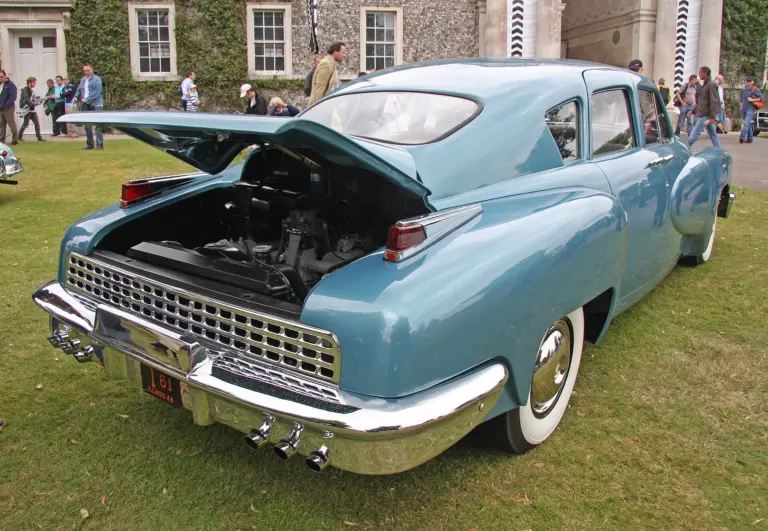
The 1940s had a break in production for all American automobile brands due to World War II. Commander production stopped in early 1942. When the car returned for 1947, it wore an all-new design from Raymond Loewy’s studio, which made Studebaker one of the first automakers to sell truly new postwar cars. The rear deck was so long that people joked they couldn’t tell whether the car was coming or going. That design also meant plenty of trunk space, and some historians credit it with kicking off a boom in trunk space.
In the 1950s, the car was very popular. The 1950 and 1951 Commanders had a very distinctive “bullet nose” front end that set them apart from other automobiles. In 1951, the Commander also received Studebaker’s first V-8 engine. For 1953, the Commander got a sleek, low new body from Robert Bourke of Loewy’s studio, and the Starliner hardtop from that year is still admired by collectors. In a 1953 road test done by Popular Mechanics, the Commander got a 0-60 mph time of 17.9 seconds and was rated at 26.1 miles per gallon at 30 miles per hour. Studebaker built a Commander convertible prototype for 1953, but it never went into production. In 1955, the President name returned, and the Commander became a mid-range automobile in the Studebaker line of cars. After the 1958 model year, the Commander name was shelved as Studebaker shifted its focus to the compact Lark.
Finally, in the 1960s, the name Commander came back for 1964 on a Lark-based car. As the years in the 1960s passed, the main difference in the Commanders was their headlights. The 1964 car typically had two, with four available as an option. In 1965, the car had four. In 1966, it went back to single headlights. This was the final year of production, and the final year of Studebaker cars. Studebaker had closed its South Bend, Indiana, plant in December 1963, so the last Commanders were built in Hamilton, Ontario. In March 1966, the final Studebaker rolled off the line there, and the company stopped building cars for good. Studebaker had merged with Packard back in 1954.
Studebaker in American Automotive History
Studebaker Commander history is important because the car was successful and certain design ideas still show up in cars today. This is most evident in the large trunk that came with the 1947 redesign. Consumers now value storage space, and this automobile helped show buyers what a big trunk could do. The car also had several iterations of headlamps in its final years, which makes the last Commanders easy to tell apart, year by year.
Conclusion: Do Not Forget
Studebaker Commander history is important to know. The car was produced across four decades and had an important effect on American automotive history. Studebaker’s story is one of resilience: at first, the company produced wagons and then moved to cars. Designs were innovated, and the company survived several economic crises. Though the Commander ceased production 60 years ago, it and other Studebakers are memorialized in the Studebaker National Museum in South Bend, Indiana.
 Don't stop here
Every Score. Every Story. One Home.
Breaking sports, entertainment and news from across the Total Apex network, updated all day.
Get the Full Story →