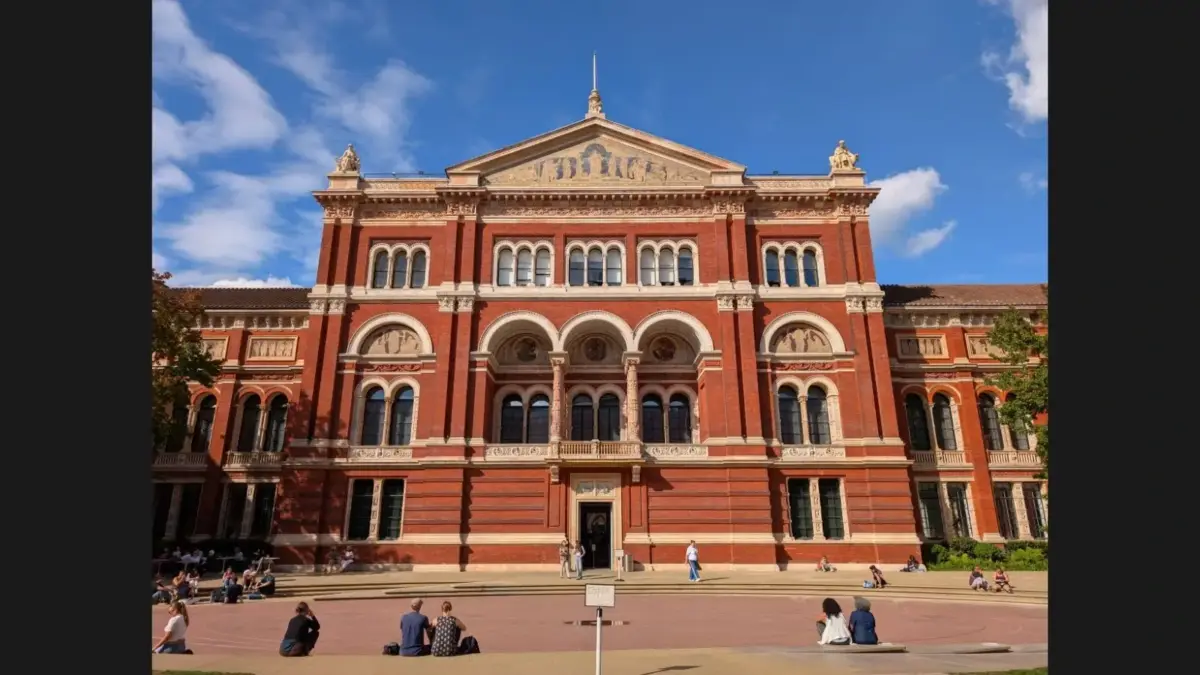
A new exhibition at London’s Victoria and Albert Museum brings together more than 200 rare objects to trace nearly 1,600 years of history in one of the world’s most fought-over cities. “Constantinople to Istanbul: One City, Two Empires” opened Nov. 7 at V&A South Kensington and runs through May 9, 2027.
The show follows the city from A.D. 330, when Roman Emperor Constantine the Great refounded the ancient town of Byzantium as his imperial capital, to 1922, when the Ottoman Empire came to an end. For those 16 centuries, the city served as the capital of two successive empires, first the Christian Byzantine Empire and then the Muslim Ottoman Empire.
“Creating this exhibition has been an exciting adventure,” curator Tim Stanley said in a statement.
Four sections chart the city’s transformation
Stanley and his team organized the exhibition into four broadly chronological sections, each built around a distinct period in the city’s life. “Roman Beginnings” opens the show by charting the city’s origins as an imperial capital, from its fortified walls and water systems to the Hippodrome, where chariot races doubled as political theater.
“Heaven and Earth” follows with a look at how Byzantine emperors used sacred art and architecture, including the sixth-century Hagia Sophia, to project their power. “A Capital Reborn” shifts to the Ottoman era and examines how the imperial court used portraits, luxury goods and grand processions to put its authority on display. The final section, “Life in the City,” captures Istanbul as a crossroads of languages and faiths, from coffee houses and bathhouses to the 19th-century turn toward Parisian fashion and design.
Rare loans highlight the exhibition
Among the objects on display is the Lincoln Typikon, a 14th-century illuminated manuscript from the Convent of the Virgin of Sure Hope in Constantinople. The manuscript, on loan from Lincoln College, Oxford, is on public display for the first time in 60 years.
A typikon is a rulebook for a religious community. This one was made between 1327 and 1335 for a convent founded by Theodora Palaiologina, a niece of Emperor Michael VIII, and contains delicate portraits of Theodora and her relatives. It gives visitors a window into aristocratic and monastic life more than a century before Constantinople fell to Ottoman forces in 1453.
Other highlights include Gentile Bellini’s portrait of Sultan Mehmet II, on loan from the National Gallery in London, and the Veroli Casket, a carved Byzantine ivory box.
The exhibition also shows how Byzantine rulers used luxury religious art as a diplomatic tool. One example is the Pallium of St. Lawrence, a silk textile decorated with religious imagery that the future Emperor Michael VIII Palaiologos gave to Genoa after the Treaty of Nymphaeum in 1261.
From Byzantine capital to Ottoman stronghold
The exhibition does not shy away from the pivotal moment when the city changed hands. After the Ottoman conquest in 1453, Sultan Mehmet II converted Hagia Sophia into a mosque, and the building kept its name in its Turkish form, Ayasofya.
Its vast domed design went on to shape Ottoman architecture, especially the imperial mosques that sultans built across the capital in the centuries that followed. The exhibition treats that transformation as the hinge point between its Byzantine and Ottoman sections, moving from the end of Constantinople to the city’s rebirth as Istanbul.
What’s next
“Constantinople to Istanbul: One City, Two Empires” runs at V&A South Kensington through May 9, 2027. Standard tickets cost £24, with £16 tickets for visitors ages 12 to 25 and concessions, and free entry for children under 12. Learn more on the V&A’s website or in Smithsonian magazine’s coverage.
More Museums & Exhibitions news from Total Apex Entertainment.
 Don't stop here
Every Score. Every Story. One Home.
Breaking sports, entertainment and news from across the Total Apex network, updated all day.
Get the Full Story →