
The Graham-Paige Story: How Three Brothers Built, and Lost, One of America’s Most Innovative Car Brands

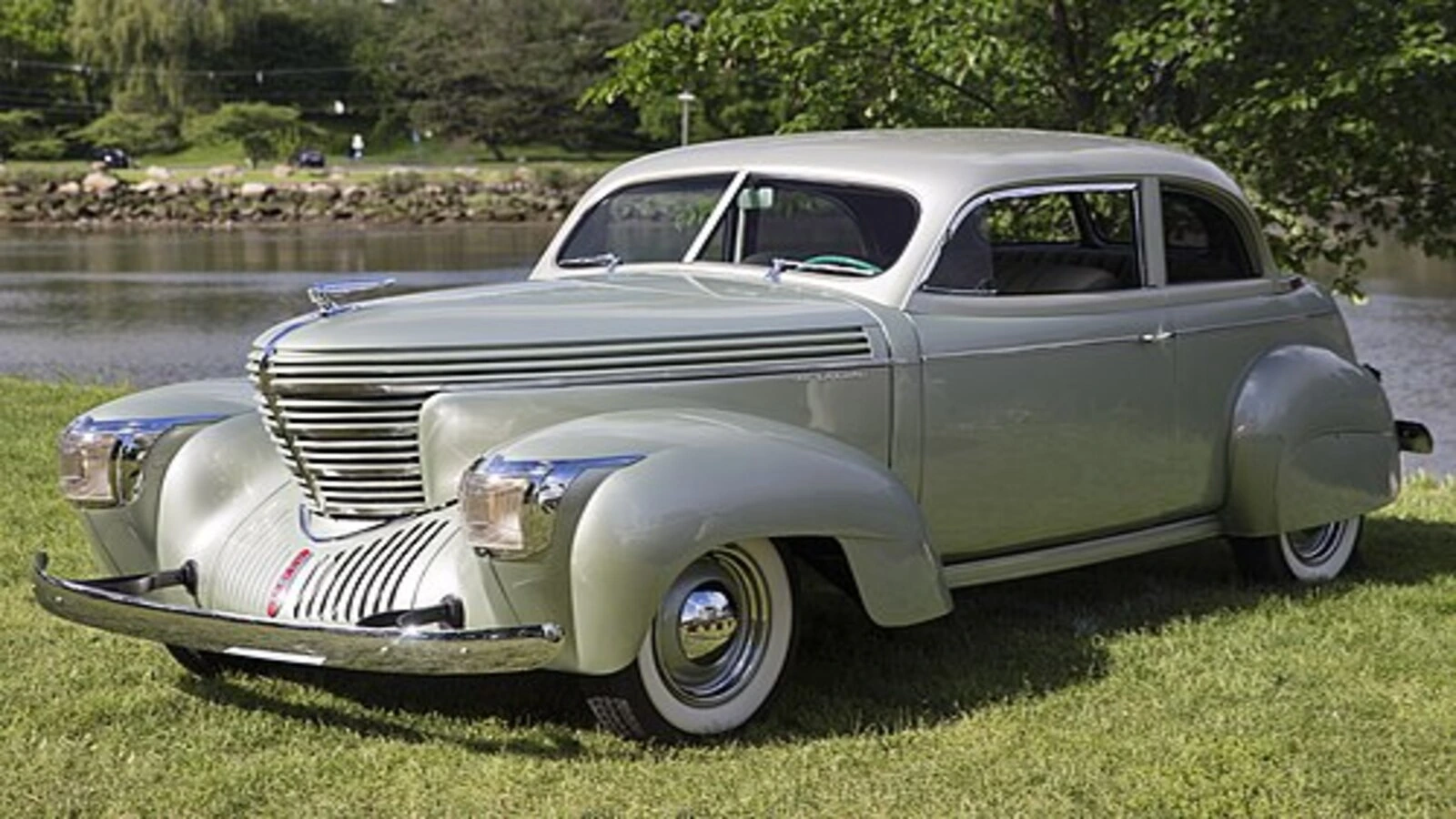
Graham, or Graham-Paige, as the company was known at the time. The company was a family affair, as brothers ran it. Joseph B., Robert C., and Ray A. Graham founded the company in 1927. The company stopped producing cars in 1940. However, they built several notable automobiles before the company went defunct.
The Graham-Paige company first, in 1919, produced kits to convert Ford Model Ts into trucks. That led to the brothers building their trucks using various engines from the Graham Brothers brand and other dealers. Did you think it was possible that a company that started out producing trucks, quite successfully so, could produce cars that sold?
Graham-Paige History
The Graham company was of short duration, but during the time they produced cars, they produced some noteworthy cars. In 1927, the brothers bought the Paige-Detroit Motor Car Company for $4 million. Joseph became president, Robert vice-president, and Ray secretary-treasurer. The initial offerings of the company had a line of cars with 6- and 8-cylinder engines.
When they founded the company, the brothers Graham were experienced in the glass-making business. They had a successful glass manufacturing business. And, as we will see, the somewhat sordid history of their automobile production belied a lack of success. All this raises the question of why the brothers thought the grass was greener in the automobile production field.
Graham-Paige made most of their own bodies and engines. Apart from the restored cars, the Blue Streak was a landmark redesign for the company. That was in 1932. In 1934, they added an optional supercharger on its 8-cylinder models. Initially, the company withstood the onset of the Great Depression well, but sales fell as the decade wore on. Like so many other automobile companies, that was the reason for the company’s decline.
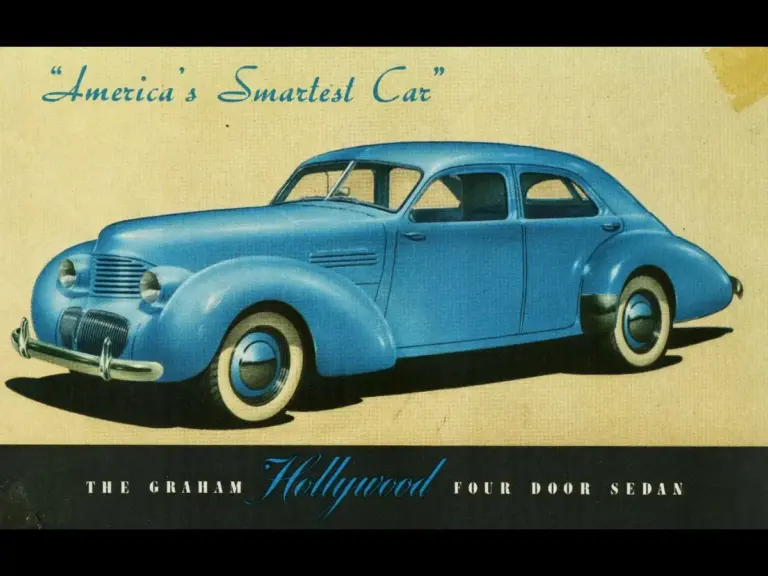
The company, however, did not stop producing cars until 1940. Other offerings included the Crusader in 1936, the Cavalier in 1937, and the combination coupe in 1939. After this point, desperation set in. Desperate for a winning offering, needing cash, and unable to retool, the company made a deal with the Hupp Motor Company, which was also failing, in late 1939. According to the deal, the faltering company entered into an arrangement with Hupmobile Motor Company to build cars based on the body dies of the attractive Gordon Buehrig-designed Cord 810/812.
The new cars used 6-cylinder engines, but were doomed to fail. The Skylark, as it was named, was powered by a 245.3-cubic-inch engine; the Hollywood was available with a standard 217.8-cubic-inch engine and an optional supercharged version. Both cars were manufactured by Graham-Paige. The company suspended operations in 1940, only to resume them after World War II.
Postwar
The company, in partnership as Kaiser-Frazer, resumed automobile production in 1946, producing a modern-looking new car, the 1947 Frazer, named for the new president, Joseph W. Frazer. He was in partnership with Henry J. Kaiser. The company also began production of farm equipment under the Rototiller name. The company said it planned to produce automobiles under the Graham name. However, those plans never materialized. They sold their production plants to Chrysler, and those plants were used to make the Imperial for the 1959, 1960, and 1961 model years. In that way, the company sort of lived on.
Conclusion
It turns out that the company was one that would not end. While they did produce a few noteworthy cars, the main legacy of this company was its unusual longevity. Though production of the car stopped in 1940, there was a post-World War II production boom, but staying power never materialized. The plants used to produce the automobiles were sold to Chrysler and used to produce the Imperial in the early 1960s.
