
The Chrysler Touring Car: How a Stop‑Start, Renamed Model Quietly Shaped 20th‑Century American Autos

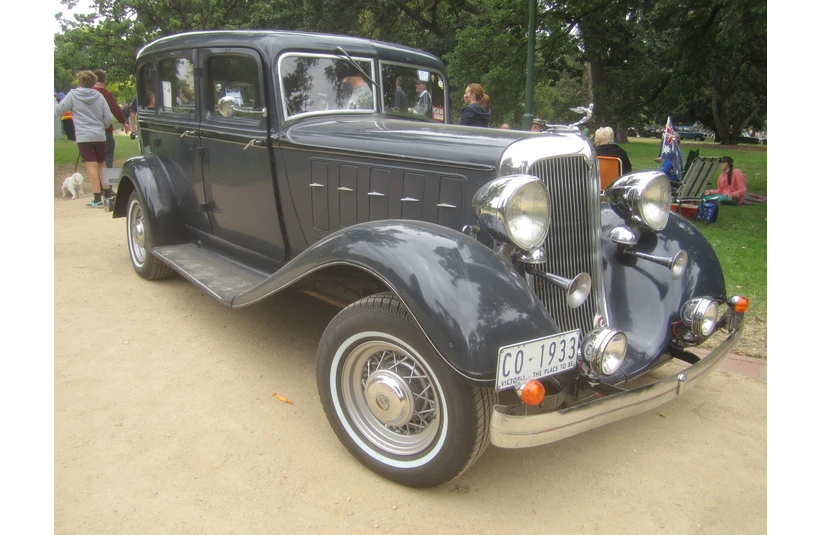
The Chrysler Touring car was produced in 1932 and 1933, then not in 1934, but then until 1950. There were two 8-cylinder engines originally offered with the car. The nameplate “Royal” was used with the car, and in its second iteration was called the Airflow. It sold poorly, though it stayed in production until 1950.
The new model had a 6-cylinder engine. Though it produced power, pleasing customers despite the low quality of gasoline at the time. The car had luxurious details and competed successfully with the DeSoto Custom, Dodge Custom, and Plymouth De Luxe. Do you think this car had a large effect on American automotive history?
Chrysler Touring Car History
This car is interesting because it was produced in 1932 and 1933, took a year off, and then was produced from 1935 to 1950, with a new engine and a new name. For model year 1933, Chrysler introduced its first straight-eight engine for the Chrysler Touring car. It borrowed appearance influences from the Cord L-29.
The engine used had a 240.33 cubic-inch displacement, smaller than the one used in other Chryslers. An upgraded 298.65 cubic-inch engine was used, but the car still had a 124-inch wheelbase. The car had sweeping fenders, rear suicide doors, dual windshield wipers, dual taillights, and dual chrome trumpet horns. It shared an appearance with the 1931 Chrysler Imperial Series CG and was available with five different two-door body style choices.
Prices ranged from $1,495 for the two-door Sport Roadster to $1,970 for the four-door Dual Cowl Phaeton. A stripped-down Sport Roadster was entered along with an Imperial roadster in the 1931 24 Hours of Le Mans, but did not finish due to radiator issues. Nevertheless, this is a prestigious race, and even entry into it was a badge of honor for the car.
The Chrysler Royal
The Chrysler Royal was a full-size car that was produced by Chrysler. The “Royal” nameplate was added to the 1932 Chrysler Touring Car series and was sold in 1933 as the Chrysler Royal Series CT. The Royal was originally installed with the Chrysler Straight Eight engine, and it was the second Chrysler to use a nameplate that did not refer to a “Series” designation that referred to an internal body code or the speed it was capable of in past products.
The Royal was offered as a two-door Coupe, Roadster Coupe, Convertible Coupe, a two-door, five-passenger Convertible Sedan, and a four-door Sedan using a shorter 120-inch wheelbase from previous years. A longer 128-inch wheelbase was used as an eight-passenger sedan. While the longer wheelbase was rare. It was available as a cowl and chassis only for special coachwork choices from private companies, of which 95 were documented and built.
Prices for the new car ranged from $895 for the coupe to 1,085 for the convertible sedan. while the long wheelbase was listed at $1,125. That car offered the appearance of the flagship Imperial but at an affordable price. However, this affordability did not help sales.
The Royal nameplate was used for one year in 1933 when the Airflow replaced the Royal in 1934, then brought back as a new model in 1937 when the Airflow sold poorly and was sold alongside the Airflow, which continued to offer the Chrysler Straight Eight. The changing of names is a little confusing.
Changing Names
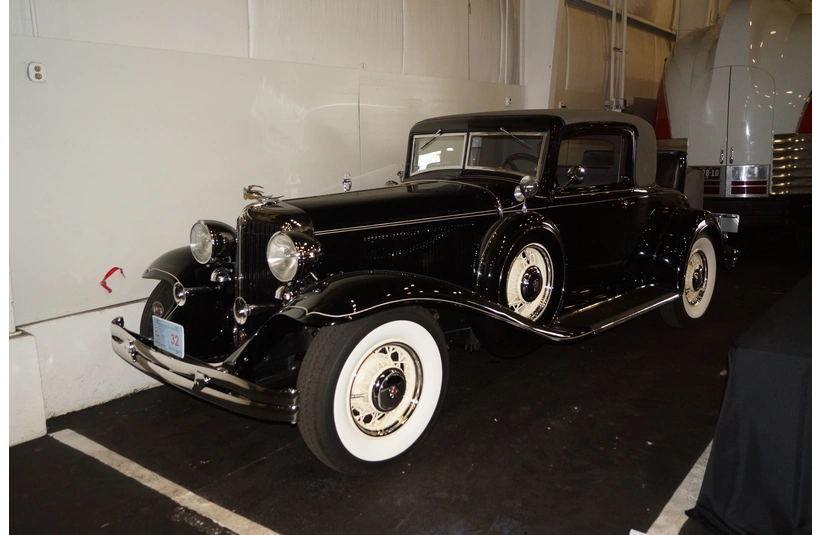
There was no successor for the Airflow. A November 1936 advertisement listed the 1937 Royal as available in ten body types. Prices started at $715 and went to $815 for the four-door sedan. In 1937, the Royal Series C-16 was installed with the Chrysler Straight Six, a 6-cylinder engine, and took the entry-level position in the Chrysler hierarchy. So, the company tried a new engine.
In 1939, the Series C-22 Royal introduced the “Royal Windsor” nameplate, then in 1941, the “Royal,” “Windsor,” and “Highlander” became separate nameplates sharing the same wheelbase but only using the Straight Six engine, with “Windsor” models offering more standard features and a higher standard interior over the “Royal.” The 1948 models were officially designated as First Series 1949 models.
The Royal replaced the Chrysler Six that the company originated with way back in 1925, and the Royal remained the 6-cylinder entry-level model for Chrysler until it was dropped at the end of the 1950 model year.
Parting Shots
This car was produced for a long time despite a lack of commercial success. The car had several names and two engines. Prices changed, and so did the car’s wheelbase. Throughout these twists and turns, the car was an important part of American automotive history.
