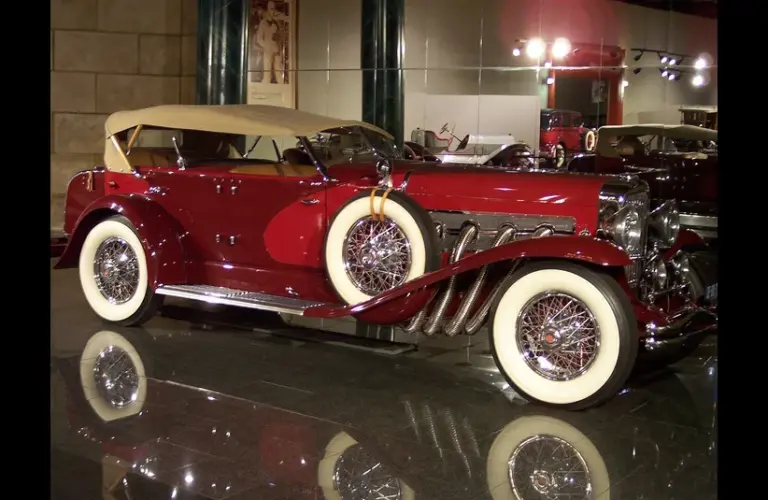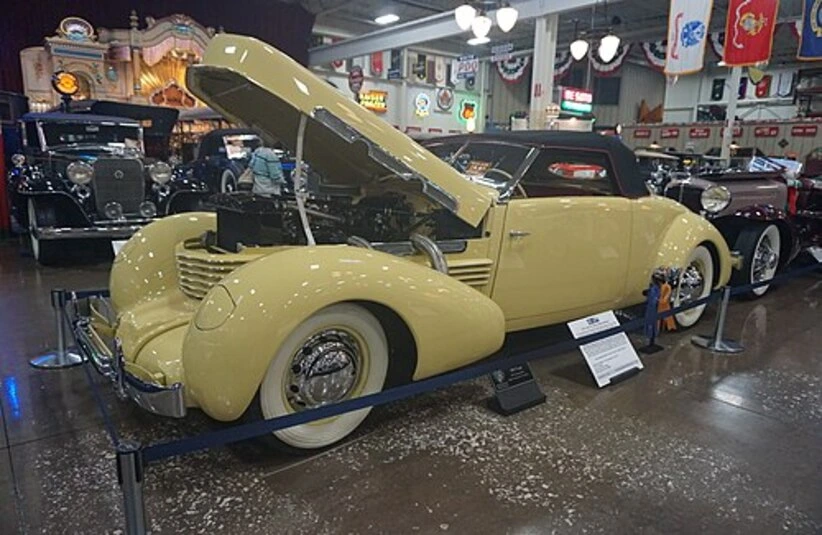
The Cord 812 Berline was only produced in 1936 and 1937. However, despite the short stay, it was significant for two reasons. First, the car was designed by Erret Cord. He designed many other cars during this period and was considered an automotive genius. Second, the car had several design features that advanced car design.
This was a luxury car offered by the Auburn Automobile Company. Apart from significant novel design features, the Cord 812 was the first American-designed and built front-wheel-drive car with independent front suspension. The car’s novel design features included a radical new nose styling that replaced the traditional radiator grille and horizontal louvers that curved around the sides of the nose. This latter feature gave the car the nickname of ‘coffin nose.” Is it possible for a car that was only produced for two years to have a major effect on automotive design?
The Cord 812 Berline
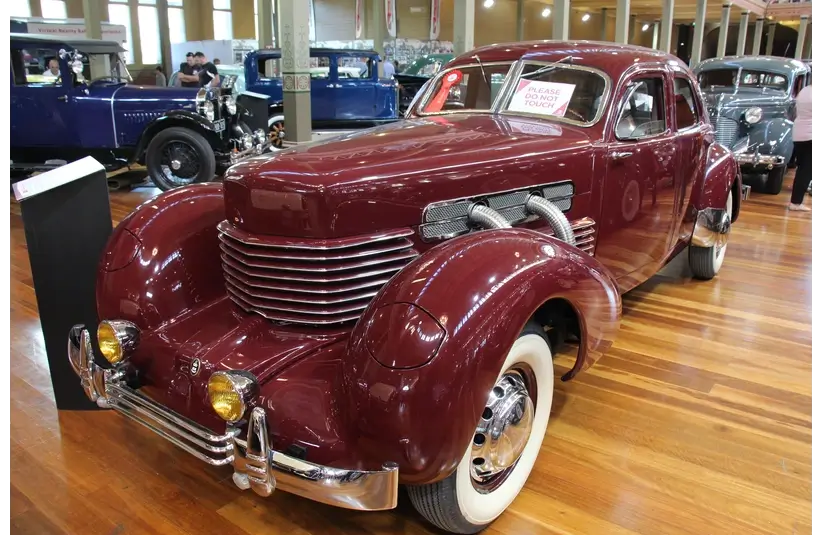
The Cord 812 Berline was the first American front-wheel-drive car with independent front suspension. It had a tube rear axle with semi-elliptic rear springs. The engine was a 289 cubic inch Lycoming V8 with 125 horsepower. The car was semi-automatic and had a four-speed transmission extended in front of the engine. It had a sleek, low-slung look, without running boards. It had a 125-inch wheelbase.
The car was reportedly conceived as a Duesenberg and was nearly devoid of chrome. The Cord 812 Berline had hidden door hinges and a rear-hinged hood (side-opening hinges were the norm at the time). Both of these features were new items. The car also featured a concealed lockable fuel filler door and variable-speed windshield wipers. At the time, wipers were often operated by intake vacuum and so tended to stop when the driver stepped on the gas pedal. Its engine-turned dashboard included complete instrumentation, a tachometer, and a standard radio.
Supercharged versions were also available. Supercharged models were distinguished from the normal models by the chrome-plated external exhaust pipes mounted on each side of the hood and grill. With supercharging, horsepower was raised to 170, and they were designated with an “S” at the end of their name.
Interestingly, between 1964 and 1970, two further attempts were made to replicate the original Cord 812 design for limited production. Both Tulsa, Oklahoma-based companies soon halted production due to financial difficulties. The design of the Cord 812 remains one of the most distinctive of the 20th Century. In 1996, American Heritage magazine proclaimed the Cord 810 sedan “The Single Most Beautiful American Car.” The “Classic Cord” Hot Wheels toy car from the 1960s, a convertible coupé, is one of the most valuable and can command up to $8,000 if still in an unopened package.
The Genius of Errett Cord
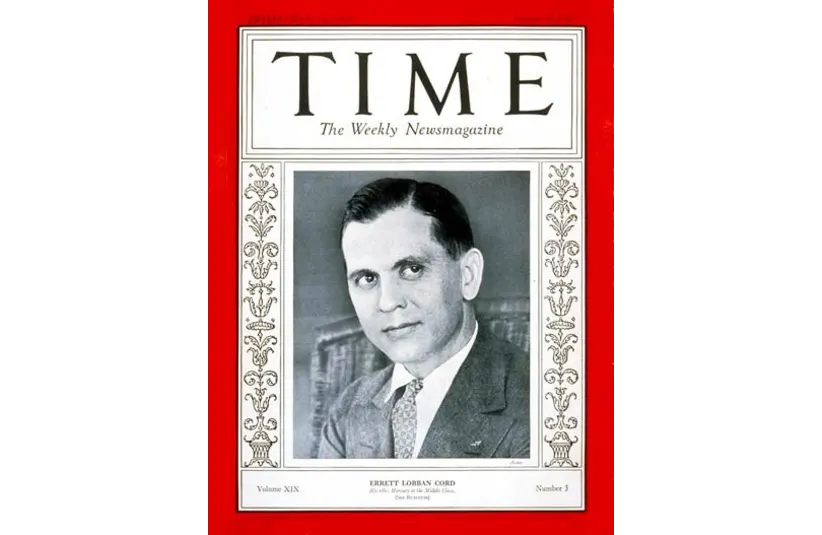
Errett Lobban “E. L.” Cord was born July 20, 1894, and he died on January 2, 1974. He was an American business executive. He was considered a leader, a genius frankly, in United States transport during the early and middle 20th century. He founded the Cord Corporation in 1929 as a holding company for more than 150 companies he controlled in the transportation field. Among the companies the corporation controlled were the Auburn Automobile Company, Lycoming Engines (which were in cars), Duesenberg Inc., New York Shipbuilding, Checker Motors (which made taxicabs), Stinson Aircraft Company, and American Airways, which later became American Airlines. There were many more holdings.
He was on the cover of Time Magazine on January 18, 1932. He was not just a transportation mogul. He was a politician. During the 1940s, he filled in for a Nevada state legislator who died in the middle of his term, and later rose to fame as a politician. In 1958, he was asked to run for governor of Nevada. He died in Reno, Nevada, from cancer in 1974, aged 79.
Parting Shots
The Cord 812 Berline, though it was produced for only two years, had a significant impact on the automobile industry. The car introduced innovations in the powertrain and in design. Errett Cord was one of the most accomplished Americans ever. Nowadays, he is basically anonymous, so it is good to learn a little about him.
 Don't stop here
Every Score. Every Story. One Home.
Breaking sports, entertainment and news from across the Total Apex network, updated all day.
Get the Full Story →
Don't stop here
Every Score. Every Story. One Home.
Breaking sports, entertainment and news from across the Total Apex network, updated all day.
Get the Full Story →