California’s cocktails-to-go extension through 2026 keeps a pandemic-era perk alive for restaurants statewide, while a separate federal proposal could ease food-tracking paperwork for smaller eateries starting as soon as this year. The two developments work on different timelines and affect different parts of a restaurant’s operation, so here’s what’s locked in now and what’s still pending.
California’s Legislature passed Senate Bill 389, extending the state’s cocktails-to-go allowance through Dec. 31, 2026, according to Nation’s Restaurant News. Separately, the Food and Drug Administration proposed on Oct. 8 to ease enforcement of its Food Traceability Rule for certain restaurants and retail food businesses, Restaurant Business reported.
What Does The Cocktails-To-Go Extension Actually Allow?
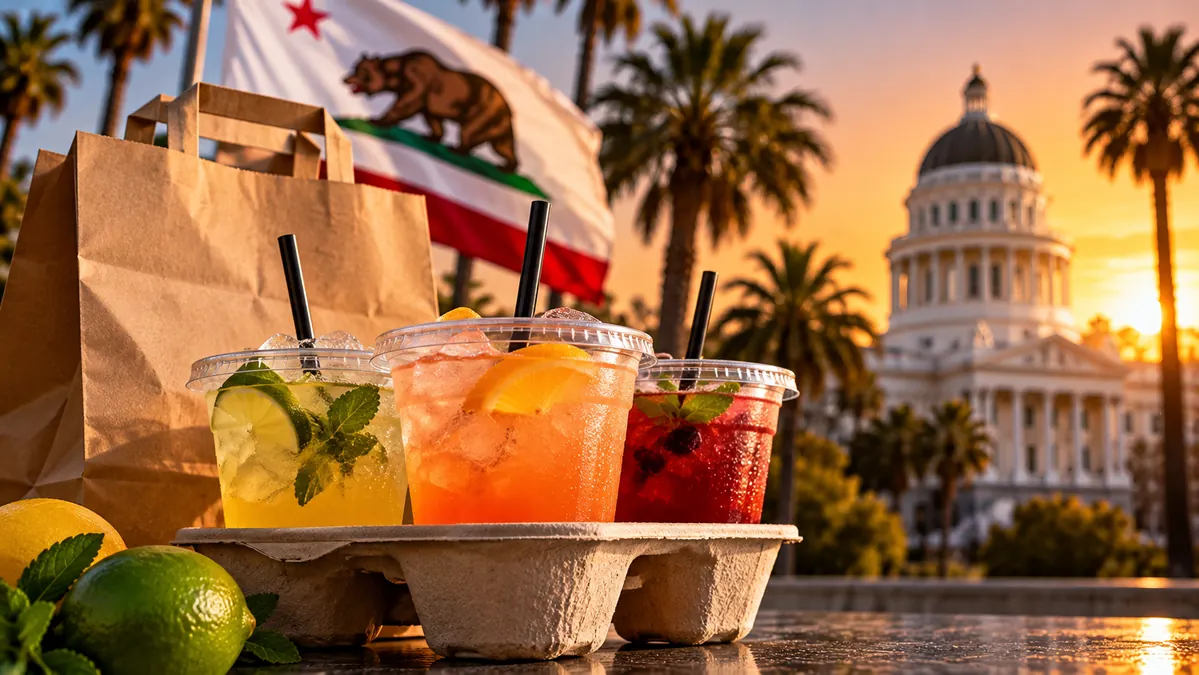
Under the extended rules, diners can purchase up to two cocktails per meal to take home, but the order must include food. Restaurants cannot sell to-go cocktails without a meal attached, and the establishment has to sell food on premises to qualify at all.
Each drink is capped at 4.5 ounces of distilled spirits. Customers must pick up the order themselves since delivery of to-go cocktails is not permitted under the law.
What Are The Packaging And Transport Rules?
Every cocktail sold to go has to be sealed in a container with a lid or cap that can be secured, not just a cup with a straw. Once the drink leaves the restaurant, state law requires it to ride in the trunk or another area of the vehicle that isn’t accessible to the driver or passengers while driving.
Restaurants are required to post these transport limits visibly for customers to see, giving diners a clear reminder of how to legally carry a to-go cocktail home.
When Does The Cocktails-To-Go Law Expire?
The extension approved by lawmakers runs through Dec. 31, 2026, according to Nation’s Restaurant News. That gives bars and restaurants that built cocktails-to-go into their sales mix a defined runway rather than an open-ended policy, though the law does not establish what happens after that date.
What Is The FDA Proposing For Food Tracing Rules?
The FDA’s Food Traceability Rule requires food businesses to keep detailed supply chain records for high-risk foods, a mandate set to take full effect in 2028. On Oct. 8, the agency proposed easing enforcement for restaurants and retail food businesses that fall under a new revenue threshold, Restaurant Business reported.
The proposed exemption would cover restaurants with average annual food sales under $1 million over the previous three years, adjusted for inflation. That’s a significant jump from the original rule, which only exempted businesses making $250,000 or less per year in food sales.
Which Provisions Are Already In Force And Which Are Still Pending?
The cocktails-to-go extension is an approved law with a fixed end date of Dec. 31, 2026, covering purchase limits, container requirements and transport restrictions for California restaurants right now. The FDA’s traceability rule change, by contrast, remains a proposal as of Oct. 8, and the broader Food Traceability Rule itself isn’t fully active until 2028.
Restaurant operators in California dealing with both alcohol-to-go sales and supply chain recordkeeping should track each timeline separately. One is a state law with an expiration date already set, the other is a federal rule still working through the proposal stage before any exemption becomes final.
 Don't stop here
Every Score. Every Story. One Home.
Breaking sports, entertainment and news from across the Total Apex network, updated all day.
Get the Full Story →
Don't stop here
Every Score. Every Story. One Home.
Breaking sports, entertainment and news from across the Total Apex network, updated all day.
Get the Full Story →