
Late Summer Religious Practices: How Faiths Fast, Pray and Reflect

While most of us are squeezing in one last beach trip before pumpkin spice season takes over, millions of people around the world are doing something a lot less relaxing: fasting, praying and taking a hard look in the mirror. Late summer religious practices span nearly every major faith tradition, and the timing isn’t a coincidence. From Jewish households sounding the shofar every morning to Orthodox Christians skipping meat for two weeks straight, this stretch of the calendar turns out to be one of the busiest spiritual seasons of the year.
Here’s what’s actually happening right now, and why so many traditions independently decided that late August was the moment to slow down and get serious.
Judaism’s Elul: The Month Nobody Warned You About
If you know any Jewish friends who seem a little more introspective than usual right now, there’s a reason. The Hebrew month of Elul began at sundown on August 12, 2026, and it runs through mid-September, wrapping up right before Rosh Hashanah. Chabad.org, one of the most widely cited sources on Jewish practice, describes Elul as the month that connects the past year to the coming one, a stretch where the goal is figuring out where you stand and where you need to go.
What makes Elul distinctive is that it’s the only month on the Hebrew calendar with zero festivals, fast days or holidays attached to it. No feasting, no fasting, just focus. Observant Jews sound the shofar every weekday morning as a kind of spiritual alarm clock, increase charitable giving and start reciting Selichot, penitential prayers that build toward the High Holidays. Rabbi Schneur Zalman of Liadi, the 18th-century founder of Chabad Hasidism, famously compared Elul to a king temporarily leaving his palace to walk among his people, meaning God is unusually accessible during this window, according to Chabad’s teachings. It all builds to Yom Kippur, the actual fast day, which lands in the fall.
Orthodox Christianity’s Dormition Fast
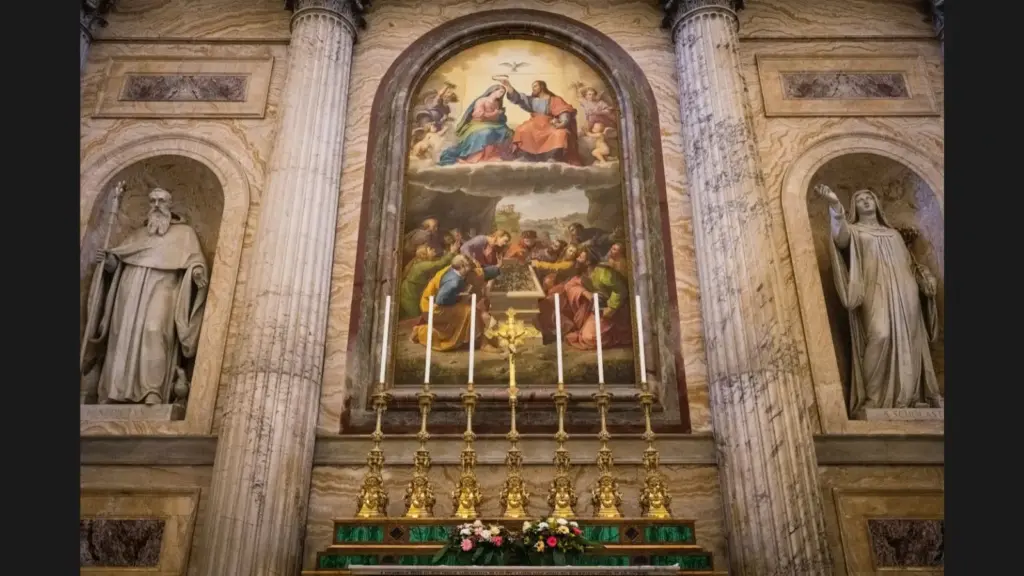
Two weeks before Elul even started, Eastern Orthodox and Eastern Catholic Christians were already deep into their own late-summer discipline. The Dormition Fast runs August 1 through 14 every year, a two-week stretch where practitioners abstain from red meat, dairy, fish, oil and wine, which draws on established Orthodox liturgical sources. It leads directly into the Feast of the Dormition on August 15, which commemorates the “falling asleep” and heavenly assumption of Mary, the mother of Jesus.
Communities with strong ties to Greece, Eastern Europe and the Middle East often treat this period as a pilgrimage season too, with families traveling to ancestral villages for the feast day itself. Parishes frequently use the fast as an occasion to chant the Akathist to the Theotokos and lean into study and prayer rather than just food restriction. The fasting is the visible part. The reflection is the point.
Hinduism’s Shravan: A Month for Shiva
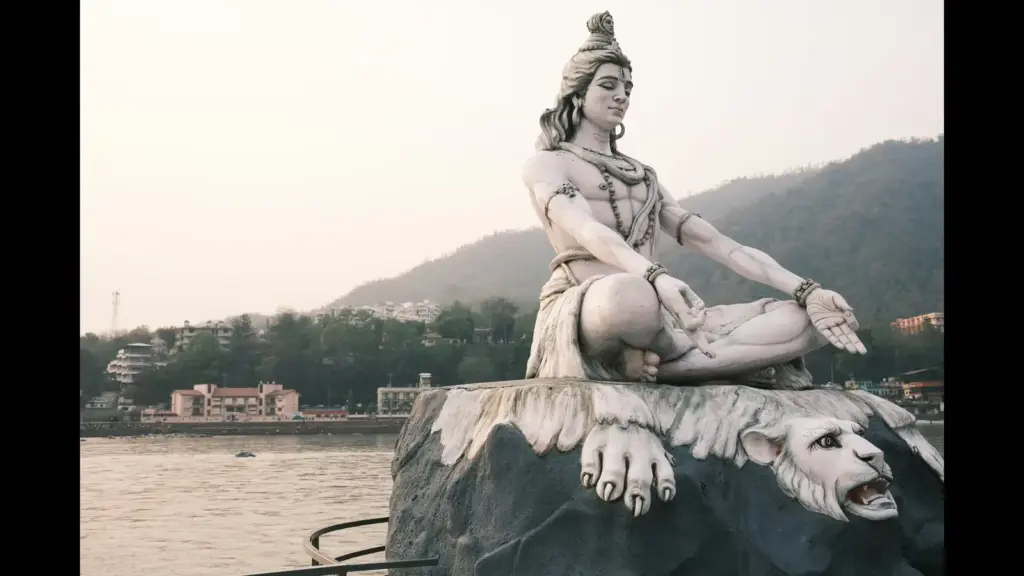
Meanwhile, across the Hindu calendar, the sacred month of Shravan (also called Sawan) typically falls somewhere in the July-to-August window, depending on region and lunar calculations. It’s dedicated to Lord Shiva, and every Monday of the month, known as Shravan Somvar, devotees fast until sundown, visit temples and perform ritual bathing of the Shiva lingam with water, milk and bael leaves.
The mythological backbone here is the Samudra Manthan, the churning of the cosmic ocean, during which Shiva drank a deadly poison to save the universe and earned the epithet Neelkantha, or “blue throat.” Devotees pour Ganges water over Shiva images as a symbolic gesture of cooling that poison’s effects. The month also fuels the Kanwar Yatra, an annual pilgrimage in which participants walk long distances carrying holy water from the Ganges to local Shiva temples, a tradition that draws massive crowds in northern India every year.
Buddhism and Shinto’s Obon: When Ancestors Come Home
Not every late-summer practice centers on fasting. In Japan, mid-August (or mid-July in some regions) brings Obon, a Buddhist and Shinto tradition where families honor the spirits of their ancestors. People visit gravesites, clean family altars, light lanterns to guide spirits home, and gather for Bon Odori folk dances. It’s less about restriction and more about remembrance, but the underlying instinct matches everything else on this list: pause, look backward, reconnect.
Why Late Summer Keeps Showing Up on the Spiritual Calendar
Notice a pattern? Elul precedes the Jewish New Year. The Dormition Fast precedes a major feast day. Shravan precedes a string of Hindu festivals including Raksha Bandhan and Janmashtami. Late summer keeps functioning as a threshold season, the deep breath before a wave of holidays hits. Harvest cycles play a role too. Many agrarian calendars, including the ancient Celtic festival of Lughnasadh, mark this time as the first fruits of the harvest, a natural moment for gratitude and stocktaking before autumn arrives in earnest.
Whatever the tradition, the instinct is remarkably similar: eat less, pray more, and take stock before the calendar turns.
The Takeaway From These Late Summer Religious Practices
You don’t have to belong to any of these traditions to notice what they have in common. Late summer keeps getting chosen, across cultures and continents, as the moment to strip things back and get honest. Whether that’s a shofar blast, a meatless meal or a lantern floating down a river, the message underneath is the same: slow down before the year speeds back up.
FAQ
When does Elul 2026 start and end?
Elul began at sundown on August 12, 2026, and continues through the onset of Rosh Hashanah, which starts at sundown on September 11, 2026.
What is the Dormition Fast and who observes it?
The Dormition Fast is a two-week fasting period, August 1-14, observed by Eastern Orthodox and Eastern Catholic Christians leading up to the Feast of the Dormition on August 15, which honors Mary’s death and assumption into heaven.
Is Shravan the same as Sawan?
Yes, Shravan and Sawan refer to the same sacred Hindu month dedicated to Lord Shiva, with regional naming differences across North and South India.
Do Hindus fast the entire month of Shravan?
Not necessarily the entire month. Many devotees fast specifically on Mondays (Shravan Somvar), though some choose to fast throughout the month as a personal spiritual commitment.
What is Obon and when does it happen?
Obon is a Japanese Buddhist and Shinto tradition honoring ancestral spirits, typically observed in mid-August (or mid-July in some regions), involving grave visits, lantern lighting and community dances.
Why do so many religions have observances clustered in late summer?
Many faith calendars use this period as a transitional season, either tied to harvest cycles or as spiritual preparation preceding major holidays like Rosh Hashanah, the Feast of the Dormition, or Krishna Janmashtami.
Written with the help of AI, reviewed and edited by Harmony Daniels.
