
Raksha Bandhan 2026: The Real History Behind the Rakhi

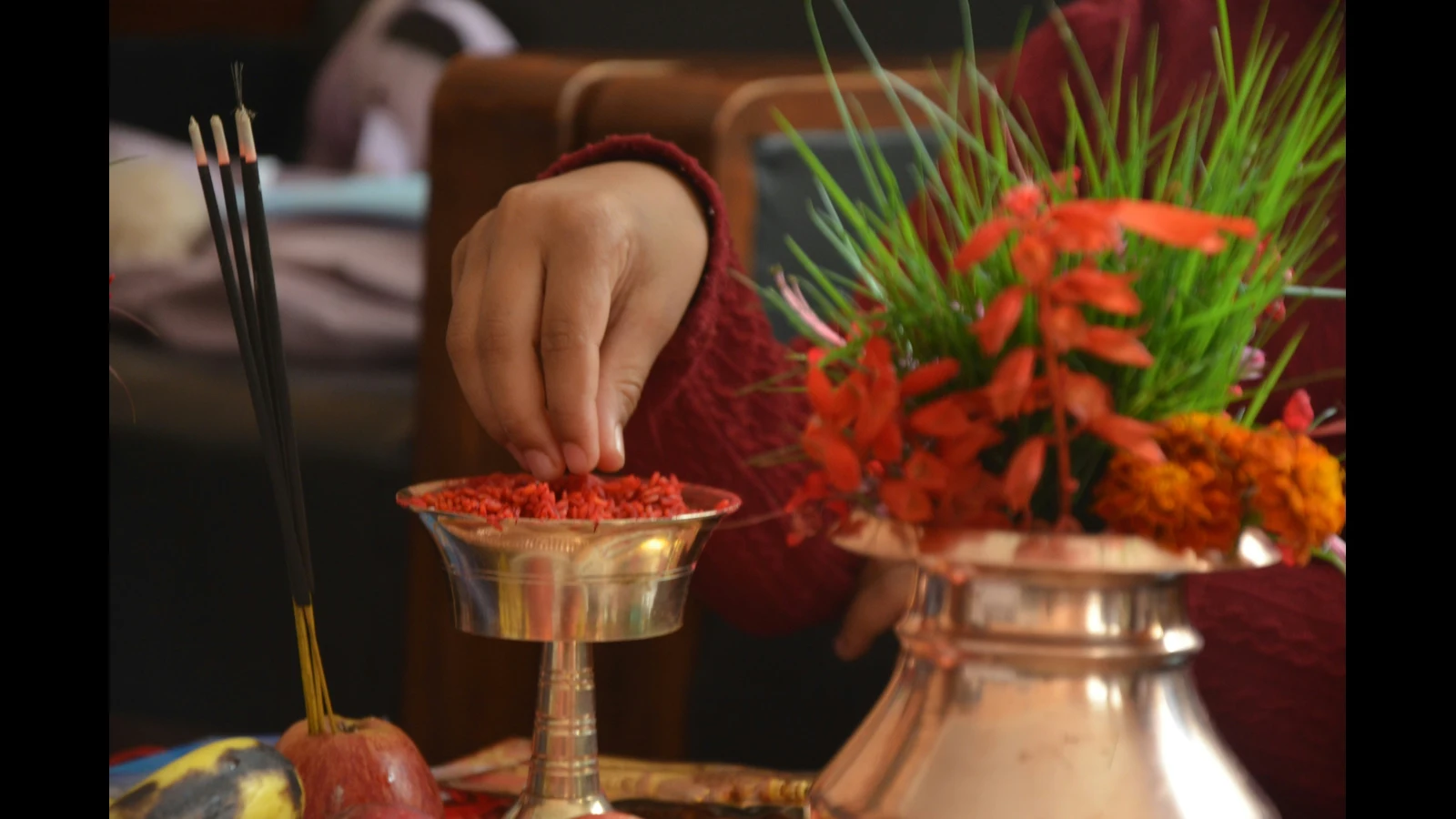
Tomorrow, millions of sisters around the world will tie a thread around their brothers’ wrists, and it’s going to look deceptively simple. A little string. Some rice. A sweet or two. But Raksha Bandhan, the Hindu festival celebrating the bond between siblings, has quietly survived empire, war and colonial partition to become one of the most loaded threads in South Asian culture. Literally.
Raksha Bandhan 2026 lands on Friday, Aug. 28. If you’ve ever wondered why your Hindu coworker suddenly has glitter on their wrist and a box of laddoos on their desk, here’s the story: what it means, where it came from, and why a piece of string has started diplomatic incidents and outlasted a British colonial strategy.
What Does Raksha Bandhan Actually Mean?
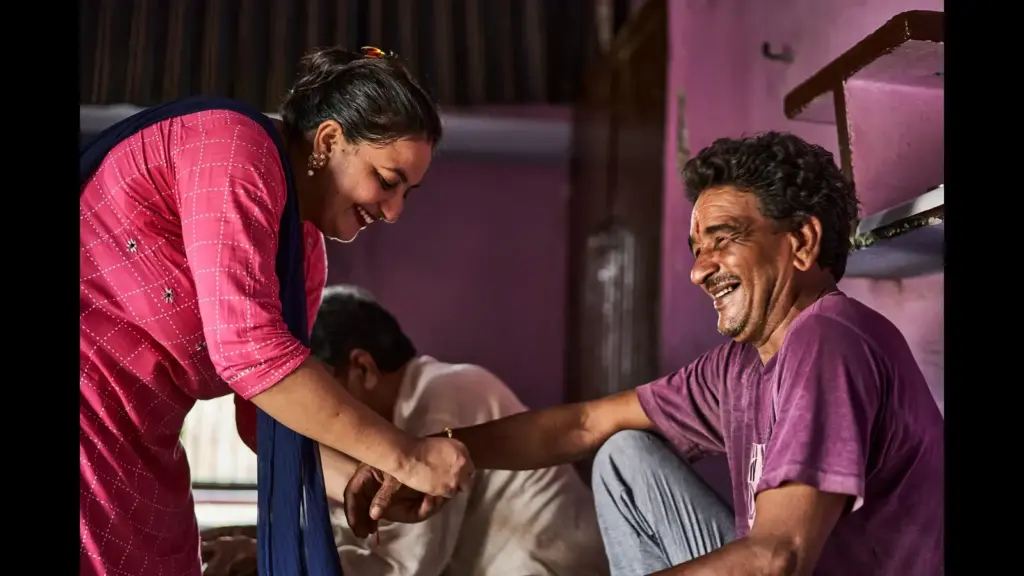
Break down the Sanskrit and it’s almost embarrassingly literal: “Raksha” means protection, “Bandhan” means bond or tie. Put together, you get “the bond of protection.” The ritual centers on the rakhi itself, a decorative thread a sister ties around her brother’s wrist while praying for his well-being. He, in turn, promises to look out for her and usually hands over a gift, cash, or both. Then everyone eats sweets, because no Hindu festival worth its salt skips the sugar course.
It’s traditionally observed on the full moon day, or Purnima, of the Hindu lunar month of Shravana, which usually falls in August. That’s why the date moves every year on the Western calendar. The 2026 Purnima Tithi begins around 9:08 a.m. on Aug. 27 and runs until roughly 9:48 a.m. on Aug. 28, with families typically choosing a morning window before that cutoff. Exact auspicious timing shifts by city and local Panchang, so check a local calendar rather than a generic muhurat window online.
Where the Legend Actually Comes From
Here’s where it gets interesting, because Raksha Bandhan doesn’t have one origin story. It has several, stitched together from mythology, medieval politics, and 20th-century protest.
The Mythological Roots
One popular tale traces back to King Bali and Goddess Lakshmi, who tied a rakhi around Bali’s wrist seeking protection, eventually convincing him to release Lord Vishnu back to his divine home. Another comes straight out of the Mahabharata: Lord Krishna cut his finger using the Sudarshana Chakra against Shishupal, and Draupadi tore a strip from her sari to bandage the wound. Krishna reportedly considered that gesture a sacred bond and later repaid it by protecting her honor during her humiliation in the Kaurava court.
The Historical (and Historically Disputed) Legends
Then things get politically spicy. According to a widely repeated 16th-century story, the widowed Rajput queen Rani Karnavati of Mewar sent a rakhi to Mughal Emperor Humayun in 1535 as her kingdom faced invasion from Bahadur Shah, appealing to him as a brother. Humayun reportedly reorganized a military campaign in response, though he arrived too late; the fort had already fallen, and Karnavati had died rather than face capture. It’s a striking story about a rakhi crossing religious and political lines in medieval India, though historians are split on whether it actually happened. Modern historian Satish Chandra has called it a fable rather than documented fact.
An even older, equally contested account puts Alexander the Great in the picture. Around 300 BCE, legend holds that Alexander’s wife sent a rakhi to Indian king Porus, asking him to spare her husband in battle. The story got a popularity boost from the 1941 Bollywood film “Sikandar,” and historians treat it with even more skepticism than the Karnavati legend. Still, it’s stuck around in Rakhi folklore for a reason: it turns a thread into a peace treaty.
The Political Reinvention
The most historically verifiable chapter belongs to Rabindranath Tagore. In August 1905, when the British moved to partition Bengal along religious lines, the timing coincided with Raksha Bandhan, and Tagore turned the festival into a protest tool, encouraging Hindus and Muslims to tie rakhis to one another as a symbol of standing together. It’s arguably the moment Raksha Bandhan stopped being purely a family ritual and became a statement about who counts as kin.
How the Ritual Actually Works
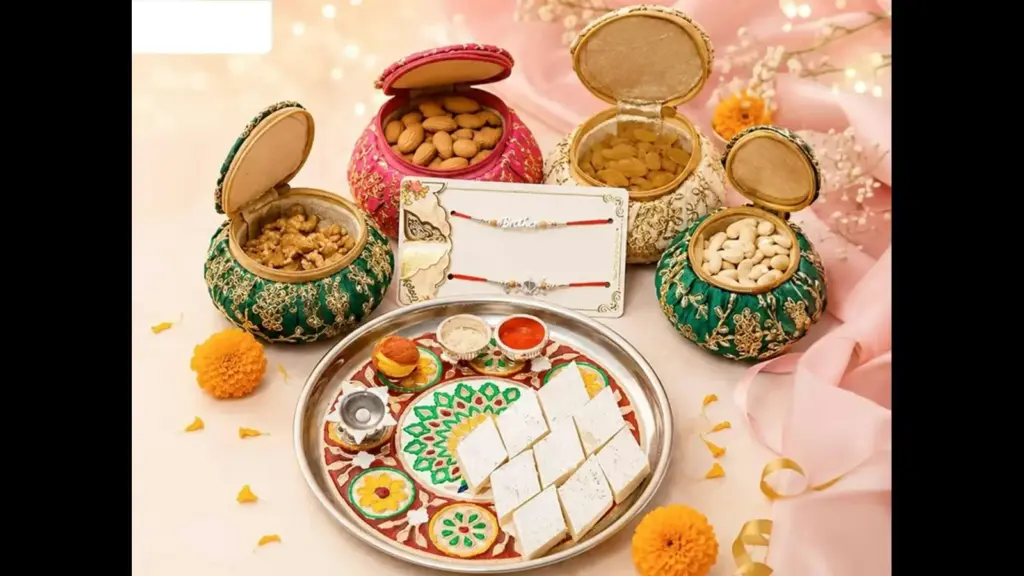
Strip away the mythology and the ceremony is pretty consistent across regions, even as the names change. The sister prepares a thali, a small decorated plate holding the rakhi, red kumkum powder, a few grains of rice, a lit diya and sweets. She applies a tilak to her brother’s forehead, performs a short aarti, ties the thread around his right wrist and feeds him something sweet, usually a laddoo or a piece of kaju katli. He gives her a gift in return, historically a modest cash amount, and vows his support.
The festival goes by different names depending on where you are. It’s called Narali Purnima in Maharashtra and Avani Avittam in parts of South India, and earlier folk traditions used saluno, silono or rakri long before “Raksha Bandhan” became the dominant name.
Not Just for Biological Siblings
This is the part that trips up people encountering the festival from the outside: Raksha Bandhan was never strictly limited to blood siblings. Rakhis get tied between close friends, cousins and communities as a symbolic vow of protection. The UK’s Armed Forces Hindu Network leans into that idea, hosting events where local youth tie rakhis onto the wrists of serving military personnel, representing bonds of protection that extend past family lines. It’s the same logic Tagore used in 1905, just in a different uniform.
The festival keeps evolving, too. This year’s trend reports point to chocolates, macarons, baklava and vegan sweets showing up alongside traditional laddoos and barfis on the Rakhi thali, plus a rise in eco-friendly rakhis and virtual ceremonies for siblings scattered across time zones. The thread hasn’t changed much in centuries. What gets tied to it keeps shifting.
The Bottom Line
Raksha Bandhan survives because it’s flexible enough to mean whatever the moment needs: a mythological debt, a political plea, an anti-colonial protest, or an excuse to see your sibling and eat too many sweets on a Friday. That’s rare for a ritual this old. Most festivals fossilize. This one just keeps finding new wrists.
6. FAQ SECTION
When is Raksha Bandhan in 2026? Raksha Bandhan 2026 falls on Friday, Aug. 28. The Purnima Tithi begins around 9:08 a.m. on Aug. 27 and ends around 9:48 a.m. on Aug. 28 (IST), so most families tie the rakhi during the morning hours on the 28th, before that window closes.
What does the word “Raksha Bandhan” mean? It’s Sanskrit for “bond of protection.” “Raksha” translates to protection, and “Bandhan” means a bond or tie, referring to the thread a sister ties around her brother’s wrist.
Is Raksha Bandhan only celebrated between blood siblings? No. While the core ritual honors biological brothers and sisters, rakhis are also tied between close friends, cousins, and even symbolically between communities, as seen in events like the UK Armed Forces Hindu Network’s rakhi ceremonies with military personnel.
What is Bhadra Kaal, and why does it matter for tying rakhi? Bhadra Kaal is considered an inauspicious period in the Hindu calendar, and most families avoid tying the rakhi during that window. In 2026, Bhadra reportedly ends before sunrise, so the full morning is considered auspicious for the ceremony.
Is the Alexander and King Porus rakhi story historically true? It’s disputed. The legend, which claims Alexander’s wife sent a rakhi to King Porus asking him to spare her husband in battle, has circulated for centuries and got a popularity boost from a 1941 Bollywood film, but historians treat it with significant skepticism due to a lack of contemporary documentation.
What’s a typical Raksha Bandhan gift from a brother to a sister? It varies widely by family and region, ranging from a modest cash gift to jewelry or other presents. The gesture matters more than the value: it’s framed as a reciprocal vow of protection and support.
Written with the help of AI, reviewed and edited by Harmony Daniels.
