
Dodge D5: The Classic Car With A Short Production Span

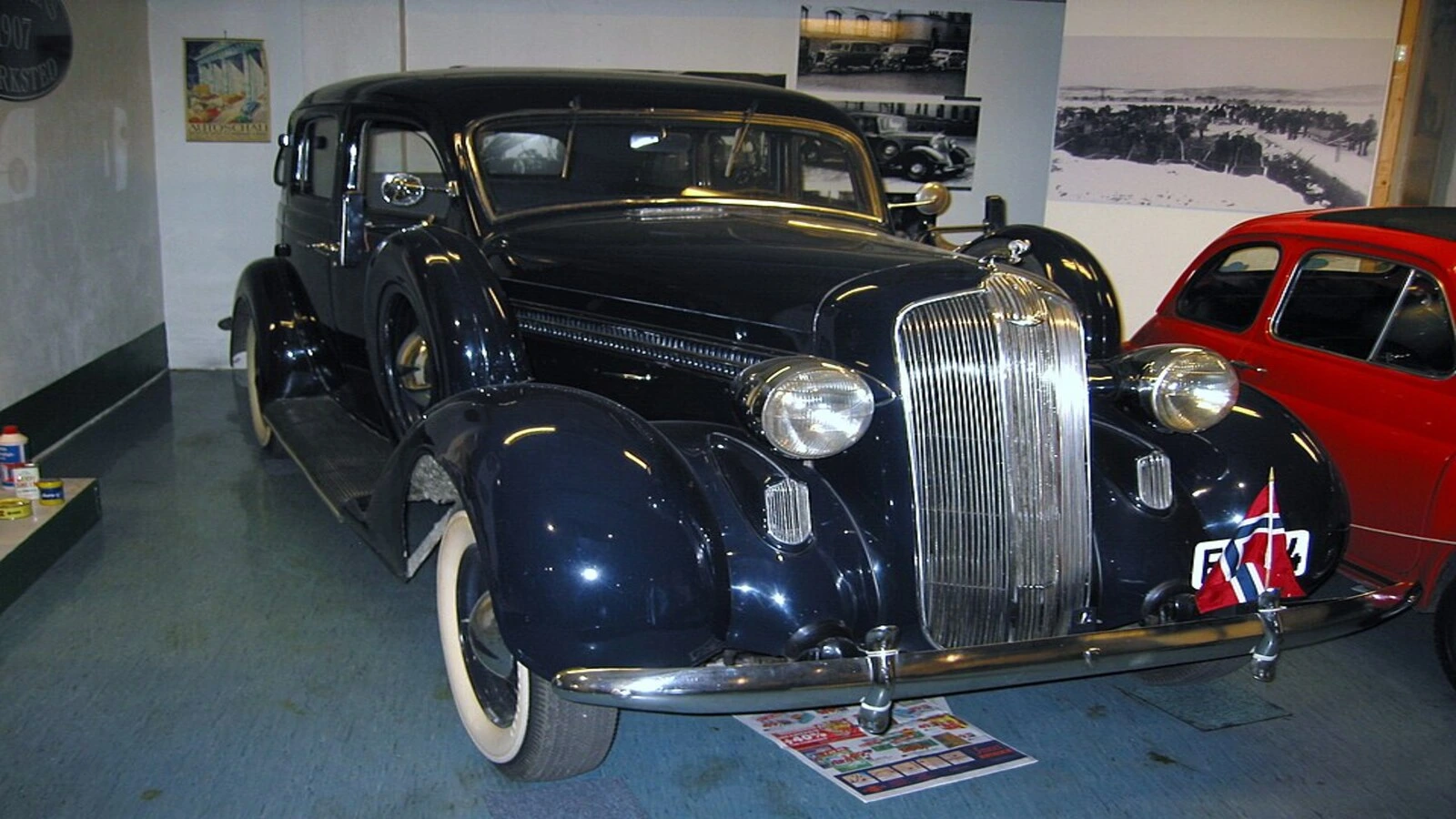
The Dodge Series D5 was produced in 1936 and 1937. It replaced the series D2, which was produced in 1935. Even though the specific car was produced for only two years, because it was part of a series, it had an outsized impact on American automotive history. In fact, there was not much evolution from the D2 to the D5.
The two cars used the same engine, clutch, and transmission. The new car even looked the same, with minimal changes made. The car was replaced with the D8 in 1938. Do you think that when a new car is introduced, that is in the same series as its predecessor, and does not change much, that car should be considered different?
1936 Dodge D5 Summary
The engine in the Dodge D5 was a 218 cubic inch 6-cylinder. It produced 87 horsepower. It had a single-disc dry-plate clutch and three-speed manual transmission. An underappreciated fact is that many of the cars from that era had manual transmissions. Though with this car, there was an automatic transmission option.
The body of the Dodge D5 was also not changed much from its D2 predecessor. It had a modified split grille, larger headlights, and the horns were moved behind the grille rather than being mounted on the fender aprons. A chrome strip continued the length of the car. These changes were difficult to notice.
On the inside of the car, there were also not many changes. The dashboard had knobs embedded in it and gauges that were flush-fitting. This sleek design was new and set a trend for cars produced in that era. There was also new safety padding on the front seatbacks and “no-snag” interior door handles that offered a never-before-seen convenience to consumers. The hypoid rear axle was also new and meant a lower transmission tunnel as well as a flat floor at the back of the car.
The Dodge Series D5 had a 115-inch wheelbase. The wheelbase was an inch shorter the next year. Some special cars had a 132-inch wheelbase. This larger wheelbase was used for limousines and luxury versions of the car. The touring versions of the car had an enclosed luggage compartment standard. There were many versions of the car, with a sedan, coupe, and convertible.
In the fall of 1937, the Dodge Series D5 was replaced by the Series D8, while the Junior line models (for export and the Canadian market) were badged D9 and D10 for 1938. 295,047 Dodge D5S were built in the calendar year. The junior versions of the car are interesting. Another answer to a trivia question about cars of that time was that a copy of the Dodge Series D5’s engine was produced under license in the Soviet Union by GAZ during the 1940s-1950s. So, the car lived beyond 1938.
The Dodge Juniors
The Juniors program was novel. In this way, even though the car was only produced for two years, it did have a spike in production due to this program. The so-called Junior line of the Dodge D5 used Plymouth’s chassis, body, and engine, with the grille and other trim parts from Dodge’s Senior line. The basic business version (D6) was built in Canada and also in Detroit, while the deluxe D7 was only built in Canada. The American-made D6S were made for overseas markets, but was also available in right-hand drive (like in the United States). It seems the car had a lot more distribution than just in the United States.
Their equipment and body of the Dodge Junior were the same as the Plymouth’s P3 and P4 models from that year. Although with a slightly longer 113-inch wheelbase. The Dodge Juniors were available as a two-door Business Coupe, and as two- or four-door Touring Sedans. The D6 also offered trunkless versions, and the D7 was available as a Rumble-Seat Coupe.
D6S, as well as the D7S, received Plymouth’s smaller 201 cubic inch version of the Chrysler flathead engine, which produced 82 horsepower at 3600 revolutions per minute. Chyrsyler, Plymouth, and Dodge were all part of the same company. 39 of the D6S built in Detroit received a narrow-bore engine displacing 170 cubic inches to fit local tax rules. It is a little funny that the Dodge had a different designation in the Junior program. It was essentially the same car.
Conclusion
Because the Dodge Series D5 was only produced for two years on might think that the car was somewhat constrained in its production. This was not really the case. First, the car did not differ much from its predecessors. Second, the car was sold overseas, with the engine being used in a car in the Soviet Union. Third, there was a novel junior program that led to a spike in production, albeit with different designations.
