
DreamForge Review: Can AI Really Build You a Custom Video Game From Scratch?

DreamForge is described as “an AI-powered gaming platform where you create, play, and share highly personalized story adventure games.” And that is exactly what it is. But what is it like to use it? How was the result? How does it work? And, what does it actually cost?
I had the opportunity to play with DreamForge. And I reached out to the developers with some questions. They were quick to provide answers. So let’s dive in!
*Updated to reflect correct pricing for credits.
The DreamForge Experience
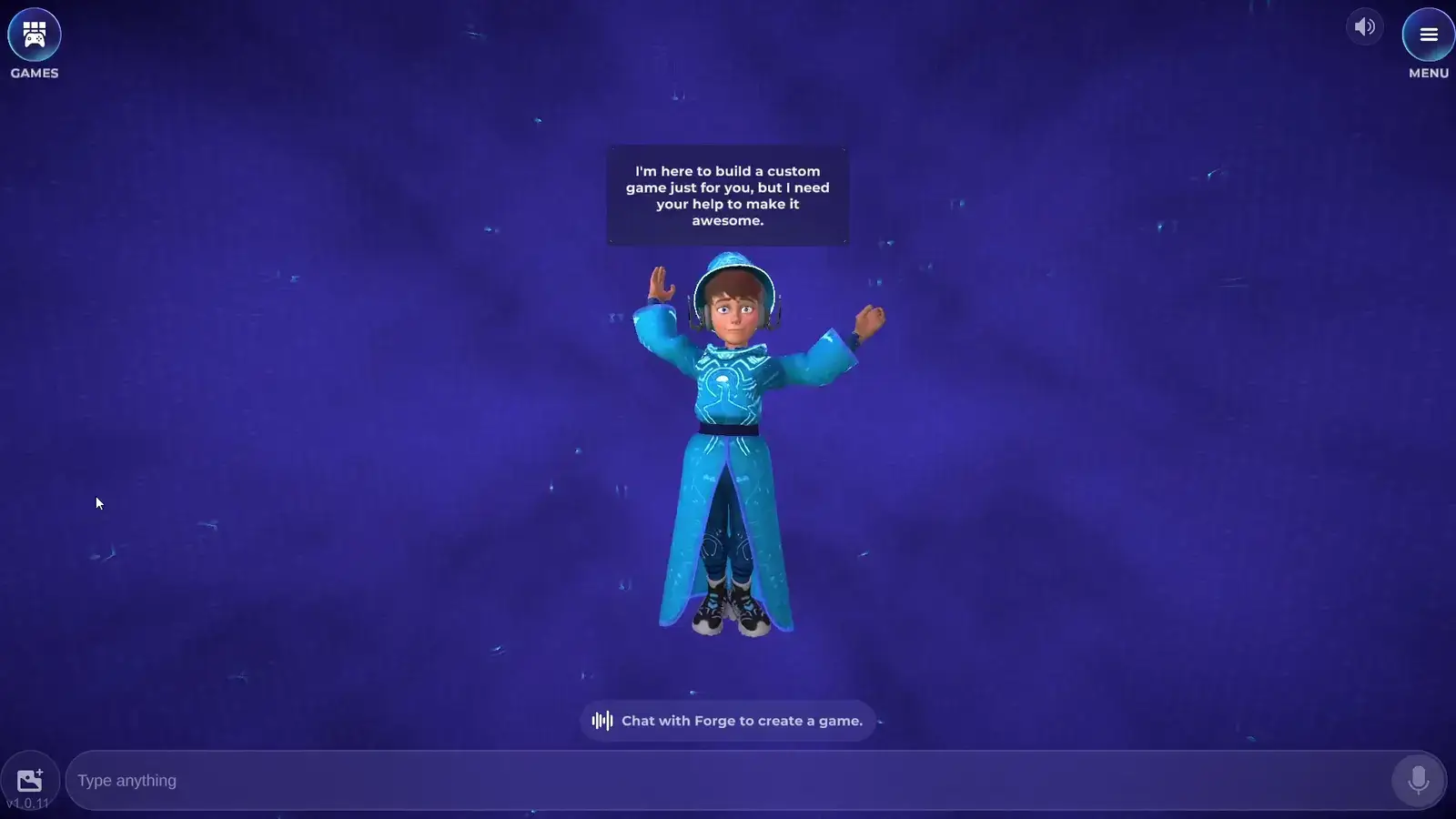
When I first launched the game, I was greeted by Forge. He’s a boy dressed like a wizard in blue robes but with gaming headphones and sneakers. He’s a modern wizard because he’s your entry point to the AI tools that create the game. He started out asking about me and my world. I decided to tell him about the protagonist in my own science fiction novel instead. I gave him another character, a little backstory, and watched the bar above his head filling up. It’s conversational, like talking to any large language model (LLM) like ChatGPT, Gemini, Claude, etc.
You have the option of adding photos for characters if you want to. But I chose to skip that step and let it use the AI-generated models instead. I’m cautious about what I feed to AI, though I’m sure AI models have already picked up all of the publicly available photos on the internet.
I was presented with a screen that summarized everything and showed options for the final creation. More on that later. I left it on the default, Standard option. Forge then went to work creating the game. I have come to learn that DreamForge actually uses a number of AI models to create the final product.
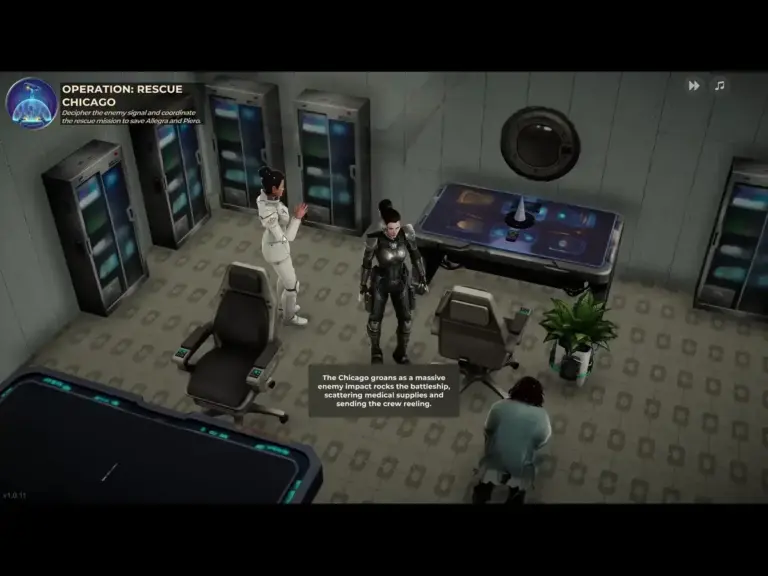
Finally, I was presented with the game, which had a load screen, theme song (with lyrics), and fully voiced characters. The game was simple point-and-click mechanics. It’s basically going through an interactive story where you talk to characters (by typing to them), manipulate objects, and make choices.
Altogether, it was just over half an hour from the start to completing a playthrough of my creation. If you have access to DreamForge yourself, you can play it by clicking here.
How it Works
After seeing DreamForge in action, I wondered what was behind it all. You direct an animated avatar, and the other characters move about. You talk to them in natural language. And each has their own voice, plus a narrator. There are AI-generated images, comic-book-like scenes, and that theme song. That really took me by surprise and made me laugh. AI does some silly things.
So, I reached out to the DreamForge team for some added information. I learned that it currently uses five different image generators, at least three LLMs, and several AI voice platforms (Hume was the one used for my game). That’s a lot of AI content generation going on, and the mechanism to combine them all must be very interesting. With AI models changing so quickly, they also switch models when something else can do the job better.
The Monetization: What Does It Cost?
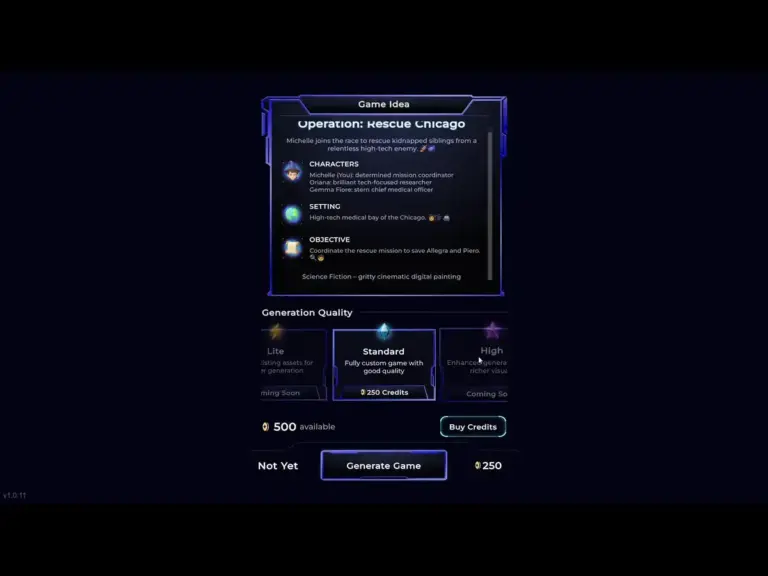
Currently, DreamForge doesn’t cost anything up front. You can join their waitlist for early access, or you can just wishlist it on Steam. In my case, I started with 500 credits. The Standard game creation is 250 credits. This includes AI-generated models in the game.
Lite is 100 credits but uses assets from a library instead of generating everything from scratch. Ultra includes fully generated custom video cinematics and more engaging story lines. Note that this is based on the current early-access version. The Lite and Ultra versions aren’t currently available.
But How Much Are Credits?
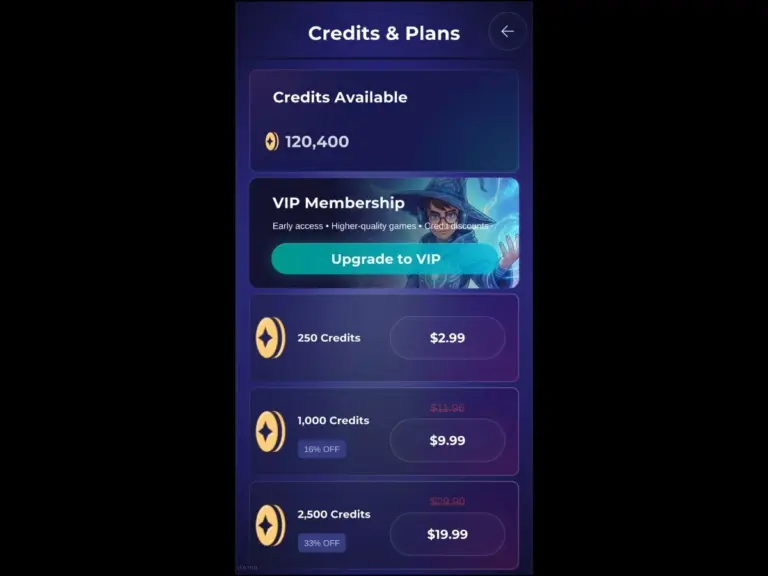
Credit pricing may be showing incorrectly in the game, as it was for me. That caused me to report it incorrectly at first. Credits are $2.99 for 250, $9.99 for 1,000 , or $19.99 for 2,500. That might sound like a lot. But when you factor in the cost of generating everything using multiple AI models (including voices), that’s probably a fairly good deal considering the cost of AI generation.
The Good
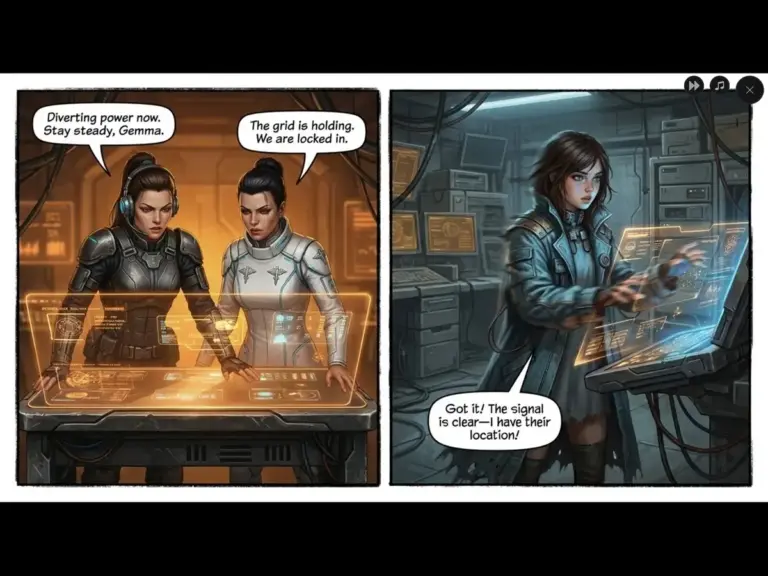
DreamForge is very easy to use. Since it uses LLMs as the basis, chatting with Forge is simple and intuitive. I was impressed with how quickly it generated the final game. That was some impressive processing power. I’ve used LLMs for generating content, and it isn’t always fast. The comic-style panels were a good way to transition between scenes. And they make great screenshots. The opening theme song was a surprising touch, even if some of the lyrics didn’t make a lot of sense. I was amused and had fun playing with it.
Needs Improvement
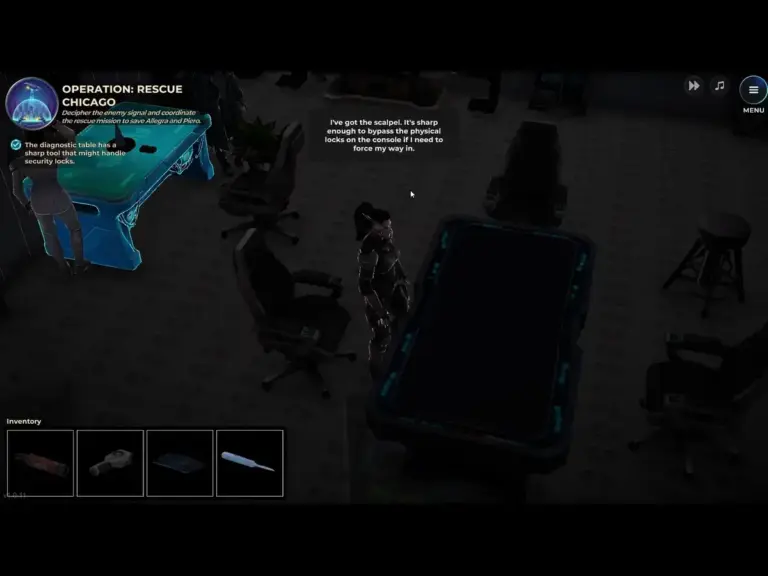
I’ll caveat this by saying I know this is early access and the platform has a long way to go. But we’re judging it as it stands now.
- In the actual game, the scene started out bright, but then it was like the lights got turned off, and the whole scene was dark. This might have been intentional (the spaceship was low on power), but it made it more difficult to see things in the scene.
- The other characters were oddly fascinated by a decorative potted plant (more a problem of the AI model than DreamForge itself, but worth noting).
- The characters’ movement was a bit jerky.
- There was some pure nonsense. For example, synchronizing a flare with a holoprojector to send coordinates to other ships.
The platform definitely needs work for the storytelling aspect to make more sense. But… there’s more to come.
What’s Next for DreamForge
Amar Shivdasani, Cofounder and COO of DreamForge, was kind enough to share their vision of the future. Here’s what he told me:
“We’re envisioning a really robust story gaming platform. We’ll soon be adding features for people to edit and expand their games. We’ll also be adding collaborative prompting and multi-player gameplay. Gameplay dynamics will expand as well, with puzzles, combat, and strategy all on the longer-term horizon.”
My Final Take
As it stands right now, DreamForge is a minor diversion, but if they can pull off what they’re planning, this could really turn into something magnificent. I can imagine creating more complex games based on my own novels, stories, and even our role-playing games. As the AI models that make DreamForge possible continue to improve, there really is no limit to what this platform could do.
I look forward to seeing what comes next. I’ll be watching closely!
* This is not a sponsored post, but I’d like to thank Amar Shivdasani, Cofounder and COO of DreamForge, for taking the time to respond to my inquiries.
What more great content? Bookmark us and follow us on YouTube.
And you can follow Michelle Kitz here: https://linktr.ee/michellekitz
