
Success or Predictable: A Late Review of “Young Washington.”

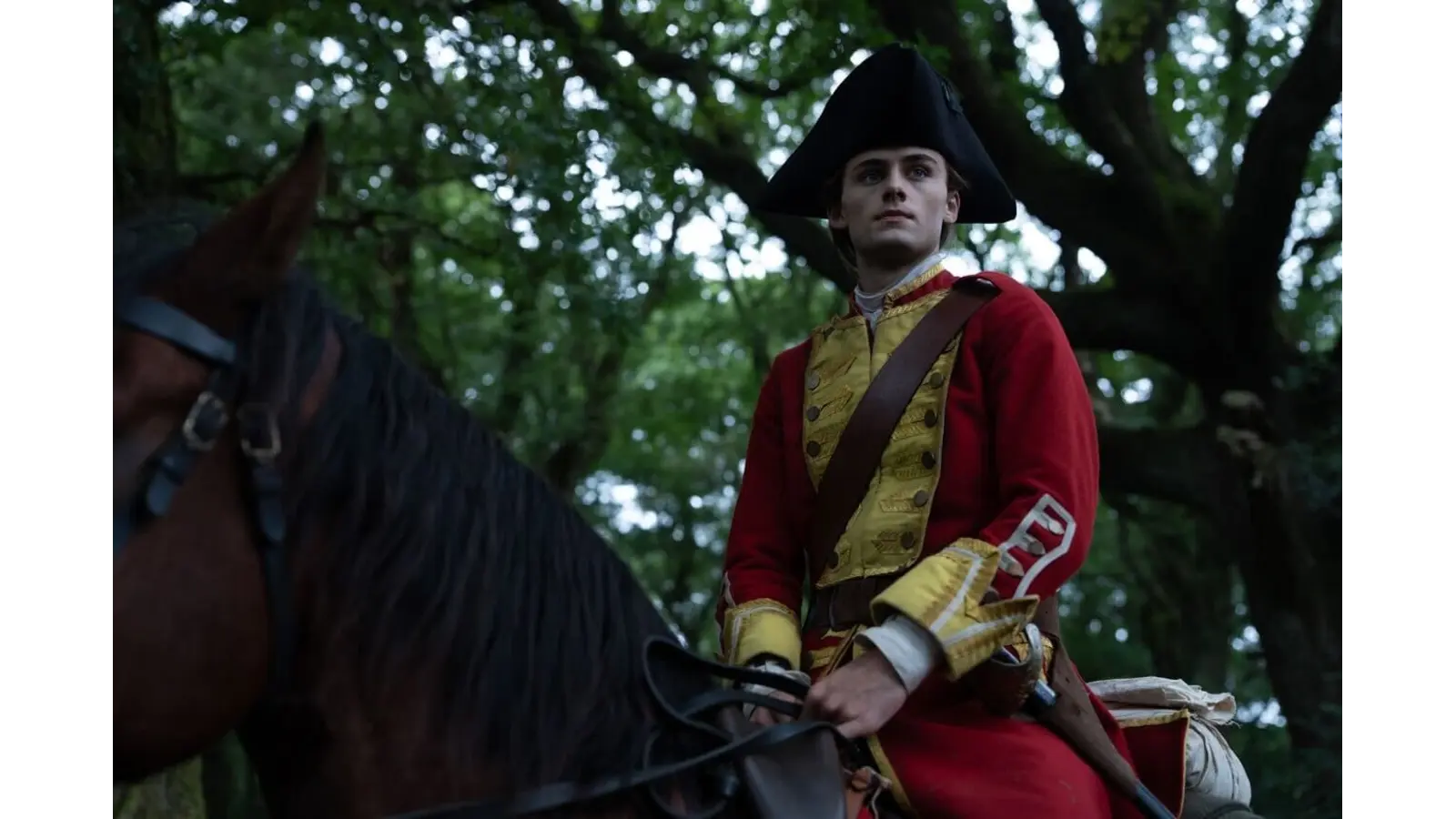
There’s a scene early in “Young Washington” where a British officer looks at the protagonist as if he just tracked mud onto an expensive rug. This glance, in a nutshell, is the premise of the entire film. A determined – albeit respectable and moral – nobody, trying to prove he belongs in a room built by people who never wanted him there. A decent premise, yet the trouble is the film seems to flinch from itself.
Let us take a closer look at “Young Washington” as the USA revels in its 250th birthday and examine the truth of the man behind the myth.
The American Mythology
Directed by Jon Erwin for Angel Studios, timed for the country’s 250th birthday, “Young Washington” arrived in theaters on July 3 like a calendar reminder set a year in advance. William Franklyn-Miller, 22, plays George as a surveyor turned soldier, all cheekbones and simmering ambition.
According to Sounds of Cinema, Miller may outwardly suit the role of the youthful Virginian, yet his actions and character seem more at home in the 20th or 21st century than the 1750s. The strain of warfare comes through Miller’s performance, humanizing the young man who would lead a future army against the very empire and crown he longed to serve. “The best moments of Young Washington are the title character’s scenes with his low-class colonial friends. Their camaraderie is the part of the movie that is emotionally affecting,” “Sound of Cinema” posted on July 12th.
The Cheerful Absence of Cherry Trees

Thankfully, nobody swings an axe at a fruit tree in the film. Instead, we see a young George grieving his father, being shuffled off due to his birth order, and slowly talking his way into a military career. His half-brother Lawrence, played with quiet warmth by John Foss, hands him a chess metaphor about pawns taking kings that the script leans on so hard it practically needs a chiropractor by the end.
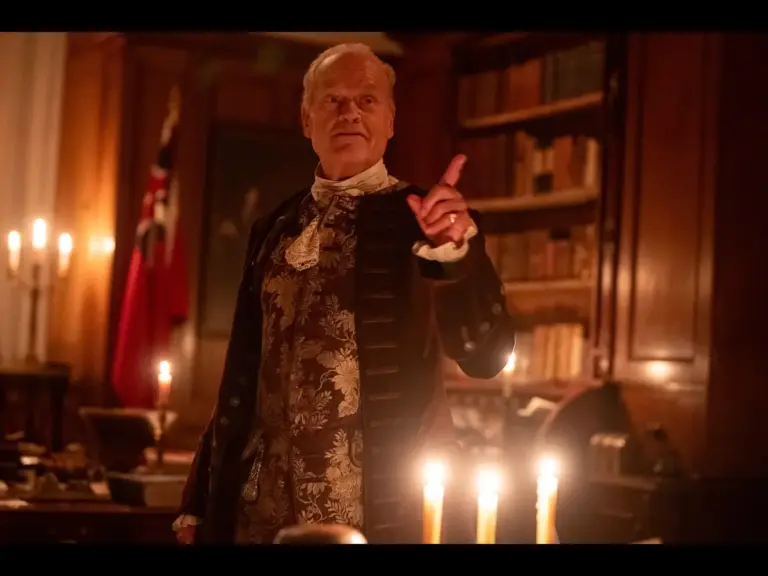
From there it’s the French and Indian War, colonial politics, and a young man discovering that ambition tastes a lot like humiliation before it tastes like anything else. Ben Kingsley shows up as the sly colonial administrator Dinwiddie, Kelsey Grammer plays a benefactor with the patience of a man who has clearly done this benefactor thing before, and Andy Serkis storms through as General Braddock, a walking cautionary tale about fighting the last war instead of the one in front of you.
Where the Movie Actually Works
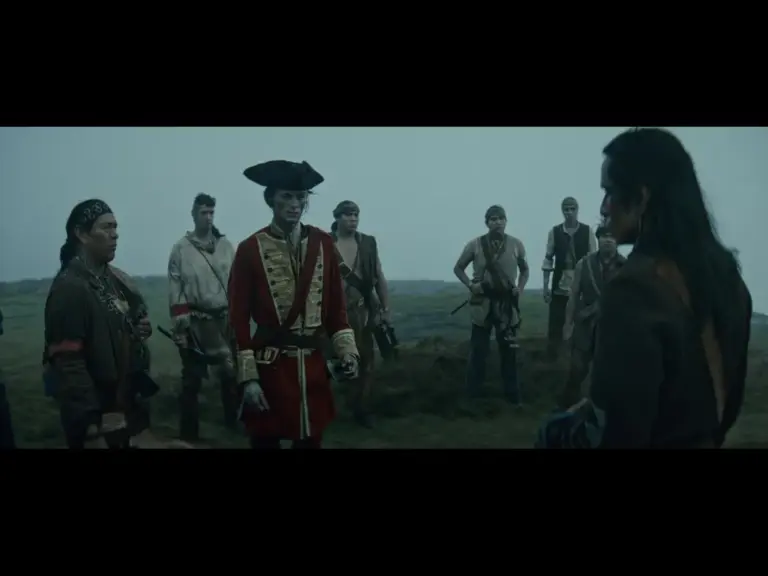
Let us give credit where credit is due. The battle scenes have weight to them. We are exposed to a tense river crossing sequence, all ice and panic with men poling desperately downstream. One’s shoulders tense in a theater seat that has seen far worse. When the muskets and cannon fire start, the chaos feels earned instead of choreographed for a trailer.
The supporting cast also does some quiet, unglamorous work to keep the thing afloat. Mary-Louise Parker, as Washington’s mother, carries a kind of exhausted anger that suggests a whole unspoken story about a widow raising sons on a tenant farm. Kingsley and Grammer bring the kind of dry, comfortable authority that makes you wish the script entrusted them with more.
Where It Stumbles Over Its Own Boots
Here is the crux of the matter. For a film about a man who would eventually lead a revolution, “Young Washington” is strangely cautious. There’s a difference between telling a complicated story and tiptoeing around one.
Franklyn-Miller portrays George with a quick temper and a stubborn sense of fairness that feels believable in our own social context. But the film never quite closes the gap between this jumpy, ambitious youth and the marble statue we all picture when someone says the word “Washington.” Reverence and a sense of being “relatable” is not always historically acurate: yes, the men and women of history were of flesh and blood, but we cannot impose the values if 2026 upon the 18th century.
Also, one cannot shake the feeling that some of the frontier vistas are not entirely real. Obviously, the region known as the Ohio Territory is a far cry from the present location; however, filming in a rural area could lend the impression of realism with depending upon graphics or AI tools for the sake of a budget.
Final Thoughts on “Young Washington”
If you grew up on grade-school biographies, this movie will feel familiar. It’s competent, occasionally stirring, and never once boring. The film fulfills the task at hand: an updated telling of George’s story. Yet, it is not the rousing epic reaching for its full potential.
“Young Washington” opened bigger than expected, accruing over 19 million dollars its first weekend, and a sequel covering the road to 1776 is already reportedly in the wings. Clearly, enough people wanted this particular slice of history dramatized.
Somewhere between a textbook and a blockbuster, “Young Washington” finds a comfortable middle ground, and for a founding father this uncertain about his own myth, that might be the entire point after all.
