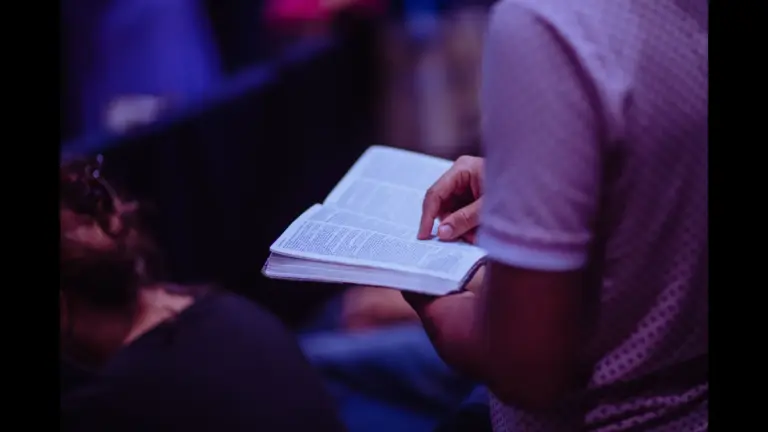
“I discipline my body like an athlete, training it to do what it should. Otherwise, I fear that after preaching to others I myself might be disqualified” (1 Corinthians 9:27, New Living Translation).
This daily devotional for men for Nov. 11, 2026, looks at 1 Corinthians 9:27 and self-discipline, a trait the apostle Paul compares to the training of an athlete preparing for competition. Paul wasn’t describing a casual habit. He was describing a deliberate, ongoing discipline of the body so it would serve him rather than control him.
What This Verse Means
Paul’s readers in Corinth didn’t need the sports metaphor explained. Their city hosted the Isthmian Games, one of ancient Greece’s major athletic festivals, so the grind of an athlete’s training was common knowledge. “Everyone who competes in the games goes into strict training,” Paul wrote two verses earlier (1 Corinthians 9:25, New International Version). The NIV puts verse 27 even more bluntly than the NLT: “No, I strike a blow to my body and make it my slave.” It’s a picture of a man whose spirit sets the terms, not his appetites.
Self-discipline in this sense sits right next to self-control, the last quality Paul names in the fruit of the Spirit (Galatians 5:22-23). The King James Version renders that word as “temperance.” Either way, it describes the ability to tell an impulse no, whether that impulse is a craving, a temper or the pull toward comfort. GotQuestions.org treats self-discipline and self-control as essentially the same thing.
Paul understood this was not a battle won once and forgotten. In Romans 7, he described his own internal struggle bluntly: “For I do not do the good I want to do, but the evil I do not want to do — this I keep on doing” (Romans 7:19, NIV). Galatians describes the same tug-of-war as a fight that doesn’t let up: “These two forces are constantly fighting each other, so you are not free to carry out your good intentions” (Galatians 5:17, NLT).
Living It Today
Modern life gives men plenty of chances to practice or neglect self-discipline. GotQuestions.org argues that in affluent societies, a lack of self-discipline feeds problems like obesity, alcoholism, drug use and debt. Those pressures haven’t gone anywhere. They simply show up in new forms, from how a man spends his evenings to how he manages money or handles stress at work.
Scripture is clear that small, consistent choices matter more than isolated grand gestures. Jesus put it this way: “If you are faithful in little things, you will be faithful in large ones. But if you are dishonest in little things, you won’t be honest with greater responsibilities” (Luke 16:10, NLT). Proverbs adds a practical warning: “Lazy people want much but get little, but those who work hard will prosper” (Proverbs 13:4, NLT). Crosswalk.com contributor Cortni Marrazzo pairs both verses in her piece on how self-discipline connects to God’s will.
This discipline is not meant to be a solo effort of willpower. Paul lists self-control as fruit of the Spirit, not fruit of a man’s grit. Jesus described his followers as branches that bear fruit only by staying connected to him: “I am the vine; you are the branches. If you remain in me and I in you, you will bear much fruit; apart from me you can do nothing” (John 15:5, NIV). Paul made the same point in Romans: “If by the Spirit you put to death the deeds of the body, you will live” (Romans 8:13, English Standard Version). Centuries earlier, God sent word to Zerubbabel, the governor leading the rebuilding of the temple: “Not by might, nor by power, but by my Spirit, says the Lord of hosts” (Zechariah 4:6, ESV).
That doesn’t mean the effort is passive. Jesus described the urgency with striking language: “Strive to enter through the narrow door” (Luke 13:24, ESV). In a Desiring God article on self-control, pastor John Piper notes that the Greek word behind “strive” is where English gets the word “agonize.” Paul used that same word for his own ministry: “For this I toil, struggling with all his energy that he powerfully works within me” (Colossians 1:29, ESV). The “his” in that verse is Christ’s. Paul gave it everything he had, but the power came from someone else.
Reflection Questions
Where in your daily routine — work, finances, relationships or habits — do you notice the pull described in Galatians 5:17, the fight between what you want to do and what you actually do?
Paul said he disciplined his body so he would not be “disqualified” after preaching to others. What is one small, consistent choice you could make this week that trains you rather than one that simply feels easier in the moment?
How might relying on the Holy Spirit’s power, rather than willpower alone, change the way you approach a habit you have struggled to control?
A Prayer for Today
Lord, I confess that my own strength runs out quickly. Thank you for the reminder that this fight is not mine to win alone. Teach me today to treat my choices with the same seriousness Paul gave his training, not out of fear, but out of love for you.
Where I am tempted toward excess or laziness, give me your Spirit’s power to choose differently. Help me see that the small decisions of this day matter, and that you are at work in me even when the effort feels hard. Thank you for not leaving me to rely on willpower alone.
Amen.
For more reflections built around Scripture, read this devotional for men on patience or this piece on humility for men. You can also explore speaking truth in love for another angle on daily faith.
More Daily Devotionals news from Total Apex Entertainment.
 Don't stop here
Every Score. Every Story. One Home.
Breaking sports, entertainment and news from across the Total Apex network, updated all day.
Get the Full Story →