
The Real History of Labor Day: How Workers Won a Holiday


You know Labor Day as the day mattresses go on sale and pools shut down for the season. But the holiday didn’t start as a farewell to summer. It started as a protest.
More than 140 years ago, a group of frustrated New York workers walked off the job in the middle of a Tuesday, marched through Lower Manhattan and basically dared their employers to do something about it. What followed was decades of strikes, a deadly standoff in Chicago and a president who needed a political favor. That’s the real story behind the history of Labor Day, and it’s a lot messier than a three-day weekend suggests.
Why Do We Celebrate Labor Day? The Short Answer
Labor Day exists because 19th-century American workers were getting crushed. Twelve-hour shifts, six or seven days a week, in conditions that would get a modern employer sued into oblivion, were standard. Child labor was common. Unions organized because nobody else was going to fix it for them, and Labor Day grew directly out of that organizing, not out of a government committee deciding workers deserved a nice long weekend.
The First Labor Day Parade Nobody Was Paid To Attend
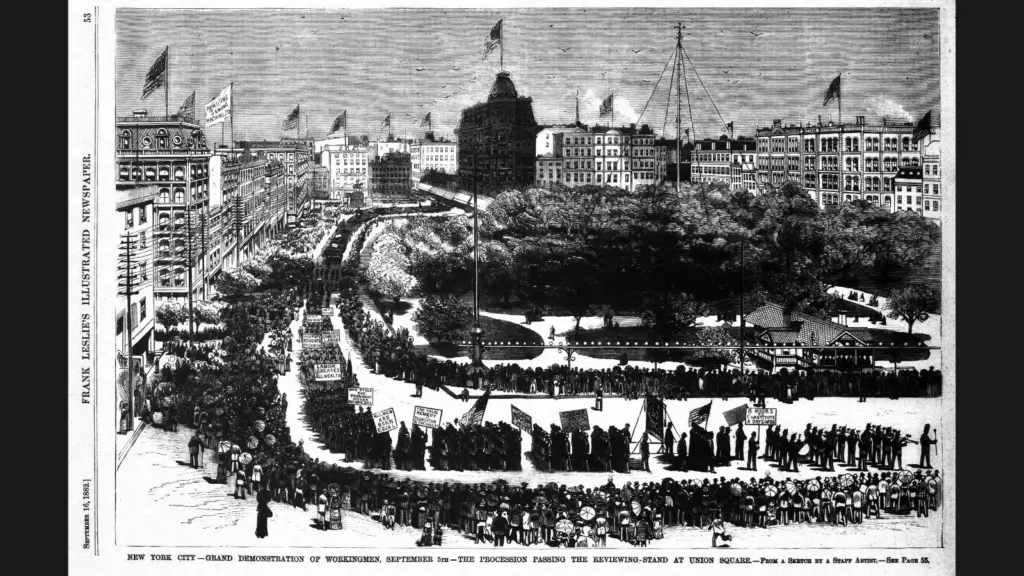
On Sept. 5, 1882, thousands of New Yorkers filled the streets for what’s considered the first Labor Day celebration, organized by the city’s Central Labor Union. Somewhere between 10,000 and 25,000 people showed up, and here’s the part that gets lost in the retelling: these workers didn’t get the day off. They took unpaid leave to march, which tells you a lot about how badly people wanted this to happen.
Marchers walked from City Hall to Union Square, and the rest of the day turned into a full-blown block party, with a picnic, concert and speeches for anyone who stuck around. It wasn’t a government-sanctioned holiday. It was workers deciding to throw their own party and inviting the city to watch.
Who Actually Founded Labor Day? It’s Complicated
Ask five historians and you’ll get two answers: Peter J. McGuire or Matthew Maguire. Similar names, similar politics, genuinely confusing legacy.
Peter J. McGuire, general secretary of the Brotherhood of Carpenters and Joiners and a co-founder of the American Federation of Labor, is often credited with proposing a “general holiday for the laboring classes” in 1882. He’s the one with a statue and a gravestone in New Jersey that literally reads “Father of Labor Day.”
But later research points to Matthew Maguire, secretary of the Central Labor Union of New York and later a machinist union leader in Paterson, New Jersey, as the one who actually proposed the holiday to the Central Labor Union. Maguire sent the invitations for that first parade and rode in the lead carriage. A Paterson newspaper even wrote after the fact that “the souvenir pen should go to Alderman Matthew Maguire,” not McGuire.
Nobody has definitively settled it, and honestly, the U.S. Department of Labor’s own history page hedges on the question. So the fair answer is: two guys with nearly identical names both deserve credit, and history just never sorted out whose name goes on the plaque.
How a Deadly Strike Turned Labor Day Into a National Holiday
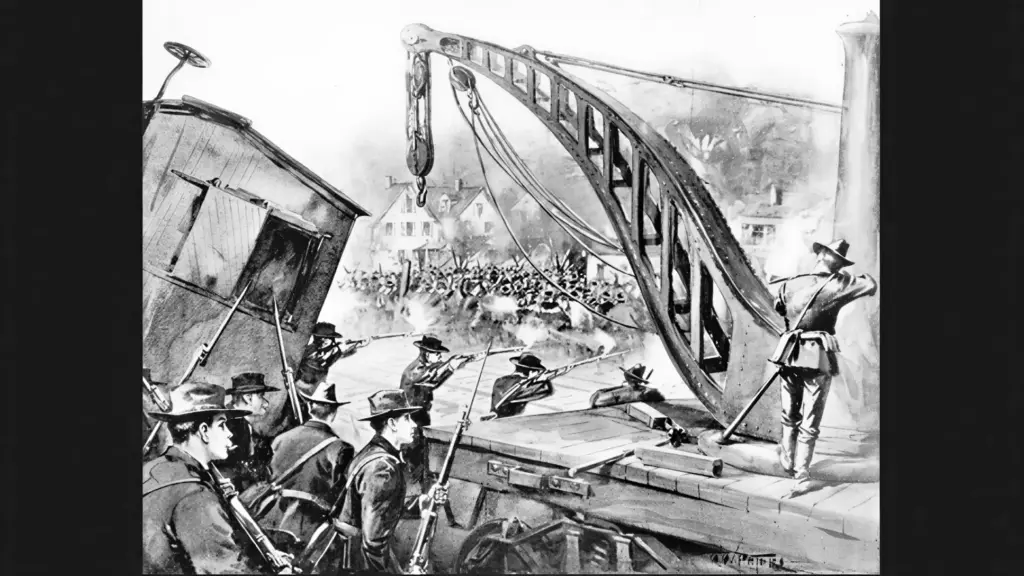
The parade caught on. By 1885, cities across multiple states were holding their own Labor Day celebrations, but it was still a patchwork of local traditions, not a federal law. That changed because of Chicago, and it did not change peacefully.
In 1894, the Pullman Palace Car Company, which manufactured railroad sleeper cars and controlled the company town its workers lived in, cut wages by roughly 25% during an economic depression without lowering rents or other charges in that same company town. Workers walked out. The American Railway Union, led by Eugene V. Debs, backed them with a national boycott of any train pulling a Pullman car, and the strike eventually pulled in somewhere between 125,000 and 250,000 railroad workers across 27 states.
Rail traffic west of Chicago basically stopped. President Grover Cleveland, under pressure and citing interference with U.S. mail, sent in federal troops. The crackdown turned violent, leaving roughly 30 people dead.
Cleveland needed to make peace with an American labor movement that now had every reason to hate him. On June 28, 1894, in the middle of that same crisis, he signed a bill making Labor Day a national holiday. It’s worth noting some accounts describe the timing slightly differently, framing it as coming right after the strike wound down, but the more heavily sourced record shows Cleveland signed the law while the Pullman conflict was still actively unfolding, as a deliberate olive branch. Either way, the message was the same: a national holiday honoring workers, born directly out of a fight the government had just used the Army to win.
From Picket Lines to Backyard Barbecues
Once Labor Day became federal law, it kept its roots in parades, speeches and demonstrations centered on workers’ rights. Over the 20th century, as union membership and influence shifted, so did the holiday’s public image. It slid from protest to tradition, then from tradition to “unofficial end of summer,” complete with mattress sales and the weird fashion rule about not wearing white after it. The politics didn’t disappear. They just got buried under charcoal smoke.
Why the History Still Matters
Every Labor Day parade or union rally you see today traces back to that unpaid march in 1882. The eight-hour workday, weekends, child labor laws and workplace safety rules weren’t handed down. They were fought for, and Labor Day is the one day a year built specifically to remember that. So next time someone calls it “just a day off,” you’ve got the receipts to explain otherwise.
FAQ Section
When was the first Labor Day celebrated?
The first Labor Day celebration took place on Tuesday, Sept. 5, 1882, in New York City, organized by the Central Labor Union.
Who is the founder of Labor Day?
Credit is disputed between Peter J. McGuire, a co-founder of the American Federation of Labor, and Matthew Maguire, secretary of the Central Labor Union of New York. Historical evidence supports both claims, and no consensus has emerged.
When did Labor Day become a federal holiday?
Congress passed the law and President Grover Cleveland signed it on June 28, 1894, making Labor Day a national holiday, during the same period as the Pullman Strike.
Why is Labor Day connected to the Pullman Strike?
The 1894 Pullman Strike, a nationwide railroad boycott sparked by wage cuts, led to a violent federal crackdown that killed roughly 30 people. Cleveland signed the Labor Day law partly to repair his relationship with the labor movement in the aftermath.
Why is Labor Day in September instead of May 1?
Labor Day traces to the original September 1882 New York parade, not to International Workers’ Day (May 1), which grew out of the 1886 Haymarket affair in Chicago. The U.S. deliberately kept its labor holiday separate from the more radical May Day tradition associated with anarchist and socialist movements in Europe.
Do workers still get the day off with pay?
Labor Day is a federal holiday, so federal employees get paid time off. Private-sector policies vary by employer, though most give employees the day off.
Written with the help of AI, reviewed and edited by Harmony Daniels.
