
Creatine: The Proven Fitness Supplement With a Neurological Edge

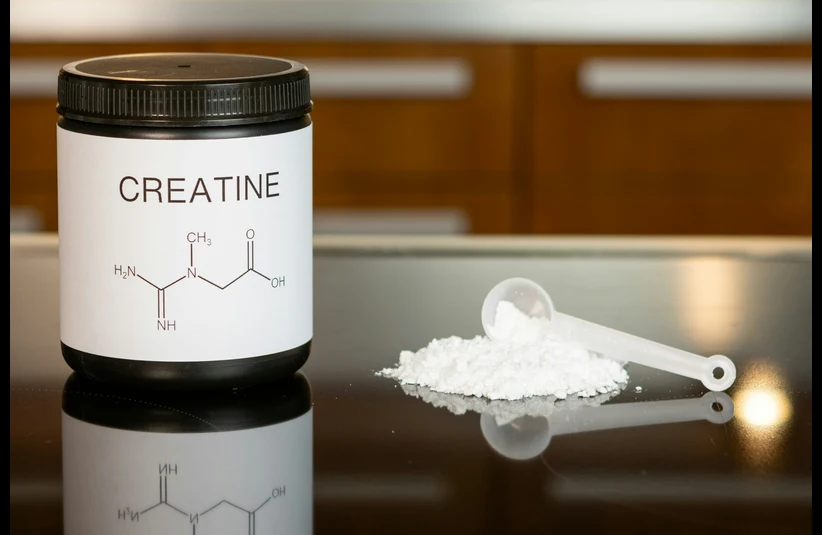
The decades-famous workout molecule creatine monohydrate has been shown to support cognitive function, along with hypertrophy. One of the more interesting recent clinical studies has shown that it also sharpens cognitive function in individuals who are sleep deprived.
It’s probably safe to say most of us are feeling life’s stresses pile up regularly between training sessions at work and in the gym. Most of us wouldn’t mind taking a medical journal-approved supplement that not only gives us an edge within the neurological spectrum, especially when we’re sleep deprived, but also provides us with significant gains in the hypertrophy department. There’s hope in this ideal supplement realm, and it has been around for a while. The wonder molecule that could lead us all to our own individual moments of cellular joy: Creatine Monohydrate.
The Old Standard of 5 Grams Daily Is Obsolete

Whatever routine you may have found for yourself that combines physical activity with sleeping well, daily nutritional intake, and consistently learning something new, there is no minimizing the obvious fact that we could all use a healthy cognitive and physical function boost.
Whether it’s at work involving new procedures, as a student who also works full time, or as an individual who has found themselves between graduating boot camp and beginning a new military career, that boost can come in the form of a widely tested and properly studied supplement supported by both neuroscience experts and physical fitness PhDs.
Based on recent lab results and clinical studies, Dr. Rhonda Patrick believes we should be taking more than the recommended 5-gram daily dose. She sat down with Dr. Peter Attia for his October 24, 2025, podcast and discussed her findings, especially why the daily dose should get bumped up to 10 grams for active individuals.
Creatine Monohydrate: New Cognitive Benefits and Protocols
These folks were given a daily dose of 20 grams, and the patients ended up showing marked cognitive improvement even when sleep-deprived, way above baseline. So that’s huge in and of itself right there, and here’s the link to the actual study. If you’ve been on a red-eye flight all night and are too stressed to sleep, or are someone who just can’t sleep when the sun is out, taking 10-20 grams of creatine and working out in the hotel gym or room, even, is going to be more beneficial than tossing and turning in bed.
This is the new science that has Stanford University neuroscientist Andrew Huberman beaming with excitement, calling creatine the supplement of 2026. She went further by explaining how it’s different than protein supplementation that directly affects protein synthesis. According to Dr. Patrick, our liver creates 1-3 grams a day, so by supplementing 10-20 grams, you’re essentially banking creatine stores and earning interest payments in the form of being able to perform more reps at a higher intensity, along with an added clarity of critical thinking skills, which never hurts.
Apparently, the musculature is a greedy son of a gun, though, because if the individual works out regularly or is an athlete, the original recommended daily dose of 5 grams isn’t enough to boost cognitive traits. It’s going to soak up whatever the liver produces, plus your 5 grams of supplementation.
“The more active, the more athletic, the more healthy cognitive and physical stressors you put on your body and mind through training and learning, the more the muscles soak up during recovery,” Dr. Rhonda Patrick stated in their Huberman podcast. Simply put, for your creatine stores to juggernaut their way through the blood-brain barrier and reap cognitive benefits, you are really going to need larger stores in your system.
Late-Night Study Sessions Can Lead to Daytime Improvement
Service members, veterans, first responders, around-the-clock medical staff, full-time students, elite athletes, we are all also typically, simultaneously raising a family and working for a paycheck. Most of us hope to avoid burnout via supplementation. We seek to implement nutritional supplements backed by medical and peer-reviewed studies to achieve the maximum hypertrophy and neurological gains from our savage workouts.
Days on end of scientific and academic research, new training sessions and protocols at the workplace; then you throw sleep loss, marital issues, financial hardships and whatever else spins out of an active individual’s daily schedule like a frothing, towering tidal wave; it can be difficult to maintain a steady course heading.
This is where creatine really shines: it provides the individual with more potential energy stored in the muscles, allowing for additional reps and elevated intensity, as well as a noticeable cognitive advantage when taking at least 10 grams, according to these conversations with the field’s leading health professionals.
