
‘Supergirl (2026)’ Review: Milly Alcock Is the Real Deal, Even When the DCU Isn’t


Milly Alcock shows up to her own movie hungover, sunglasses on, dog in tow, and absolutely zero interest in playing the hero. And honestly? She’s the most compelling Supergirl we’ve ever seen on screen. The real question is whether the movie around her can keep up — and the frustrating answer is: not quite.
“Supergirl” hits theaters June 26, and it arrives carrying a lot of weight. James Gunn’s DCU is still young, still building trust after the long, bruising Snyder era. Last year’s Superman proved the new universe had a pulse. Now, with Kara Zor-El taking center stage in a grimy, Mad Max-flavored space western, the question is whether the DCU can land a sophomore hit or if the wobble was always coming.
What Is “Supergirl” About — and Is It Worth Your Time?
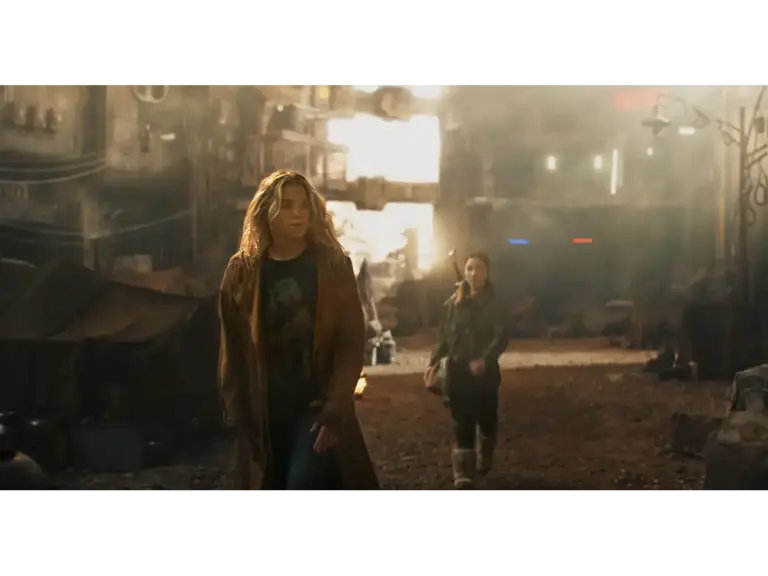
The story, adapted loosely from Tom King’s acclaimed “Supergirl: Woman of Tomorrow” comic run, drops us into Kara’s world mid-chaos. She’s celebrating her 23rd birthday on some desolate alien planet, drinking too much, ignoring calls from her cousin Clark (David Corenswet, doing the whole square-jawed Superman thing perfectly), and dragging her beloved dog Krypto along for the ride. Then a young girl named Ruthye Marye Knoll (Eve Ridley) walks into her bar demanding revenge against Krem of the Yellow Hills — a warlord played by Matthias Schoenaerts who looks like he wandered in from a post-apocalyptic biker convention. Krem poisons Krypto, giving Kara 72 hours to hunt him down and steal the antidote, and suddenly we have a plot.
It’s part “True Grit,” part “John Wick,” part cosmic road movie — and when it leans into that odd-couple energy between Kara and Ruthye, it works beautifully. The problem is that it doesn’t always lean into it.
Milly Alcock Owns This Role — Full Stop

Let’s get the most important thing out of the way: Milly Alcock is extraordinary. She plays Kara as a woman still processing the trauma of watching Krypton die, burying the grief under layers of sarcasm, bad decisions, and bar fights. It’s a sharp, lived-in performance that never tips into either unearned heroism or wallowing self-pity. Alcock makes you feel the weight of everything Kara has lost while somehow still making her infectiously fun to watch.
There’s a brash, chaotic energy to her — a quality that’s genuinely different from what we get in most superhero movies. Kara isn’t good-natured and golden like Clark. She’s prickly, impulsive, and operating on about three hours of sleep and too many drinks. The film describes her as someone who wants to be ‘good but not nice,’ and Alcock nails that distinction with every sulky look and reluctant heroic act.
Her scenes with Corenswet’s Superman have the easy warmth of two actors who genuinely enjoy playing off each other. When they’re together, the DCU feels genuinely alive in a way that suggests big things ahead for these two when “Man of Tomorrow” eventually arrives.
James Gunn’s DCU Takes a Detour Into Space Western Territory
Director Craig Gillespie (“I, Tonya,” “Cruella”) brings an unmistakable visual sensibility to the film — the alien worlds feel dirty and lived-in, the action is kinetic and punchy, and the needle-drops (Wet Leg, Halsey, among others) snap with attitude. The punk-rock aesthetic the film is going for? You can see it. You can feel it trying. Whether it fully gets there is another matter.
The film’s biggest tonal swing is its deliberate distance from the sunnier energy of James Gunn’s “Superman.” Where that film was warm and witty and genuinely big-hearted, “Supergirl” is grungy and cooler, more interested in being edgy than emotional. That’s a legitimate creative choice — but it means the film has to earn its emotional beats harder, and it doesn’t always do the work. The backstory scenes showing Krypton’s final days are the clear exception: artfully composed and genuinely heartbreaking, with David Krumholtz and Emily Beecham delivering quietly devastating performances as Kara’s parents.
Gillespie’s track record with spirited, rule-breaking female characters made him seem like a natural fit here. And in flashes, that instinct pays off. But too often the film plays it safe when it should be cutting loose.
Jason Momoa as Lobo Is Exactly What You’d Expect — and That’s Both Good and Bad

Jason Momoa arrives as Lobo — interplanetary mercenary, glam-rock menace, certified chaos agent — and immediately steals every scene he’s in. There’s no version of reality where Momoa playing an alien biker bounty hunter doesn’t work on some fundamental level, and the movie delivers on that promise. Lobo is a blast.
The problem is there isn’t nearly enough of him. Momoa shows up, makes everyone better, and then disappears for long stretches. For a film that could have used more energy in its second act, the limited use of its most electric supporting player is a real missed opportunity. You want Lobo; the movie gives you a taste.
Matthias Schoenaerts’ villain Krem is the film’s other significant casting, and here the results are more uneven. He’s menacing enough, with a face full of silver piercings and an accent that defies easy geography, but the character never quite rises above stock “Mad Max” antagonist. He serves the plot without becoming truly memorable in his own right.
What “Supergirl” Gets Right — and What Holds It Back
When the film works, it really works. The practical effects and production design are genuinely impressive — Krypton looks incredible, the alien landscapes have texture and specificity, and the action sequences (particularly an early showcase of Kara’s powers under a yellow sun) crackle with invention. Eve Ridley as Ruthye is a quiet revelation, matching Alcock beat for beat and bringing a fierce vulnerability to an underdeveloped role.
The script — by Ana Nogueira — is where things get complicated. The character work on Kara herself is strong. Everything built around her is shakier. The plot mechanics lean heavily on convenience. Some tonal choices feel miscalculated, including a looming threat of sexual violence that lands as tonally jarring and regressive against what is otherwise a promising feminist superhero story. For a franchise that has prided itself on getting the scripts right before cameras roll, this one has some uncharacteristic soft spots.
And there’s the nagging sense that the movie simply doesn’t trust itself enough. It has genuinely weird, wild instincts — an anti-hero protagonist who drinks too much, a spaghetti-western revenge structure, a genuinely strange villain — but keeps pulling punches. You want it to fully commit. Mostly, it hedges.
Where Does Supergirl Fit in the Bigger DCU Picture?
Here’s the important context: Milly Alcock is already confirmed to return in James Gunn’s “Man of Tomorrow,” and that news is the most exciting thing about this film. Because what “Supergirl” ultimately does is introduce you to a Kara Zor-El you genuinely want to spend more time with. That’s not nothing. That’s actually a lot.
The DCU is still building. “Superman” set the stage and showed real promise. “Supergirl” is an imperfect next step — more of a holding pattern than a leap forward. “Lanterns” arrives on HBO August 16, and “Clayface” drops in October, and the sense is that Gunn’s broader vision will come into sharper focus over the next year. “Supergirl” won’t be the film that defines this era, but Alcock might well be the performer who does.
The Verdict: A Star Is Born, If Not a Classic Film
“Supergirl” is a film that is very easy to like and just a little hard to love. Milly Alcock is magnetic and then some — a performer with the rare ability to make a deeply flawed character feel like someone you’d follow across the galaxy. The production design is striking, the action is fun, and the Kara-Ruthye odd-couple dynamic has real heart when the movie lets it breathe.
But “Supergirl” the movie can’t quite match Supergirl the character. The script has holes, the villain is underdeveloped, and the film too often blinks when it should be swinging. Craig Gillespie’s direction has personality and genuine style — but the final product plays it safer than its premise deserves.
Still. Milly Alcock is the real deal, and the DCU is a more interesting place with her in it. Sometimes a franchise introduction is about planting the seed rather than delivering the flower. On that front, “Supergirl” more than gets the job done.
