
‘Trapped in the War on Terror’ Review: Why Ian Lustick Says the U.S. Can’t Escape the Conflict


“Trapped in the War on Terror” is a 2006 book written by Ian Lustick. In context, the global war on terror, or GWOT, was written and published during what seemed like an interminable quagmire for the United States. The book explains how the United States got into the mess of the Global War on Terror, and how to get out of it.
In “Trapped in the War on Terror,” Lustick is highly critical of the Neoconservatives for getting the United States into the mess it was in at the time. As the title indicates, Lustick argues that the United States is trapped, the politicians created this mess, and he says, they hijacked 9/11 to get the war in Iraq they wanted. Do you think the same thing?
“Trapped in the War on Terror” Summary
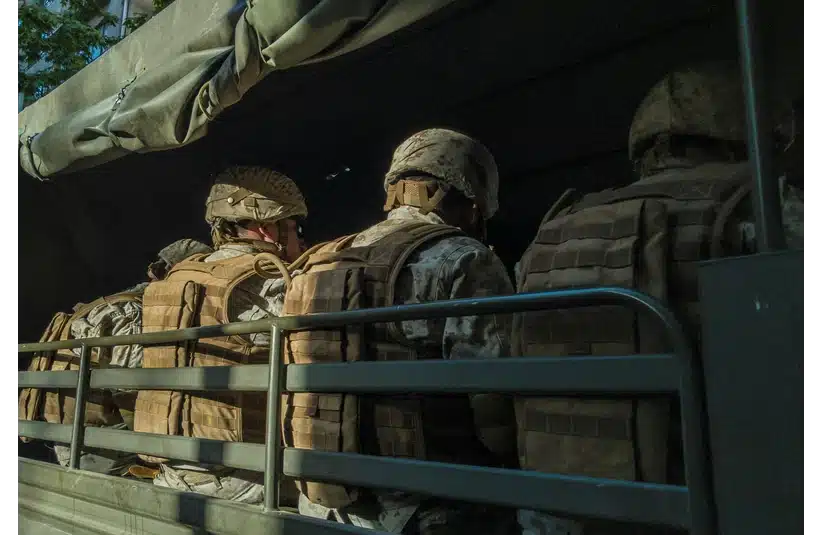
“Trapped in the War on Terror” argues that the United States was trapped because being in the war plays to every interest group. In a scathing review of politicians, Lustick says they have an incentive to exaggerate threats in order to play to the fears of interest groups, which Lustick argues they do. In the book, he presents ample evidence of that. There is a further argument that the American public was brainwashed to think the terrorist threat is much larger than it is. He mocks the color-coded Department of Homeland Security Terrorist warning levels.
The book spends a lot of time making the same argument, specifically about the war in Iraq. For instance, the public was led to believe that the Iraqis were behind the 9/11 attacks and that they had weapons of mass destruction. He argues that many elites were getting rich off the war and perpetuating it for their own interests. Readers might be turned off by this highly political argument.
Lustick offers several paths to get out of the War on Terror. He first argues that the United States needs to really understand what motivates Al-Qaeda. This should be easy to know their true objective, because they have been forthcoming about it. Second, he urges an honest public debate about the logic and appropriateness of the Global War on Terror. Third, he likens the terrorist threat to a law-enforcement problem, which was a popular argument at the time among academics. Fourth, and finally, he argues America must develop a society that is robust to terrorist attacks.
Agent-Based Models
Lustick, the author and a political scientist, cut his teeth on agent-based models, though they are not in this book. Agent-based models attempt to simulate reality. These are computer models with individual actors, or agents, imbued with a mix of characteristics that mimic the distribution of those traits in the population. The computer simulation, then, plays forth the interaction between the agents to see their future distribution of characteristics.
Why You Should Read This Book
Readers who are themselves liberals and Democrats will like the arguments made at the beginning of “Trapped in the War on Terror.” Everyone will benefit from the suggestions on how to get out of the war on terror. One should always know one’s adversary’s objectives when in conflict. All the better if the enemy is forthcoming with these objectives, as Al-Qaeda has been.
Whatever your political persuasion, this book is useful because some of the mechanisms offered by Lustick to get out of the War on Terror apply to all wars. Some readers might be turned off by the political nature of the argument at the beginning of the book. But you are urged to fight through this to get to the recommendations that apply to all wars.
