Deep in the Belizean forest, the ancient city of Caracol is undercutting a picture of Maya civilization that has held on for more than 450 years, and that traces largely to one Spanish friar. Archaeologists Arlen Chase and Diane Chase of the University of Houston have been digging there for four decades, and their work is the focus of a feature in the November 2026 issue of Smithsonian magazine. Their son, Adrian Chase, is also an archaeologist and a postdoctoral fellow at Tulane University‘s Middle American Research Institute.
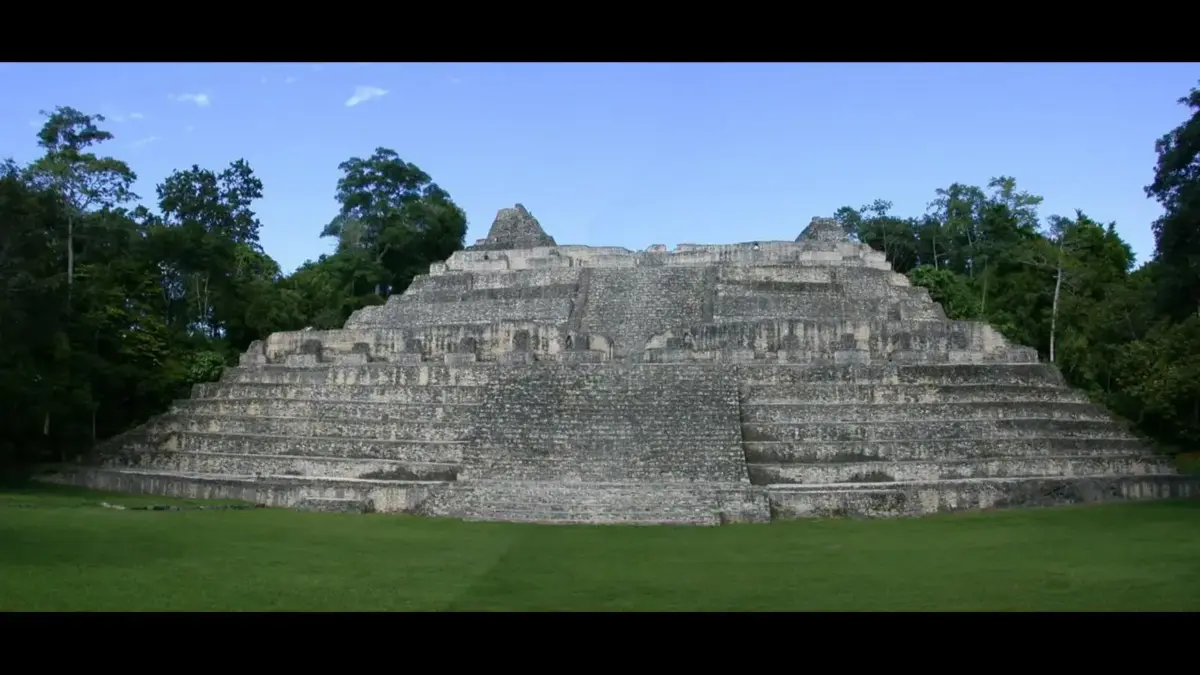
Caracol is the largest Maya archaeological site in Belize. It is anchored by Caana, a 141-foot-high “sky palace” that remains the tallest human-made structure in the country. Caana was abandoned around the year 900, as the Maya Classic era was drawing to a close.
What Caracol Reveals About Maya Civilization
For fans of ancient history, the stakes go well beyond one city. At its height between 600 and 700, Caracol was home to at least 100,000 people, according to the Chases, with homes spread across about 77 square miles and linked to the city center by causeways. Farm terraces sat between the households, so the city and its food supply shared the same landscape.
Evidence from ordinary neighborhoods has reshaped the picture too. “We’ve known for some time that they had something like a middle class, which contradicts the long held notion that Maya society consisted of elites and commoners,” Diane Chase said in an earlier University of Central Florida release. Adrian Chase’s research points the same way, finding reservoirs in residential areas rather than a water supply controlled from the top.
That doesn’t make Caracol a classless society. Bone analysis shows elites ate a richer “palace” diet than working people did. But the gradations are what the older model left out.
The Friar Behind The Old Picture
That older model owes much to Friar Diego de Landa, a 16th-century Franciscan missionary in the Yucatán. His writings shaped most scholarly assumptions about the Maya for centuries, Smithsonian magazine reports.
The problem is what else he did. At Maní in July 1562, de Landa burned 27 hieroglyphic rolls and some 5,000 “idols,” according to William Gates, the American scholar who translated de Landa into English in 1937. Only four Maya books are known to survive today.
De Landa later described the burning himself, in an account written around 1566 after he was sent back to Spain to stand trial over his campaign. “These people also used certain characters or letters, with which they wrote in their books about the antiquities and their sciences … We found a great number of books in these letters, and since they contained nothing but superstitions and falsehoods of the devil we burned them all, which they took most grievously, and which gave them great pain,” he wrote.
Gates saw both sides of that legacy. He credited de Landa as the root of “ninety-nine percent of what we today know of the Mayas,” then added that the friar “burned ninety-nine times as much knowledge of Maya history and sciences as he has given us in his book.”
Where The Two-Class Model Came From
With so many Maya books gone, de Landa’s account carried outsized weight. Smithsonian magazine calls his portrayal false: a poor rural population under the thumb of a cruel elite based in grand cities.
Arlen Chase argues that picture says more about Spain than about the Maya. “You had knights and nobles in castles, and everyone else was scattered throughout the countryside,” he told the magazine. “The Spaniards slapped that two-class model onto the Maya.”
A Founding King’s Tomb
Caracol’s biggest recent headline came from a single burial. During the 2025 field season, the Chases found a tomb they believe belonged to Te K’ab Chaak, who took the throne in 331 and founded the city’s royal dynasty. “We’re 99% sure we found Te K’ab Chaak,” Arlen Chase told Smithsonian magazine.
Archaeology magazine named the find one of its Top 10 Discoveries of 2025. A replica of the tomb and its contents was also the main feature at Belize’s 20th Archaeological Symposium in July 2026.
What Comes Next
The Chases aren’t finished. Arlen Chase hopes to find the burial place of the ruler who succeeded Te K’ab Chaak, according to Smithsonian magazine. Each new find adds to the evidence against a two-class picture that rests, in large part, on the word of the man who burned the books.
More Cultural History news from Total Apex Entertainment.
 Don't stop here
Every Score. Every Story. One Home.
Breaking sports, entertainment and news from across the Total Apex network, updated all day.
Get the Full Story →