Part 1 examined how automotive safety evolved from innovations like the three-point seatbelt, crumple zones, and tire pressure monitoring systems into more complex territory. Electronic stability control, airbags, and Corporate Average Fuel Economy (CAFE) regulations each bring perceived benefits while raising questions about how far standards should go.
The next step looks at backup cameras, automatic emergency braking, in-cabin monitoring, proposed speeding enforcement technology, and in-vehicle advertising. Some of these developments may offer safety benefits, but others raise a question: how much privacy and control are we willing to trade away?
Automakers and regulators may focus on emissions and the notion of safety, but what technology can do isn’t the only question worth asking. Will these systems keep drivers safer while leaving them in charge, or will they gradually take more of that control out of their hands?
Safety Becomes Electronic: Not Elective
The backup camera
(Buick’s 1956 Centurion concept; US 6,690,268)
Buick experimented with rear-view cameras in 1956, but practical deployment had to wait for compact digital cameras, image sensors, and in-vehicle display systems. US 6,690,268 represents one of the display-integration patents associated with that transition.
Rear-visibility systems became mandatory on new light vehicles in the United States in 2018 under FMVSS 111. The standard includes performance requirements for how quickly the image must appear when reverse gear is selected. What began as a convenience feature is now a federally required safety system on every new passenger vehicle under 10,000 pounds sold in the United States.
The in-cabin camera
(Section 24220; Ford patent US 12,639,979 B2 and pending application US20260095520)
The 2021 Infrastructure Investment and Jobs Act directs NHTSA to write a rule requiring “advanced drunk and impaired driving prevention technology” in new passenger vehicles that can prevent or limit operation when impairment is detected. The agency missed its November 2024 deadline, and as of this fall the rule has not advanced past the pre-proposal stage.
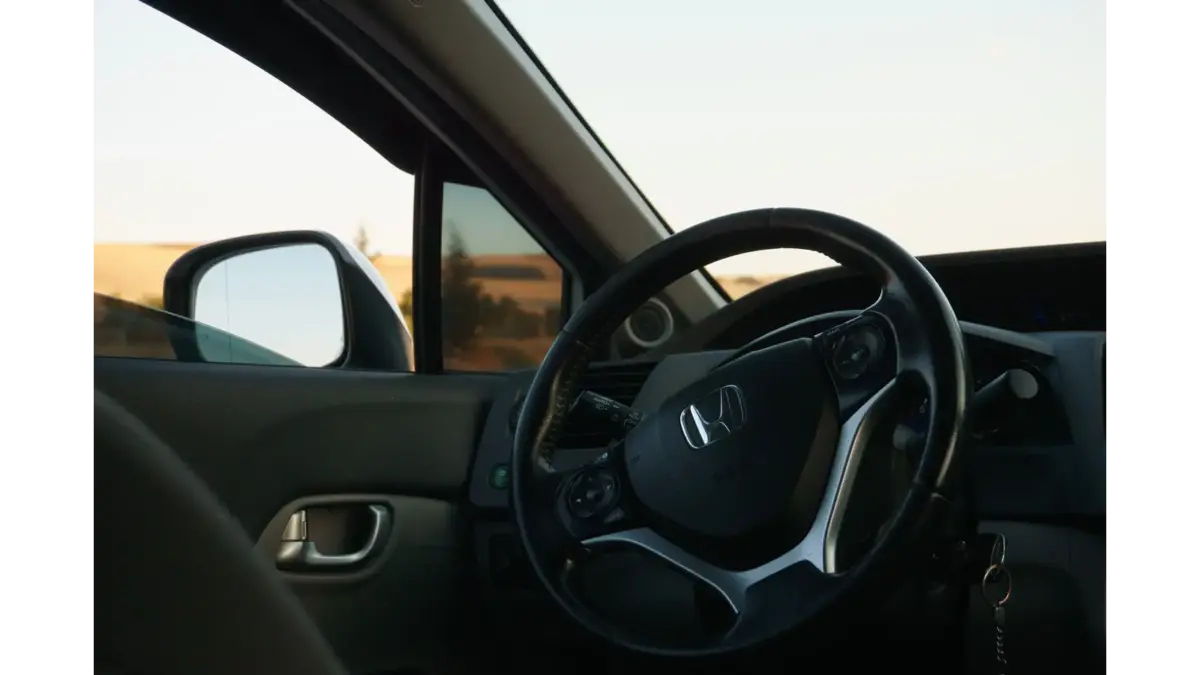
The widely cited 2027 date isn’t written into law. The statute gives automakers two to three years to comply after a final rule is issued, but no final rule exists yet. NHTSA told Congress in Feb. 2026 that the technology is not yet reliable enough. Europe has already implemented a similar requirement, and since July 7, 2026, every new car registered in the EU must have an advanced driver-distraction warning system. Current implementations use infrared cameras to monitor the driver’s head and eyes. Supporters say the EU-mandated system is designed to warn rather than record. Other in-cab monitoring systems used in commercial fleets can capture and retain reviewable footage for coaching and incident investigations.
The patent describes in-cabin scanning of faces, fingerprints and irises, with a security-event database that can check against law enforcement databases for active warrants or missing persons reports. Ford has told reporters that the in-cabin cameras seek to assist police and security vehicles. The application, published in April 2026, describes machine-learned lip reading. Unlike the granted patent, the lip-reading filing remains a published application. Together, the filings illustrate the kinds of capabilities automakers are exploring.
Now picture it going wrong. A woman in labor is racing to the hospital, and the camera reads panic as impairment. A driver who has just been hit in a crash is shaking and in shock, and the car will not move. Someone is fleeing a predator, and the vehicle decides they are too distraught to drive. As Rep. Harriet Hageman has asked, what happens when the technology strands people in a more dangerous position? A camera that decides a frightened driver cannot move the car is not a safety feature. It is a locked door with a face scanner on it.
Automatic emergency braking (FMVSS 127)
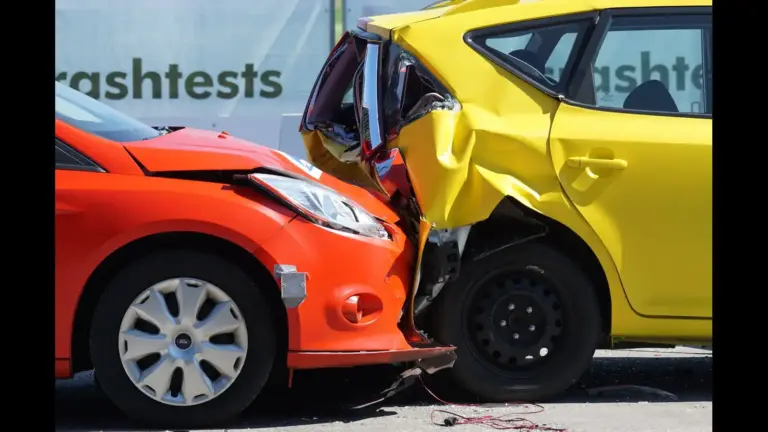
By September 1, 2029, every new passenger car and light truck up to 10,000 pounds must be able to brake on its own to avoid a collision, including with pedestrians. The standard requires AEB systems to avoid or mitigate collisions with a vehicle ahead at test speeds up to 62 mph. NHTSA projects it will save at least 360 lives and prevent more than 24,000 injuries every year. Those projected benefits are real, but the rule remains in flux. The court challenge is on hold, and in March 2026 the Department of Transportation said it was preparing a proposal that would give automakers two more years.
But consider a scenario that critics have raised. Something darts into the road, and the brakes on that car are even slightly worn. The software can only brake, and it cannot make worn pads stop sooner. A driver with sharp reflexes might have swerved the other way and spared both the animal in the road and the people in the car. Some critics call it ‘AI braking,’ though the rule simply calls it AEB. This system is the first mandate that makes the car, not the driver, the final judge of the next half-second.
The Watch List
These are patent applications and mandates future car buyers should watch. Patent filings are not product roadmaps, and do not necessarily predict what will reach production. Still, they offer a glimpse of the ideas automakers are exploring.
Ford, “Systems and Methods for Detecting Speeding Violations” (patent application). Filed January 12, 2023, and published July 18, 2024, it describes a system that can photograph a suspected speeding vehicle, generate a record, and transmit it to designated law-enforcement or connected systems. Ford says the idea is specific to law enforcement vehicles such as the Police Interceptor.
Ford, “In-Vehicle Advertisement Presentation” (patent application). Published in 2024, it proposes software that uses location and other data, with the potential to listen to occupants, to tailor advertising. Ford has said it does not monitor in-cabin conversations or have plans for in-vehicle advertisements.
The EU’s speed assistance and black-box rules (regulations). Intelligent speed assistance is mandatory on all new EU cars, phased in since 2022 and applied to every new car since 2024. It warns drivers who exceed the limit, and while it can be switched off, it turns back on at the start of every drive. Event data recorders, the car’s black box, are part of the same package.
The Road Ahead
The open road used to be the last place a person could be alone with their thoughts. The long drive, the empty highway at dusk, the hour when the radio goes to static and a problem finally comes into focus: that was freedom with an engine. Now picture the 2030 version. The car checks your face before it will start. It watches you reverse. It tells you how fast to go and decides when you have braked too late.
By then, drivers will be treated as if they got their licenses out of a Cracker Jack box: a prize inside, no skill required. The seatbelt asked one thing of us: buckle up. The new stack asks for our faces, our reflexes, and our trust. The lives saved by these systems are real. The question is not whether safety matters, but who remains in charge. The difference between a seatbelt and a kill switch is whether you get to say no.
Volvo opened Bohlin’s patent to the world. That decision represents the idea that the best safety inventions make us safer while leaving drivers feeling free. The question for 2030 is whether anyone building the next generation of vehicle safety patents and technologies remembers that.
 Don't stop here
Every Score. Every Story. One Home.
Breaking sports, entertainment and news from across the Total Apex network, updated all day.
Get the Full Story →