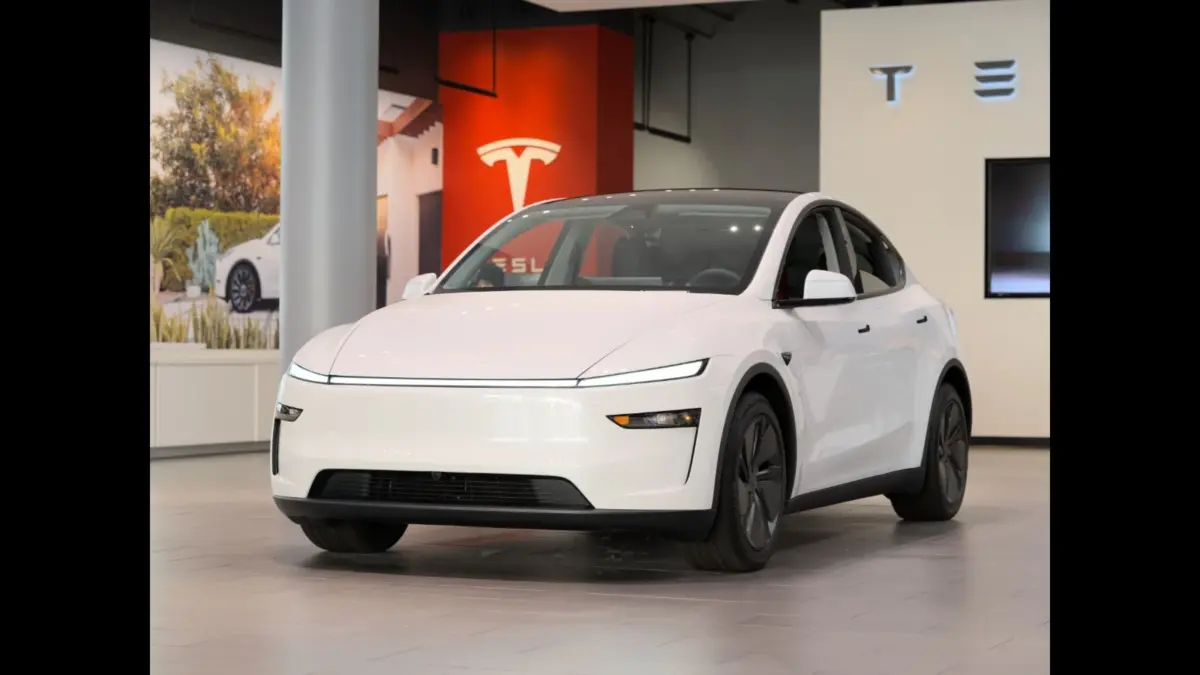
Tesla’s Model Y has sold more than 262,000 units in 2026 so far, outselling the next 24 best-selling electric vehicle models in the United States combined, according to data cited by USA Today. The figures underscore Tesla EV sales dominance even as the company’s own volume is shrinking compared with a year ago.
The Model Y and the Model 3 together accounted for more than 35% of all EV sales in the country through 2026, and Tesla as a brand made up more than half of all EV sales in the third quarter, USA Today reported. Those numbers arrive against a backdrop of a broader EV market that just posted its best quarter in a year.
The Numbers Behind Tesla EV Sales Dominance
- Tesla Model Y: more than 262,000 units sold in 2026 so far, more than the next 24 models combined
- Tesla Model Y and Model 3 combined: more than 35% of all 2026 EV sales
- Tesla brand: more than half of all U.S. EV sales in the third quarter of 2026
- Tesla’s EV volume: down 20% year over year in the third quarter
- EV share of all new car sales: 6.4% in the third quarter of 2026
- At least 10 EV models topped 10,000 units sold in 2026
Those figures come from data referenced in the USA Today report and cover 2026 sales activity through the third quarter, with the quarterly period marking the strongest EV sales stretch in a year.
What The Figures Mean For Competition
Tesla’s share of the EV market is large enough that the brand alone outsold every other automaker’s EV lineup combined in the third quarter. That single fact explains most of Tesla’s position atop the sales charts without requiring any other explanation.
But the 20% year-over-year drop in Tesla’s own EV volume complicates the picture. A brand can lead a shrinking segment of a shrinking pie and still be losing ground relative to where it stood a year earlier. Tesla’s dominance in share terms does not erase the decline in its own raw sales numbers.
Meanwhile, Toyota, Lexus, Rivian and Subaru gained momentum with higher 2026 EV sales even as nearly every other automaker reported lower year-over-year EV volume in the third quarter, according to USA Today. That split, a handful of brands growing while most shrink, suggests the EV market is consolidating around fewer winners rather than expanding broadly.
At least 10 EV models crossed the 10,000-unit mark in 2026, which shows buyers still have real alternatives to Tesla even if none approaches the Model Y’s volume.
Context: Tax Credits, Gas Prices And A Reset Market
The EV market entered 2026 under considerable uncertainty after President Donald Trump ended the $7,500 federal EV tax credit, a subsidy that had existed since the end of George W. Bush’s administration. California has tried to soften that loss for some buyers with a $3,750 rebate for first-time EV purchasers, though that program only applies in one state.
At the same time, gas prices climbed above $4 a gallon in 2026 following the start of the U.S.-Iran war, a shift that appears to have pushed some buyers back toward electric options.
Stephanie Valdez Streaty, director of Industry Insights at Cox Automotive, said the rebound reflects both factors. “What we’re seeing now is a market finding its footing again,” Streaty said, according to USA Today. “And high pump prices are likely helping as well. With gas prices well above $4 a gallon, electric vehicles look better than ever.”
Streaty also pointed to the broader trend line. “The third quarter was the highest EV sales volume in a year, and improvement through 2026 suggests the reset phase is largely behind us,” she said. “The next stage of growth will be driven by great products, competitive pricing, and automakers that continue to give consumers compelling reasons to make the switch.”
What It Means For Shoppers And What Comes Next
For consumers cross-shopping EVs, the sales data signals that Tesla still sets the pace on volume and price competition, but it is no longer the only brand gaining traction. Shoppers weighing range and features against sticker price have more viable options than the headline numbers alone suggest, particularly among the automakers Cox Automotive flagged as gaining ground.
Streaty’s comments point to pricing and product quality, not tax incentives, as the next factors that will determine whether EV sales keep climbing without the federal credit in place. Cox Automotive’s next quarterly EV sales snapshot will show whether the third quarter’s rebound continues or whether Tesla’s year-over-year decline deepens further.
More Lifestyle news from Total Apex Entertainment.
 Don't stop here
Every Score. Every Story. One Home.
Breaking sports, entertainment and news from across the Total Apex network, updated all day.
Get the Full Story →
Don't stop here
Every Score. Every Story. One Home.
Breaking sports, entertainment and news from across the Total Apex network, updated all day.
Get the Full Story →