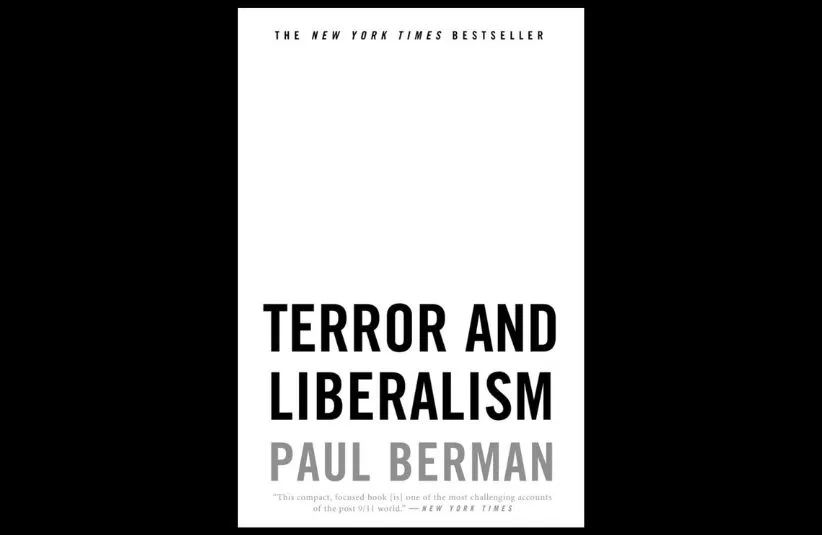
“Terror and Liberalism” is a 2003 book written by Paul Berman that was a New York Times Bestseller. Berman is a political philosopher, and the book’s main argument is that Al-Qaeda is ideologically similar to the fascist movements of the early twentieth century.
In “Terror and Liberalism,” Berman hypothesizes that the spread of democracy in the Arab world is a fundamentally just cause, though it’s highly difficult and involves a long struggle. He also thinks that democracy in the Arab World may be incompatible. He writes in support of President George W. Bush’s foreign policies while also faulting President Bush for credibility problems and incompetence. Did you think President Bush, the 43rd, was incompetent?
“Terror and Liberalism” Summary

Berman begins “Terror and Liberalism” with a discussion of the September 11, 2001 attacks. He then details the ideology of Sayyid Qutb, an influential figure behind the development of Islamism. Then he moves on to a general overview of Islamic extremist violence. He helpfully reminds readers that there were attacks that preceded the World Trade Center attacks of September 11.
Berman finds links from European intellectuals to these emerging political theologies. This is very surprising and shows the value of good scholarship. The author then argues against the two popular views on Al Qaeda. Namely, that the success of Islamic extremist groups is either, first, the lashing out of the socially oppressed or, second, a distant and alien product of a Muslim people with anti-Western religious beliefs and values.
Interestingly, Berman discusses the origins of fascism in Europe as the culmination of its ideals in the Holocaust and World War Two. He thinks the growth of Islamic extremist thinking, and he states that the Islamic extremists’ dislike of liberal, pluralistic democracies is an outgrowth of that past trend. He uses the term “Muslim totalitarianism” as a summary of his thinking, linking late twentieth-century Islamic Extremeists with the fascist movements in Twenieth-century Europe.
In terms of Islamic terrorists, in “Terror and Liberalism,” the author uses the writings of Albert Camus and agrees that “the sinister excites” and the “transgressions of suicide or murder arouse a thrill that sometimes takes an overtly sexual form.” One of the side benefits of this book is that the reader gets obscure philosophy explained.
Berman’s discussion of militant attacks on the West as an emotional anti-rationalism that is primal and hard to understand. He says we must stay strong against Islamic extremists. He argues in support of assertive, preemptive war as well as active police efforts to root out the radicals within Muslim states and in Western countries. So, basically, the aggressive foreign policy of the George W. Bush administration.
The author hypothesizes that the spread of democracy in the Arab world is difficult and involves a struggle; it is a fundamentally just cause. He writes in support of President George W. Bush’s foreign policies. But he also condemns the President for credibility problems and incompetence. This comes from how Berman thinks the Christian religious fundamentalism of Bush’s domestic agenda undermines Bush’s claims to support liberal democracy against Islamic fundamentalism.
Why You Should Read This Book
The reason to read this book is to understand a complex political-philosophical argument about the underlying linkages between the ideologies that underlay both the Islamic Extremism of the late twentieth century and the fascist movements of the early twentieth century. A secondary reason to read this book is to read an argument in favor of the so-called Global War on Terror. Most of what was written at the time was highly critical of the war.
Parting Shots
“Terror and Liberalism” was a popular book in 2003. It was a New York Times bestseller. The book presents a complex argument. However, it is worth a read because of its cogent argument. Also, it is noteworthy that the book largely supports President George W. Bush and his aggressive foreign policy.
 Don't stop here
Every Score. Every Story. One Home.
Breaking sports, entertainment and news from across the Total Apex network, updated all day.
Get the Full Story →
Don't stop here
Every Score. Every Story. One Home.
Breaking sports, entertainment and news from across the Total Apex network, updated all day.
Get the Full Story →