A sport built around a 28-ounce iron ball and a stretch of open asphalt is finding new life far from its Irish origins. Irish road bowling has spread to small towns from West Virginia to Montana, where local players are picking up a game long tied to the backroads of Armagh and Cork counties, according to Smithsonian Magazine.
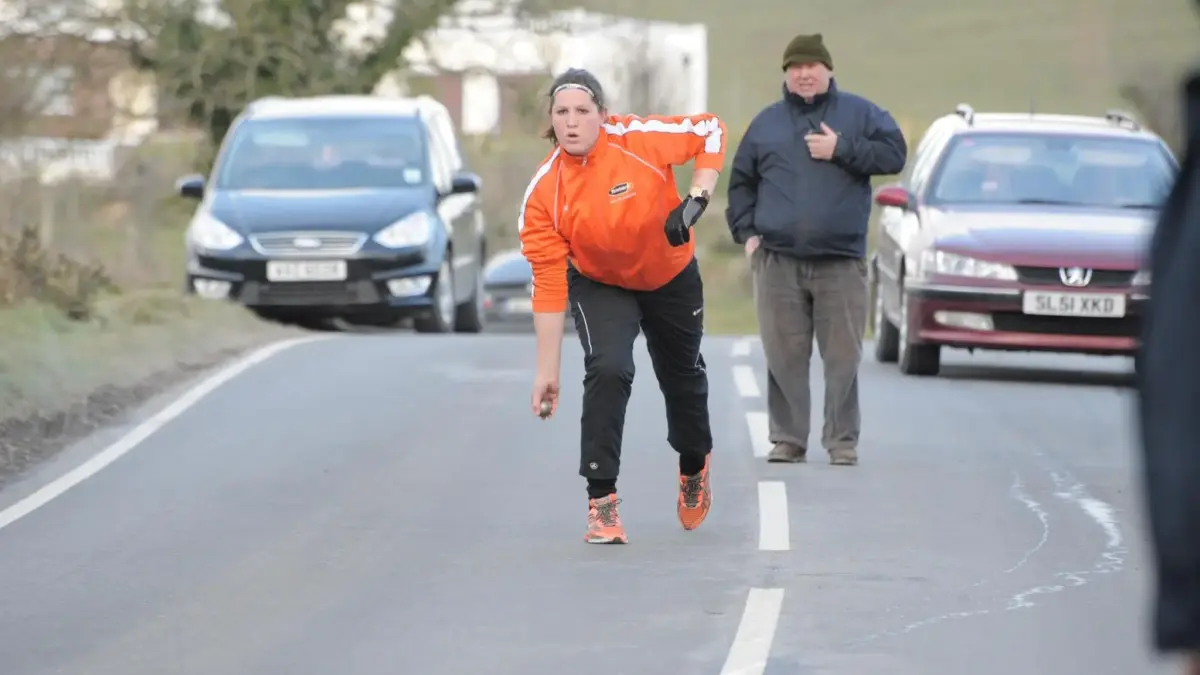
The idea is simple, even if the execution isn’t. Players take a running start and fling the iron ball, called a bowl or a bullet, underhand down a public road. The goal is to finish a course that can stretch from 1 to 2.5 miles in as few throws as possible, which makes the scoring a lot like golf. Spectators crowd the roadside, and plenty of them have money riding on the result.
How Irish Road Bowling Works in North America
Stateside players aren’t just bowling for fun. North American competition is organized into five grades that sort players by skill, and the top three grades send representatives to the All-Ireland series, Smithsonian Magazine reported.
That pipeline has already paid off. Fergal Carr, an Armagh native who bowls with Bol Chumann New York and works as a vice president of product at Peacock, won the junior C title at the 2026 All-Ireland series in Aughagower, County Mayo, beating London’s Pádraig Nugent in the final, according to the Irish Road Bowling Association. The trip marked Carr’s first All-Ireland since 2009 and added to titles he won in 1998 and 2009.
Celebrity Attention and a National Broadcast
The sport landed in front of a national audience in December 2025, when former Philadelphia Eagles center Jason Kelce joined the Boston Road Bowling club for an ESPN feature. The Boston club, founded in 1996, was the first road bowling team in the United States, Smithsonian Magazine reported.
Kelce summed up the afternoon in blunt terms on Instagram.
“I played two matches, lost one, won one, and struggled to understand at least 50% of what was said,” Kelce wrote, according to IrishCentral.
Ireland, West Virginia, and the Irish Spring Festival
In West Virginia, the game has a literal home base. David Powell, who is of Scots-Irish descent, first discovered road bowling on television. During a 1994 trip to Cork with his mother, he bought a handful of bowls at a hardware store. A year later, he introduced the sport at the Irish Spring Festival in Ireland, West Virginia, the tiny Lewis County community his mother came from, according to Smithsonian Magazine.
That first festival match grew into West Virginia Irish Road Bowling, and Powell has since become the go-to adviser whenever a new club starts up elsewhere in the country. This year, he became the first inductee into the North American Road Bowling Hall of Fame. His path, stumbling onto the game through a broadcast and then building a local scene from scratch, mirrors how the sport has taken hold in other pockets of the country far from any Irish county road.
Butte, Montana’s Irish Roots Run Deep
Butte, Montana, carries a reputation as the most Irish town in America. Many of its Irish residents descended from a wave of emigration that began during the Great Famine of 1845 to 1852 and swelled as Butte’s copper mines boomed in the late 1800s. By 1900, about a quarter of the city’s population was Irish, Smithsonian Magazine reported.
That history still shapes the town through people like Johnny Gallogly, better known as “Irish Johnny.” An Armagh native who has lived in the U.S. since the 1990s, Gallogly moved to Butte in 2020 and is now co-owner and “director of blarney” at Shawn O’Donnell’s American Grill and Irish Pub, according to Smithsonian Magazine.
Gallogly told the magazine that Butte’s Irish celebrations, road bowling included, now draw players from other parts of Montana as well as Wyoming, the Dakotas and Washington.
What’s Next for Irish Road Bowling Stateside
With a five-grade ladder feeding players to the All-Ireland series and a new Hall of Fame honoring its pioneers, road bowling in America has moved past novelty status. For towns like Ireland, West Virginia, and Butte, Montana, the sport works as a direct link to Irish heritage, carried forward by transplants and newcomers who found the game through local festivals, television broadcasts and family history.
 Don't stop here
Every Score. Every Story. One Home.
Breaking sports, entertainment and news from across the Total Apex network, updated all day.
Get the Full Story →