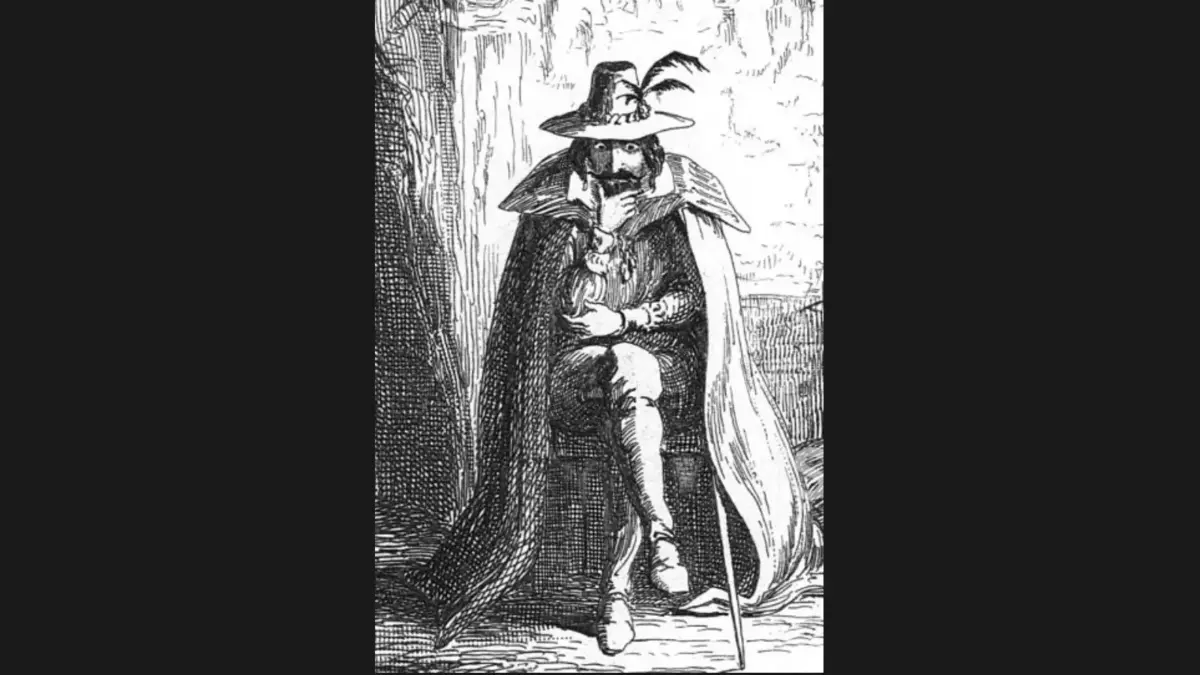
As Guy Fawkes Night arrives Nov. 5, a York historian is pointing to a death that came 19 years before the Gunpowder Plot. Margaret Clitherow, a butcher’s wife and Catholic convert, was crushed to death in the city in 1586, and her execution may have helped shape the man later caught guarding the gunpowder beneath Parliament.
Neither the BBC report that revived the question nor the Bar Convent museum behind the latest research cites a document in which Fawkes mentions her. The case is circumstantial, but it runs through his school, his friends and his hometown.
A death that shocked York
Clitherow was charged with harboring Catholic priests, a capital offense in Elizabeth I’s England. She refused to enter a plea. A trial could have forced her children and friends to testify or left them exposed to torture, so she denied the court one, the BBC reported.
The penalty for that refusal was death by pressing. She was killed March 25, 1586, in the tollbooth on York’s Ouse Bridge, crushed beneath heavy weights with a sharp stone under her back.
“Even by the standards of that time, this is said to have been a really brutal execution,” Hannah Thomas of the Bar Convent told the BBC. “This is a time where people go to executions for sport. They go to watch public hangings like we would go to a football match.”
Thomas said a young Fawkes and his fellow conspirators may have seen it happen.
Why 1586 may have mattered to Fawkes
Fawkes was born in York in 1570 and raised in a Protestant household before converting to Catholicism. He was about 16 when Clitherow died and had attended St Peter’s School in the city. Leeds historian Gillian Waters told the BBC that 1586 would have been a critical year for him.
“Well certainly Guy Fawkes would have been aware of Margaret Clitherow because she is executed on Good Friday,” Waters said. March 25 was Good Friday that year on the calendar used by Catholic Europe, though not on the older one England still followed.
Jeremy Walker, headmaster at St Peter’s, made a broader point about the city itself, saying it would have helped shape “his personality, his outlook on life and his beliefs.”
Thomas said persecution like Clitherow’s could have affected many young people who watched others punished for protecting their religious communities.
“They would have had a lot of empathy and sympathy and perhaps thinking that could have been our mother,” she said.
The friends who carried the same memories
Clitherow’s wasn’t the only death in York that year to touch Fawkes’ circle. Francis Ingleby, one of the priests she was accused of sheltering, was hanged, drawn and quartered at the city’s Knavesmire on June 3, 1586.
The BBC identifies Ingleby as a relative of Christopher and John Wright, brothers who attended school with Fawkes and later joined the plot. Their mother had also been jailed at times for her faith.
New research from the Bar Convent suggests the ties may run closer still. Thomas told Independent Catholic News that a priest’s vestment in the convent’s collection likely belonged to Robert Middleton, who she believes was Clitherow’s nephew. Middleton was the same age as Fawkes, lived in York and was executed for being a priest in 1601.
Clitherow’s son and stepson were close in age to Fawkes and the Wrights as well. Thomas argues that boys from York’s small underground Catholic community would almost certainly have known one another, raising the possibility that the future plotters knew Clitherow personally.
“We believe this could very well be the case,” she said.
How the plot ended for Fawkes and the Wrights
The conspiracy, led by Robert Catesby, unraveled after a warning letter reached a member of Parliament. Fawkes was found in the cellar beneath the House of Lords with 36 barrels of gunpowder in the early hours of Nov. 5, 1605.
He was tortured and sentenced to death, and he died at Westminster on Jan. 31, 1606, when his neck broke at the gallows. The Wright brothers fled and were killed Nov. 8, 1605, in a shootout at Holbeche House in Staffordshire.
What remains of Clitherow
Clitherow’s body was thrown onto a rubbish heap, the BBC reported. Catholic friends later recovered it and buried her in secret, keeping a hand as a relic. It remains in a glass case at the Bar Convent.
Pope Paul VI canonized her in 1970 as one of the Forty Martyrs of England and Wales.
Whether her death moved Fawkes remains a question historians can’t settle. No one has shown he was in the crowd, and the links are matters of age, place and friendship rather than anything he left in writing. The Bar Convent’s exhibition on the question, “The Gunpowder Plot: York’s Untold Story,” runs through Dec. 5, while the hand itself stays where it has been kept, in the city where Fawkes grew up.
 Don't stop here
Every Score. Every Story. One Home.
Breaking sports, entertainment and news from across the Total Apex network, updated all day.
Get the Full Story →