
Exploring Endix Expo: An Overdue Overview – Top 7 Unforgettable Indie Games Landing On My Wishlist

Endix Expo feels like a hybrid between PSO2:NGS‑style modular housing and Second Life’s stitched‑together vertical sims. Every booth in Endix’s indie showcase is a self‑contained micro‑environment built from different pieces. The way you actually move through the space, with rooms streaming in as you cross thresholds and challenges perched on rooftops, is pure SL energy.
And nothing sells that better than the Alienware jump challenge sitting at the edge of one of the tallest buildings there like some developer‑placed skybox toy. This part of Endix was a rooftop flex that basically says if you can see it, you can climb it. I did not succeed, but many did, and I tip my hat to their superior platforming skills!
Sea of Rifts
Sea of Rifts didn’t need a hands‑on demo to make an impression. The booth did the work the moment you stepped onto the wooden platform surrounded by cold blue water and tall ice formations. It felt like a world already split open, and the mood settled in before you even looked at the screens.
A holographic display floated in front of you with a view of an ironclad ship moving through a warped underwater structure. The UI flickered like a radar trying to read a place that refused to stay still. It worked as a preview, but it also hinted at a world that was unstable in ways you could feel more than explain.
The ship deck beside you filled in the rest with its mix of steam fittings, rotating turrets, and a giant purple tentacle rising out of the water. The side panels talked about hiring a crew and showed the strange weapons you could bolt onto your ship, while a small arcade machine sat off to the right like a sailor’s distraction. Everything in the booth pointed to the same idea, a shattered ocean full of impossible things that you are meant to sail straight into.
This indie game is staying on my radar, and I plan to tackle the demo soon.
Under a Rock
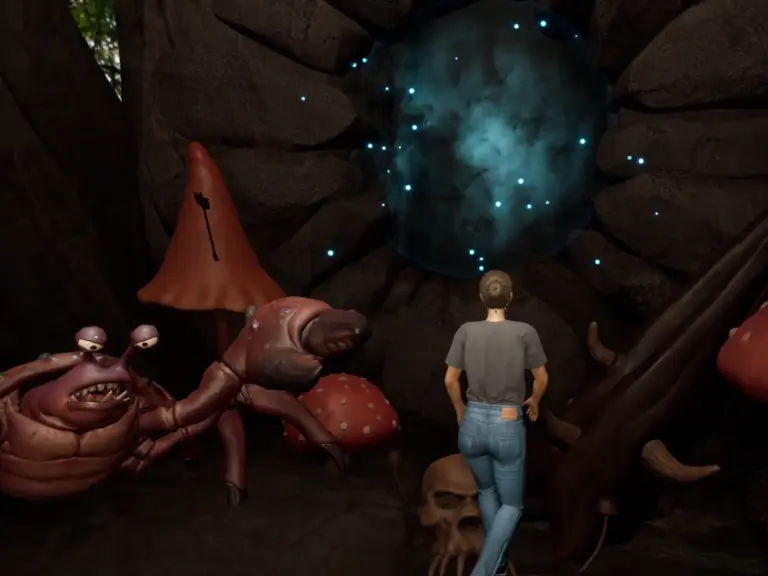
Under a Rock sat right next to Sea of Rifts, and I walked in expecting to bounce out after a quick look. The room had this warm, overgrown energy that made it impossible to rush past, so I stayed long enough to watch the trailer. It felt like a world that wanted you to explore it rather than survive it, even though survival is the whole point, and it had the kind of charm you only get from an indie game built with personality.
The setup shows your character waking up after a storm knocks your hot air balloon out of the sky, which already gives it more personality than most survival intros. It leans into a playful, almost “The Croods”‑like tone as you tumble into a lush valley that Guy dreamily calls “Tomorrow,” a place that feels untouched and full of strange life. The booth’s bright plants, oversized creatures, and glowing portal made that tone easy to read even without touching the demo.
The trailer also hints at how much freedom the game gives you, especially with the option to explore with up to ten friends. The creatures around you look like they can be tamed or captured to help you gather resources or escape trouble, which puts it somewhere between Ark and PalWorld without copying either one. By the time I stepped out from Under a Rock’s booth, the skepticism was gone and the charm had already settled in.
Akatori
Akatori was the next booth I peeked into during my walk through the Endix floors, and even though it was small, the aesthetic stopped me in my tracks. The warm reds, the lantern glow, and the temple‑style framing gave the room a sense of calm that made me stay longer than I expected. I’m not usually drawn to platformers or metroidvanias, but the space had a quiet charm that made me curious.
The trailer pulled me in with its mix of clean movement and playful combat, and I found myself watching the whole thing with a mix of curiosity and bemusement. The fights had this lighthearted energy that made the world feel alive, and the art style carried a confidence that was hard to ignore. It was the kind of presentation that makes you forget your usual preferences for a moment.
By the time I checked the Steam page, I already knew it was going on my wishlist. I may never be good enough to finish a game like this, but the booth made me want to try anyway. Sometimes a game wins you over with pure personality, and Akatori did that without even asking for it.
Hela
Hela had one of the smallest booths on the floor, but the size worked in its favor. The soft lighting, the warm colors, and the little nature diorama created a space that felt calm the moment you stepped inside. It had this quiet charm that made you slow down and take it in.
The trailer showed a world built around cooperation and curiosity, with animals helping the mice learn and navigate the wider landscape. It was cute without being sugary, and it carried a sense of contentment that is hard to describe but easy to feel. The booth leaned into that mood with its gentle forest scene and the way everything seemed to breathe at its own pace.
I think my love for animals made the whole thing hit a little harder, because the idea of working alongside them in a world this peaceful felt instantly appealing. I added it to my wishlist before I even realized I had made the decision. Something about its blissfully peaceful video and presence within Endix just proved it was worth digging into further.
Haunted Bloodlines
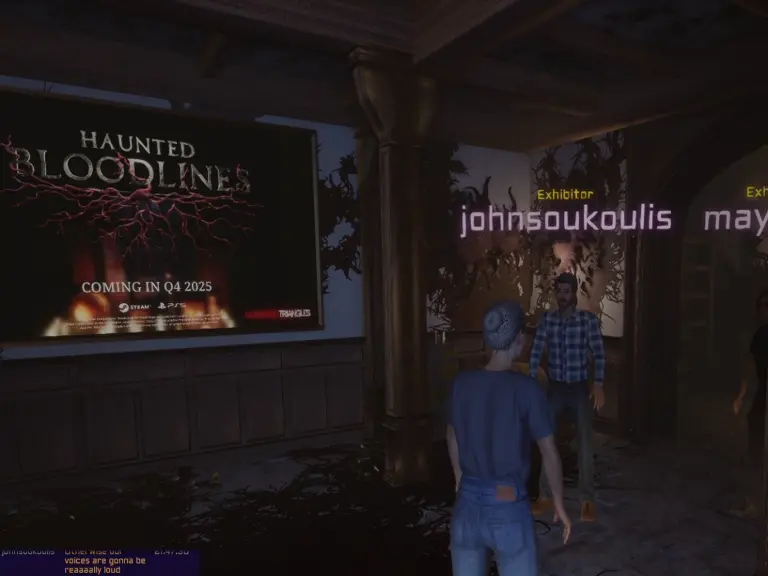
Haunted Bloodlines was the first booth that broke the mood of the floors below it, and the shift hit fast. The Victorian interior felt heavy the moment you walked in, almost like the air changed as you crossed the threshold. It wasn’t cute or cozy, it was the kind of space that feeds on childhood fears and makes you feel watched even when nothing is happening.
The trailer added to that feeling with its pulse pounding music and the way each scene lingered just long enough to build tension. It reminded me of walking into a house in Resident Evil where every shadow feels like it might move if you look away. I found myself ducking when a monster lunged on the screen even though it was only a video, which says a lot about how well the booth sold its atmosphere.
I grew up loving horror, so the psychological edge of the showcase pulled me in right away. The room made it clear that this game wants to unsettle you rather than rely on cheap scares. Getting to talk to the indie team later only made the experience better.
Rabbit’s Tale
Rabbit’s Tale was one of the indie booths on the top floor, and the art style made me stop right away. The colors were soft and inviting, and the character designs had this storybook quality that felt warm even before the trailer started. It was the kind of dazzle that sets the tone before you know what the game is about.
The combat looked simple but expressive, and the movement had a light bounce that made the world feel alive. What really caught me was the story about sealing the portals to bring back the rabbit’s family, which hit harder than I expected. There was something honest about it, and I found myself relating to that sense of wanting to fix what was broken.
It was listed as a metroidvania, which is not a genre I usually excel at, but the tone made me think I could brute force my way through it if I had to. The trailer made the journey feel worth the effort, even if I end up struggling with the tougher parts. Even if I don’t manage to succeed, it feels worth trying.
Dreampainters
The Frozen District of Endix’s showcase had a very different energy from the rest of the expo, and the Dreampainters climb was the part that stuck with me the most. The world looked like an old black-and-white film at first, which made the yellow gel splashes stand out as the only real color in the space. Those splashes became the key to bounding up the platforms, and they gave the whole climb a strange dreamlike logic that made the challenge feel playful and unsettling at the same time.
Some of the jumps relied on the gel, but a lot of it came down to proper timing and old-fashioned platforming. It was harder than it looked, and I found myself retrying sections while trying to figure out the rhythm of the space. The climb had this quiet pull that made me want to keep going even when I slipped, and that persistence became part of the experience.
Reaching the top was the moment everything shifted. The world snapped back into full color, and the sudden brightness made the whole climb feel like a transition from one reality to another. The sense of triumph that hit when I finally stood with the others at the top was indescribable, and it made Dreampainters an easy pick among the indie highlights on my list.
