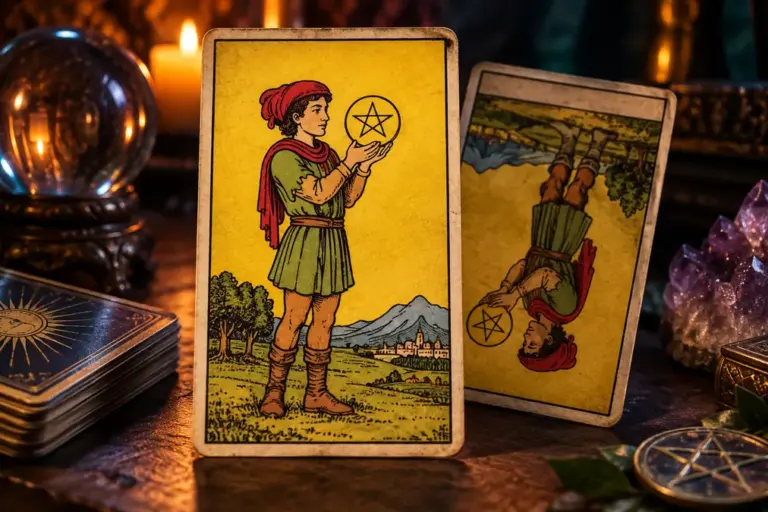

A three-card tarot reading for beginners is one of the simplest ways to start working with a deck without feeling overwhelmed. This guide is for anyone who owns a deck, knows a little about the cards, and wants a quick, approachable method for getting an answer to a specific question. Three-card spreads work well when a reader has limited time or a straightforward question in mind, according to Biddy Tarot, and the format stays simple enough to use daily while still offering direct guidance.
What A Three-Card Tarot Reading Is
A three-card tarot reading for beginners involves drawing three cards from a shuffled deck and laying them in a row, with each position assigned a specific meaning. Despite its simplicity, this format can provide clear and direct guidance for many types of situations, according to Biddy Tarot. The structure gives a beginner enough information to work with without the complexity of a larger spread like the Celtic Cross.
Once the three cards are laid out, the reader looks at them together rather than one at a time. The goal is to notice whether the cards form a connected story or cohesive message, or whether each card seems to stand on its own, according to Biddy Tarot.
What You Need To Begin
Getting started with tarot does not require much equipment. A standard 78-card tarot deck is the only essential tool, and a notebook or journal is useful for recording what comes up during a reading. Writing down insights after a three-card reading is part of the recommended practice, according to Biddy Tarot, since patterns and recurring themes become easier to spot over time.
A quiet space helps too, but it is not required. Some readers like to light a candle or set a specific intention before shuffling, though the core requirements are simply the deck, a clear question, and a place to jot down notes.
First Steps: Shuffling And Asking A Question
Start by deciding on the question or situation you want insight into. A focused question tends to produce a more useful reading than a vague one. Shuffle the deck while holding that question in mind, then draw three cards and lay them left to right in the order they were pulled.
Each position in the spread carries its own meaning, so the order of the draw matters. The first card drawn goes in the first position, the second card in the second position, and so on, building the three-part structure one card at a time.
Basic Spread Layouts To Try
Several three-card layouts work well for different kinds of questions, according to Biddy Tarot. Beginners can start with whichever one fits the question they want answered:
- Past, Present, Future: tracks how a situation has developed and where it may be heading.
- Current Situation, Obstacle, Advice: useful when facing a specific challenge and looking for a way through it.
- Situation, Action, Outcome: helps weigh a decision by showing what action might lead to.
- The Nature of Your Problem, The Cause, The Solution: good for digging into the root of a recurring issue.
- What Will Help You, What Will Hinder You, Your Unrealized Potential: useful for personal growth questions.
Each of these spreads uses the same three-card format but changes what each position represents, which shifts the kind of insight the reading offers.
Reading The Cards As A Connected Story
The most important shift for a beginner is moving from reading cards in isolation to reading them as a group. Lay the three cards in a row and look at them as a whole before examining any single card closely. Ask whether the three cards seem to build on each other and tell one cohesive story, or whether they seem to describe three separate, unrelated ideas, according to Biddy Tarot.
This step is where a three-card tarot reading for beginners starts to feel less like memorizing definitions and more like interpretation. Two cards that seem unrelated on their own can take on new meaning once placed next to a third card in a specific position. Treating the spread as a short narrative, rather than three isolated flashcards, is what turns a basic card pull into a real reading.
Common Mistakes Beginners Make
New readers often treat each card as a standalone fortune rather than part of a sequence, which can lead to a confusing or contradictory reading. Skipping the step of writing down the reading afterward is another common habit to avoid, since Biddy Tarot recommends recording insights as part of the practice. Without notes, it becomes harder to track whether a reading’s guidance played out or to notice patterns across multiple readings over time.
Rushing through the shuffle without a clear question in mind is another pitfall. A vague or unfocused question tends to produce a vague answer, so taking a moment to settle on exactly what you want to know is worth the extra few seconds.
Where To Go Next
Once the three-card format feels comfortable, beginners can explore individual card meanings in more depth to strengthen their interpretations within a spread. Learning the symbolism behind specific cards, such as the The Fool or the Death card, helps when one of them lands in a three-card spread.
For a closer look at the specific three-position layout and additional tips, see this breakdown of a three-card tarot spread. Readers curious about how tarot connects to other practices can also look into how astrology and tarot work together, according to Tarot.com, or check a tarot card of the day feature for a quick single-card practice between full readings.
 Don't stop here
Every Score. Every Story. One Home.
Breaking sports, entertainment and news from across the Total Apex network, updated all day.
Get the Full Story →
Don't stop here
Every Score. Every Story. One Home.
Breaking sports, entertainment and news from across the Total Apex network, updated all day.
Get the Full Story →