
What is a Birth Chart? 3 Essential Parts, Made Easy

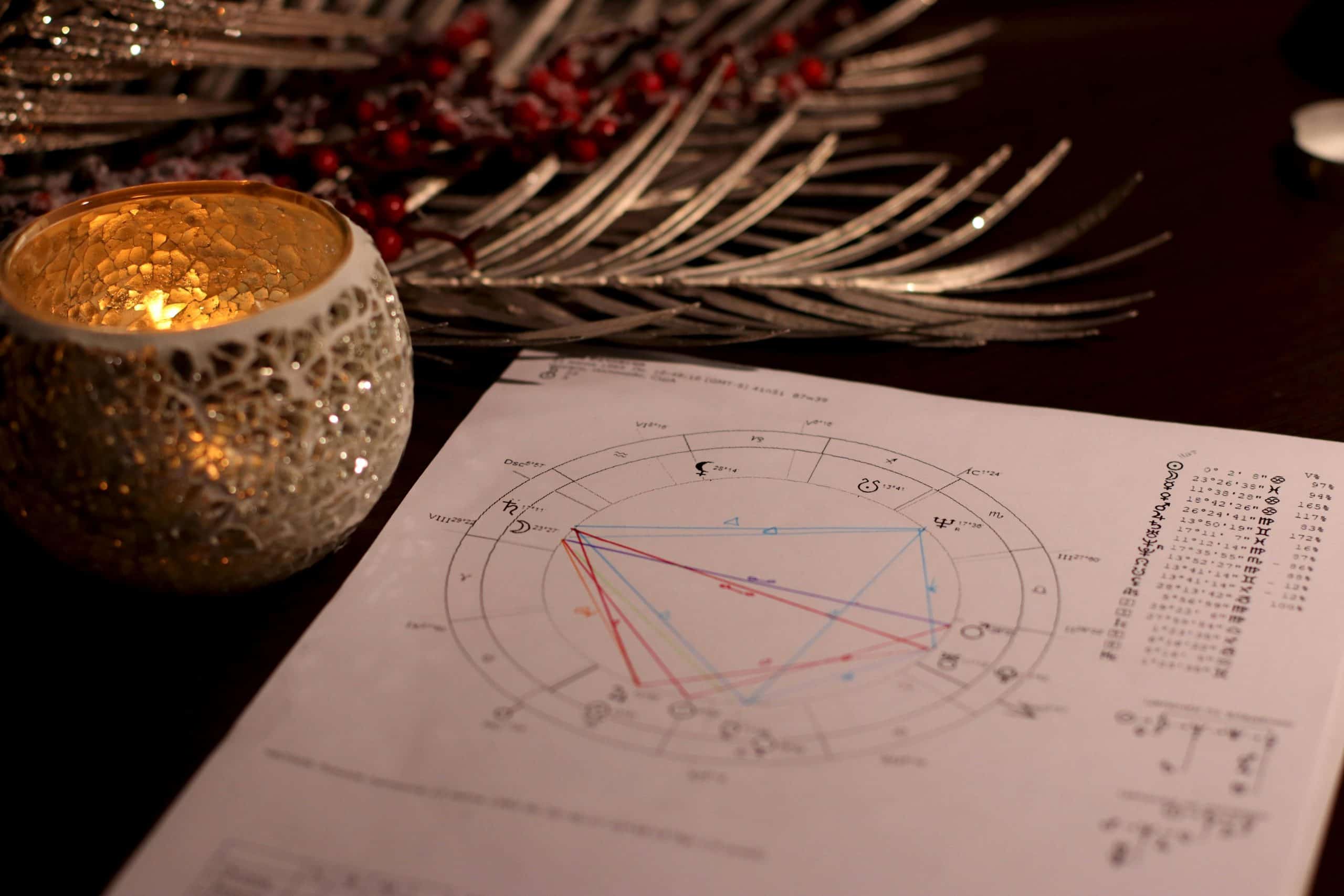
What is a birth chart? Also called a natal chart, it’s a map of where the sun, moon and planets were positioned in the sky at the exact moment and place you were born. In astrology, this snapshot is treated as a personal blueprint, offering symbolic insight into your personality, emotional patterns and potential. It’s the foundation for everything else in astrology, and once you understand its basic parts, you can start reading your own.
What is a birth chart, exactly?
Picture the sky as a giant circle wrapped around the Earth, divided into 12 segments. A birth chart freezes that circle at the moment of your first breath and records exactly where the Sun, the Moon and each planet fell within it. Astrologers call this a “natal” chart because it’s cast for your birth (the word comes from the Latin “natalis,” meaning “of birth”).
Encyclopedia Britannica describes this kind of chart, known historically as a horoscope, as a map of the heavens showing the positions of the sun, moon and planets, along with the ascendant and midheaven, at a specific moment in time.
Unlike a horoscope column, which offers general predictions for a whole zodiac sign, a birth chart is unique to you. Two people born on the same day in different cities, or even a few hours apart in the same city, will have noticeably different charts.
What you need to cast a birth chart
To generate an accurate natal chart, you need three pieces of information:
- Date of birth: This determines your sun sign and the general positions of the slower-moving planets.
- Exact time of birth: This is essential. It determines your rising sign and the house placements of every planet, both of which shift throughout the day.
- Place of birth: The city (or as specific a location as possible) is used to calculate the correct time zone and geographic coordinates for the chart.
If you don’t know your exact birth time, check your birth certificate or ask family members who might remember. Some astrologers can work with an approximate time, but the house placements and rising sign won’t be fully reliable without it.
The main parts of a birth chart
A finished birth chart looks like a circular wheel filled with symbols, lines and numbers. It can look overwhelming at first, but it breaks down into three core building blocks: planets, signs and houses.
The planets
In astrology, each planet represents a different kind of energy or life theme. The Sun, Moon, Mercury, Venus, Mars, Jupiter, Saturn, Uranus, Neptune, and Pluto all appear somewhere in your chart. For example, the Sun is traditionally associated with core identity, the Moon with emotional instincts and Venus with love and values.
The zodiac signs
Each planet in your chart sits within one of the 12 zodiac signs, from Aries through Pisces. The sign a planet occupies is thought to color how that planet’s energy shows up. Venus in a fire sign, for instance, might express affection differently than Venus in a water sign.
The houses
The chart wheel is divided into 12 houses, each corresponding to a different area of life, such as home, communication, career or relationships. The house a planet falls into is traditionally thought to show where in your life that planet’s themes tend to play out.
The big three: Sun, Moon and Rising
Most beginners start by learning their “big three”:
- Sun sign: Associated with your core identity and how you shine.
- Moon sign: Associated with your inner emotional world and instinctive reactions.
- Rising sign (ascendant): Associated with the persona you present to the world and how others tend to perceive you at first.
Because the rising sign depends entirely on your exact birth time, it’s the piece most affected by an inaccurate birth time.
How to start reading your chart
Once you have your chart generated, whether through an astrologer or a reputable chart-casting tool, here’s a simple order for reading it as a beginner:
- Find your sun, moon and rising signs first. These three give you the broad outline of your chart before you dig into details.
- Look at where each planet sits by sign. Ask what that planet’s traditional theme is, then consider how that particular sign might flavor it.
- Note which house each planet falls in. This tells you which life area that planet’s energy is thought to be most active in.
- Look for clusters. If several planets fall in the same sign or house, that area of the chart is often considered especially emphasized.
Reading a birth chart is a skill that develops over time, much like learning to read a new language. Start with the big three, get comfortable with them and layer in more detail as you go.
What a birth chart can (and can’t) tell you
In astrology, a birth chart is treated as a tool for self-reflection and symbolic insight, not a fixed script. Many astrologers describe it as showing tendencies and potentials rather than certainties, leaving room for personal choice and growth.
A birth chart is also not a fortune-telling device for predicting specific life events. Traditionally, it’s used to better understand personality patterns, emotional needs and areas of natural strength, offering a framework for reflection rather than a fixed prediction of what will happen.
Frequently asked questions
What is a birth chart used for?
Most people use it as a starting point for self-reflection. Astrologers read it to describe personality tendencies, emotional needs and the life areas a person may focus on, rather than to forecast specific events.
Do I need my exact birth time to get an accurate chart?
Yes, for full accuracy. Your birth time determines your rising sign and the house placement of every planet, both of which change throughout the day. Without it, an astrologer can still discuss your sun and moon signs, but the rest of the chart will be approximate.
What’s the difference between a birth chart and a horoscope?
A horoscope column is a general forecast written for everyone who shares the same sun sign, usually based on current planetary movements. A birth chart is personal and fixed, calculated for your specific birth date, time and place, and reflects the whole sky, not just your sun sign.
Can two people born on the same day have different birth charts?
Yes. Even a few hours’ difference in birth time, or being born in a different city, can change the rising sign and house placements significantly. This is why birth charts are considered individual even among people who share a birthday.
Where can I find my birth chart?
Many astrology websites and apps let you generate a free natal chart by entering your birth date, time and place. For a deeper interpretation, you can also consult a professional astrologer who can walk you through the chart’s details in person.
Astrology and tarot are shared for entertainment, reflection and personal insight.
