
Monet Hidden Figures: 4 Stunning Finds Under ‘The Luncheon’

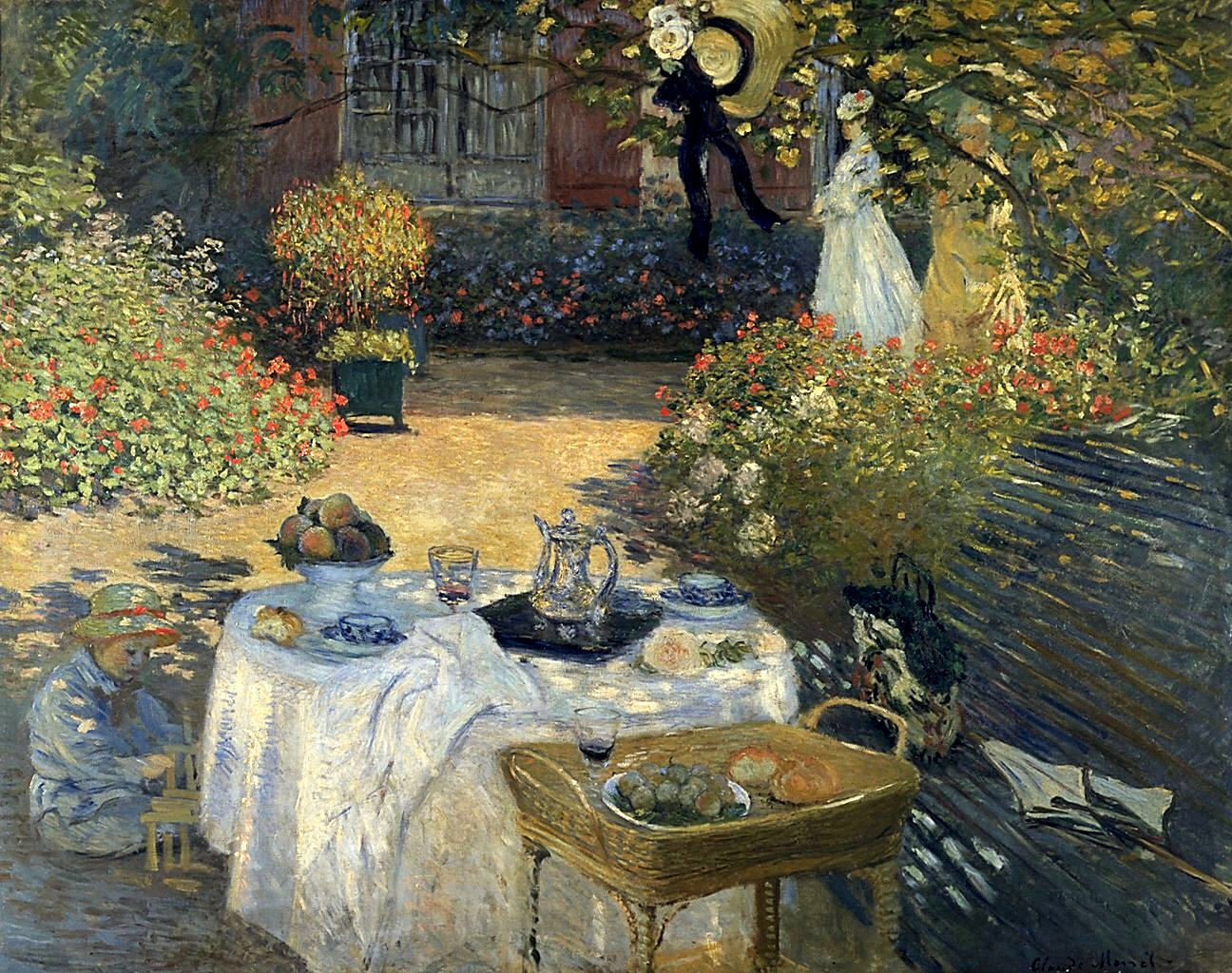
Claude Monet’s reputation rests partly on the myth of spontaneous brushwork — the Impressionist genius capturing light in the moment. But the Monet hidden figures now uncovered in one of his most intimate paintings suggest something messier and more deliberate: an artist constantly reworking, covering up and repositioning figures to get a composition exactly right.
Reported by ARTnews, technical analysis of “The Luncheon” (1873) at France’s C2RMF conservation lab has found several figures buried beneath the painting’s final surface.
X-rays, followed by transmitted infrared photography, confirmed two women once seated on the bench, which Monet later replaced with a basket and a folded parasol. The scans also turned up a figure in the window and, at the left edge, a bearded man in a hat standing in profile. Monet later painted over him with expanded flower beds.
What the science reveals about the Monet hidden figures
Johanna Salvant, a conservation scientist and Ph.D. researcher on the C2RMF team that analyzed the painting, described how much else moved: “The table itself was altered. As for the trolley in front of it, with some bread and a wine glass, it was shifted to the right; and the fruit plate moved accordingly.”
Even Jean changed. In an earlier state, Salvant said, the boy had his back almost turned to the viewer; in the final version, he faces out in three-quarter view.
The discovery comes as the Musée d’Orsay and Musée de l’Orangerie mark the centennial of Monet’s 1926 death with exhibitions, making this technical deep-dive particularly timely. The painting now hangs in the Orsay’s show “I Spend My Life Painting.”
Monet made “The Luncheon” during the years he rented a house in Argenteuil, a Paris suburb on the Seine, and it belongs to a group of garden scenes he painted there. The large canvas, more than 6 feet wide, shows the scene just after a meal. Young Jean, Monet’s son, sits at the left edge, and Camille, the painter’s first wife, strolls in the background with a companion. But the Monet hidden figures show he was thinking differently about the composition as he worked.
The self-portrait question
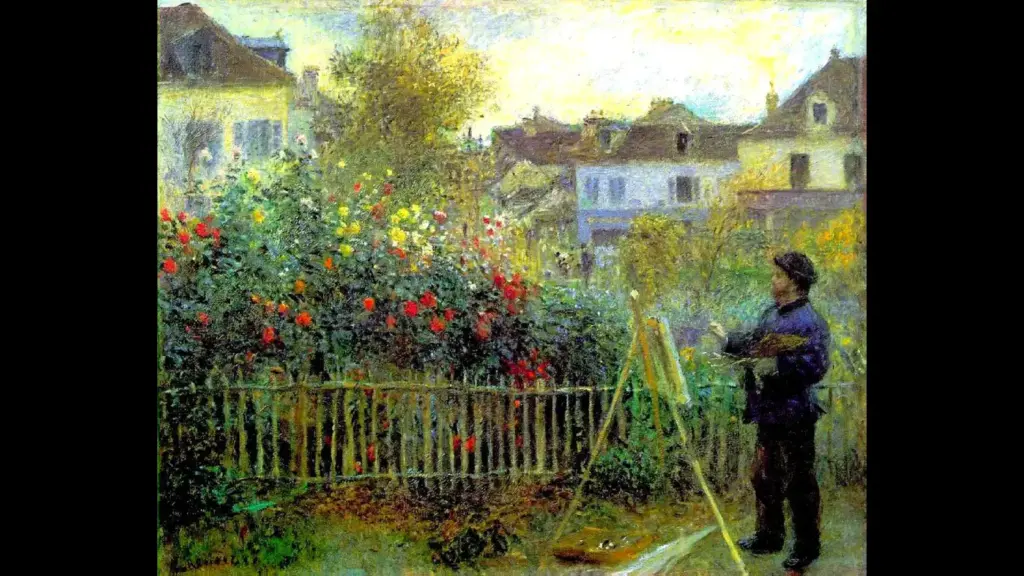
The most tantalizing possibility among the Monet hidden figures: that bearded man could be Monet himself. Pierre-Auguste Renoir’s “Monet Painting in His Garden at Argenteuil” (1873), now at the Wadsworth Atheneum Museum of Art in Hartford, Connecticut, shows Monet in a soft hat, though facing the other way.
“Monet scarcely ever painted himself, so if this is indeed a self-representation, it would be a major discovery,” Orsay paintings curator Anne Robbins told ARTnews. Still, Robbins called the identification a hypothesis, and she said the research is ongoing.
The timing of these revisions may say something about Monet’s intentions. When he showed “The Luncheon” at the Second Impressionist Exhibition in 1876, he titled it “Decorative Panel.” He was short on money and looking for patrons at the time.
“Covering the figures may have contributed to making the painting more neutral and adaptable as a decorative object,” Robbins said.
This wasn’t the only Monet canvas transformed through revision. “The Magpie” (1868-1869) first showed a row of three houses, one of which gave way to the bird. And analysis showed Monet stitched “Women in the Garden” (1866) back together after the canvas was damaged.
What comes next
“The Luncheon” is scheduled for restoration beginning in late 2027. That process may reveal additional layers or shed more light on the Monet hidden figures — whether they were abandoned ideas or deliberate choices shaped by patronage and exhibition context.
For now, the painting offers a corrective: Impressionism wasn’t purely instinctive. Monet calculated, revised, strategized. And he may have buried his own image in the process. For more art and culture coverage, visit our Special Interests section.
Source: ARTnews
Featured image: Photo: Claude Monet, “The Luncheon” (1873) / Wikimedia Commons (public domain)
