
Cadillac 452 V16 History: Production, Design, and the Legacy of America’s First V16 Car

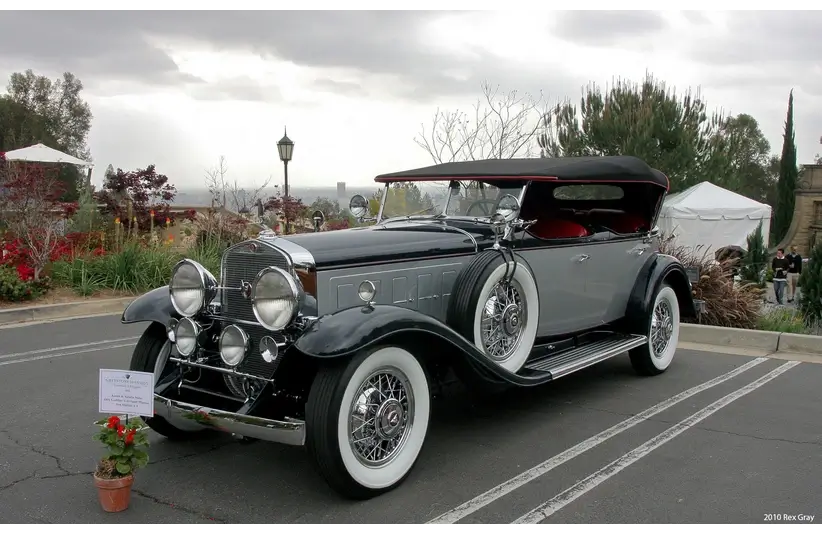
The Cadillac 452 series was a luxury car produced in the 1930s. It is noteworthy because it had a 16-valve engine. That huge engine made such an impression that the car was known as the Cadillac sixteen. The car was the first to offer a V16 engine. It was highly exclusive, with cars being custom-built in the 1930s. There were only 4,076 cars built in the entire decade of the 1930s.
The Great Depression and World War Two led to the demise of the car, which was last available in 1940. The Cadillac 452 was conceived in 1926 as a ‘multi-cylinder’ car. The car was developed in secrecy and launched in January 1930. When the car was produced, there was great demand among the upper crust of buyers. The Indian Maharaja bought one, special-ordered. Is it possible for a car to succeed if it is produced only for a few people?
Cadillac 452 Series Automobile Versions
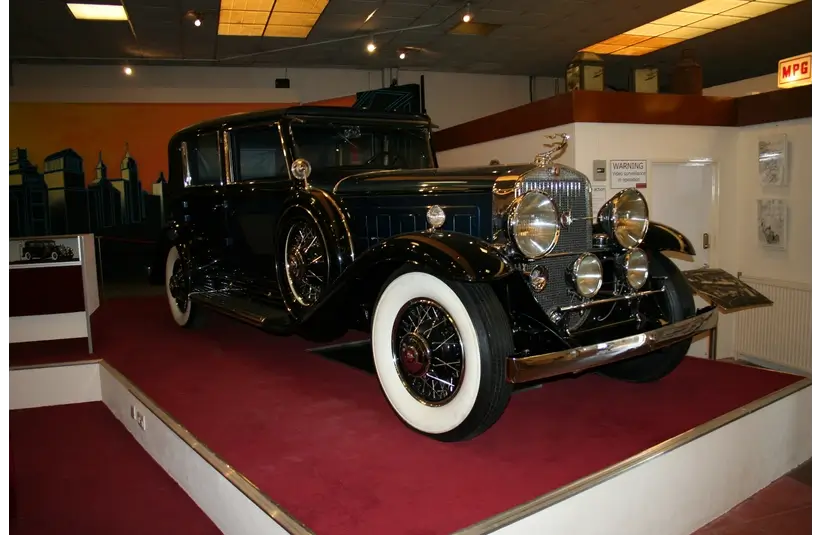
The Cadillac 452 series V-16 was distinguished by its first-of-its-kind V-16 engine. When the car was introduced, it got rave reviews from the press and huge public attention. All of which only served to heighten demand among the rich and powerful. They wanted the car despite the gloomy economic conditions.
January production of the Cadillac 452 averaged only a couple of cars per day, then ramped up to a whopping 22. By April, 1,000 units had been built, and by June, 2,000 cars. Each car was numbered and mounted on a specially crafted chassis, custom-designed for each customer. However, a lack of production and sales would be the main story for this car.
The catalog for the 1930 V16 included 10 basic body styles. There was also an envelope included containing about thirty additional designers’ drawings. Recent research indicates that 70 different job/style numbers were built on the sixteen chassis. That is a lot of options, and many of the cars were customized.
The V16 had an all-steel roof, which distinguished this car from competitors. This design would remain unchanged through 1937. With a wheelbase of 154 inches and a weight of about 6,600 pounds, the cars are the largest standard production cars ever made in the United States.
The company tried to promote the car. Beginning in June 1930, five new V-16s participated in a tour of major European cities. On the return journey from Spain, the V16 caravan also stopped in the town of Cadillac, in south-western France. The town in France has the same name as the car, but that is a coincidence. Nevertheless, the car company could not pass up the promotional opportunity.
Production Falls Off
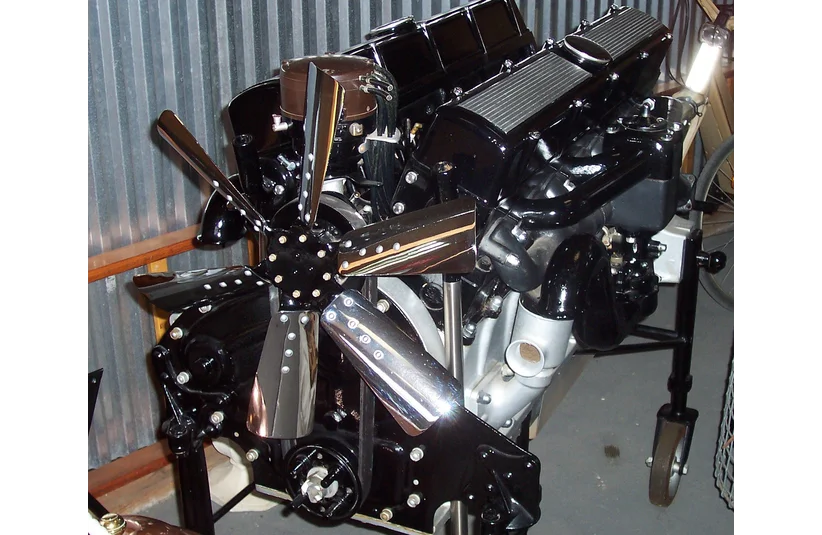
1930’s Cadillac 452cu OHV V16 at 45° engine, Courtesy of Herranderssvensson on Wikimedia under Creative Commons https://creativecommons.org/licenses/by/4.0/deed.en
Cadillac 452 V16 orders peaked in mid-1930, and production (and orders) fell steeply thereafter. During October 1930, only 54 cars were built. In August 1931, only 7 cars were produced, and in November 1931, only 6. One of the main stories about this car was its limited production.
There was minimal production throughout the rest of the decade. Combined production for the 1934 and 1935 model years was 150. A mere 50 units were built in both 1935 and 1937. The year 1940 was only marginally better with a total of 51 units. Cadillac later estimated, unsurprisingly, that they lost money on every single V16 they sold. The car was very exclusive. In 1936, only fifty-two units were sold, with nearly half ordered as limousines, which makes sense for such a big car.
Production of the original V16 continued under several model names through 1937. The body was redesigned in 1933 to convert to the model 452C. Innovations included a no-draft individually controlled ventilation. For 1934, the body was re-engineered again and designated 452D, and 452E in 1935.
In 1937, Cadillac built 50 of its most expensive cars on the 90 V-16 chassis. In 1938, the company merged the two car lines. The new car had a 431 cubic-inch engine featuring twin carburetors, twin fuel pumps, twin distributors, twin water pumps, and a nine-main-bearing crankshaft, and produced the same 185 horsepower as later versions of the original V16. The wheelbase was a somewhat smaller 141.0 inches.
Parting Shots
The Cadillac V16 is widely recognized by many authorities as one of the finest automobiles of the prewar era. Nevertheless, the car sold only a few units, which underscores its exclusivity. The Classic Car Club of America rates all V16s as CCCA Full Classics, which is a rating reserved for only the finest automobiles of the 1925–1948 time period. The car is definitely a collector’s item.
