
The Forgotten American Austin: The Little Car That Tried to Change America Before the Depression Hit

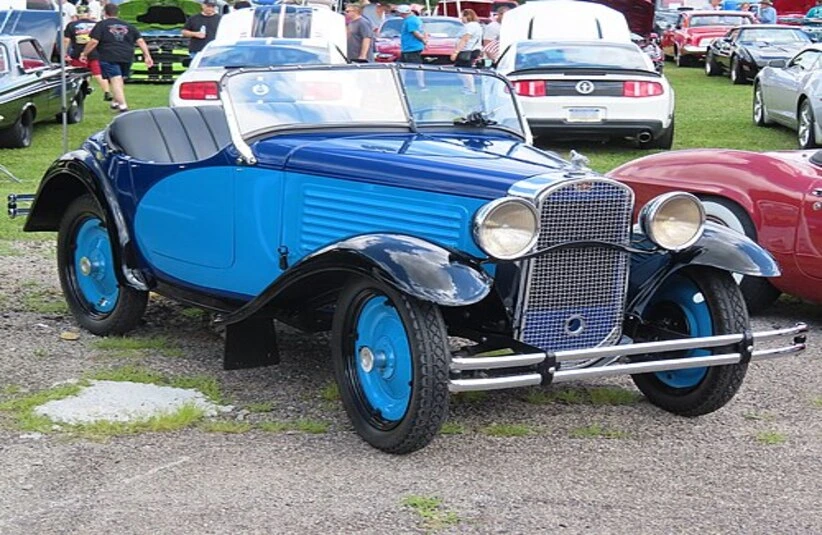
The American Austin Car Company is not well known, but its roadster was a pretty popular car. The company was incorporated in the state of Delaware. It was founded on February 23, 1929, and produced cars licensed from the British Austin Motor Company from 1930 through 1934, after the British Austin Motor Company had filed for bankruptcy protection.
The car was produced on the same site as the Standard Steel Car Manufacturing Company. The company went bankrupt and was liquidated in 1935, and the assets were acquired by Evans Operations, Incorporated. A new company, American Bantam Car Company, was incorporated to replace it in June 1936. Does the short history of this car disqualify it from consideration as a historical American car?
American Austin Car Company Summary
American Austin Car Company manufactured automobiles in Butler, Pennsylvania, in premises that had belonged to the Standard Steel Car Company. That seems like an odd pace to manufacture cars. However, it is likely there was plant and machinery there to use.
They intended to assemble and sell in the United States a version of the Austin 7 car, called American Austin, at the site in Butler, Pennsylvania. After some initial success, the Great Depression set in, and sales fell off; production was suspended. A lot of automobile companies were affected by this extreme economic downturn. In 1934, the company filed for bankruptcy protection, and in 1935, the company was liquidated.
The short stay of the company belied its importance. The Austin automobile was designed to create a market for small-car enthusiasts in the United States. These cars, in other words, were unique. Despite their lack of commercial success, the cars were a valuable part of Americana.
The Design
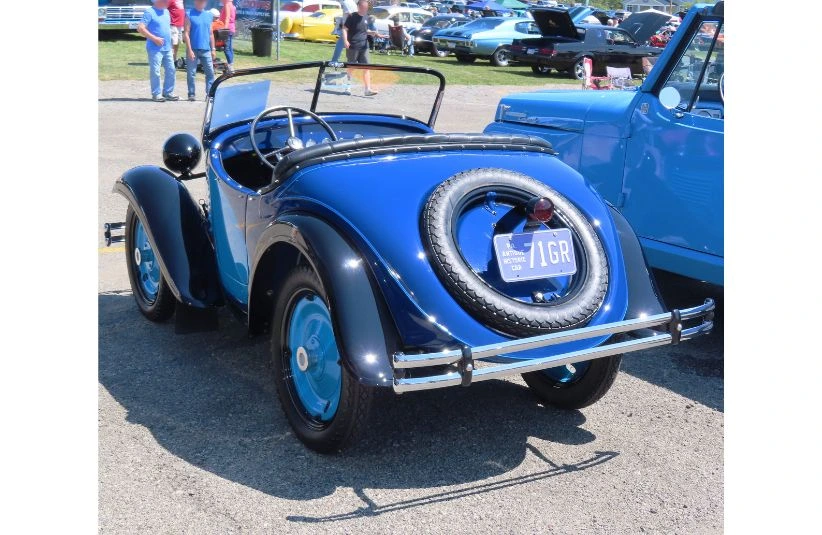
The cars had 45.6 cubic inch engines, enabling the cars to have high gas mileage for the time. The gas mileage was about 40 miles per gallon, and it could travel 1,000 miles on two quarts of oil. The American Austin Automobile could travel 50 miles per hour. The car presaged the current American obsession with gas mileage.
Styling for the car was not as unique as might be thought. The cars resembled several cars of the time. The cars resembled small Chevrolets, with Stutz or Marmon-style horizontal hood louvers. The bodies were made in Detroit, and were convertibles, and the open style made the car appealing to drive. Furthermore, the coupe was billed as a sedan and sold for only $445. This price point compared favorably with other automobiles sold at the time. However, the company had poor economic timing. The Great Depression had made cheaper, secondhand cars (we call them used cars) more appealing, so sales dropped off.
Sales and Manufacturing
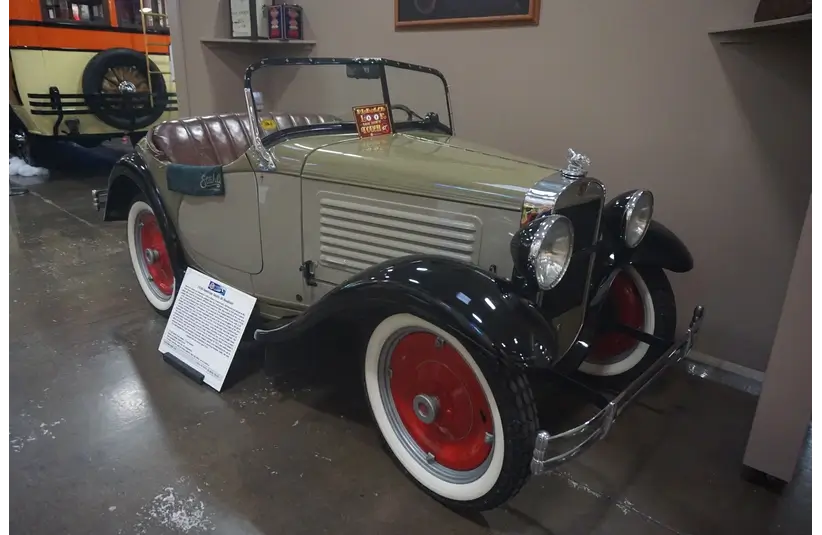
The company made 8,448 cars in 1930. That was the company’s first, and best, year of sales, but only 1,279 vehicles were built in 1931. Sales fell to the point that production was suspended in the spring of 1932. American Austin was reorganized, and by August, production rose to an average of 600 vehicles per month, with 3,846 cars being manufactured in the second half of 1932. In 1933, domestic sales for the American Austin Car Company rose to a high of 4,726 units, still far short of the “180,000 firm orders” American Austin was supposed to have before the crash.
In 1934, running out of inventory for metal-stamped body parts, the American Austin car company started to produce small-scale pickup trucks, foreshadowing their current popularity. The company made the bodies in-house. But production slowed down, and during the summer, American Austin filed a petition in federal court to plan for a reorganization. Production of vehicles stopped on December 1, 1934. By the end of 1934, about 20,000 American Austin cars had been produced.
Parting shots
On July 19, 1934, the American Austin was ordered to show cause why an order for its liquidation should not be granted. The following week, the federal court ordered the liquidation of American Austin. The company became Evans Operations. In the 1960s, the car became popular with hot rodders. A large engine could be put in this small car, and the power-to-weight ratio of the new creation meant it could go fast.
