
Women’s History Month: The Surprising Role of Women in Preserving Regional Food Traditions


For most of human history, the kitchen was a paradox. It was the beating heart of the household, a place filled with the intoxicating aromas of simmering broths and rising dough. Traditionally, women across the ages and continents were expected to be in the kitchen. Or is the answer a bit deeper and, paradoxically, simpler than we moderns wish to admit?
Perhaps women want to cook, both professionally and personally. For this Women’s History Month, let’s examine this timeless tale together and see what we find.
Old as Time
While the men were out hunting, farming, or claiming glory in the public square or on the battlefield, women were tending hearth and home by sheer necessity, societal expectations, and a natural draw.
Women are key in preserving regional food traditions in their own homes, not as a symbol of domestic confinement, but as an engine of economic power, cultural identity, and deep human connection. From Japan to Norway, cultures and nationhood waft to life upon a well-cooked and presented dish.
The Great Divide
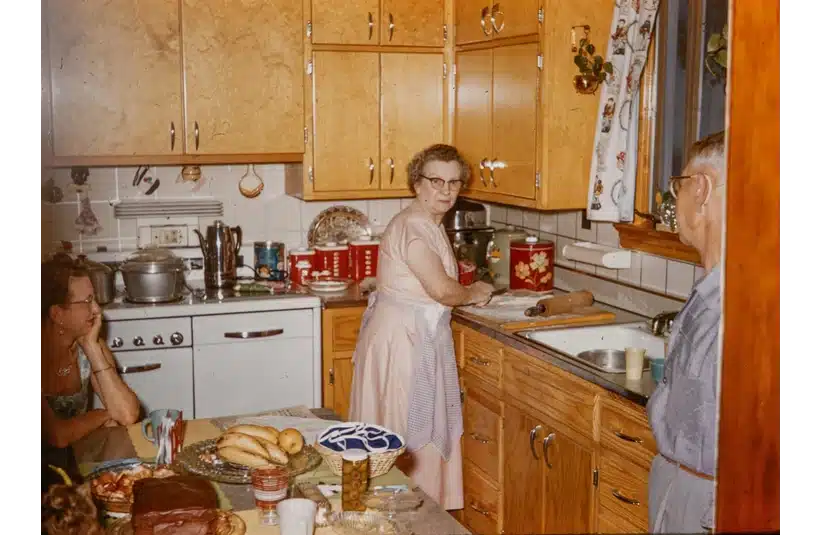
To understand where we are, we have to look at where we’ve been. Contrast the unpaid, invisible labor of the home cook with the highly monetized, ego-driven sphere of professional gastronomy. A chef perfectly sears a scallop, and he’s an artist, a visionary, a master of his craft. A woman spends three days making a complex sauce from scratch to feed her family, and well, she’s just being a good mom.
Isn’t the mom of equal value? Women’s History Month reminds us just how much women matter and their contributions across the ages. Legends such as Julia Child and Martha Stewart shattered expectations while also fostering the age-old idea of a woman being happy in her kitchen without having to explain herself.
Preserving Regional Food Traditions
The magic isn’t just happening in fine-dining restaurants; it’s happening at the grassroots level. When we examine the profound impact of women preserving regional food traditions is undeniably their greatest legacy. Without them, our global food heritage would likely be a monotonous wasteland of drive-thrus and processed snacks.
Take a trip to Spain’s Castilla-La Mancha region, an area famous for its sprawling vineyards, Manchego cheese, and Don Quixote. Women are stepping into vital leadership roles as the managers of Protected Designations of Origin (PDOs) and Protected Geographical Indications (PGIs). Whether it’s the famous purple garlic from Las Pedroñeras or complex La Alcarria honey, women are the gatekeepers of this culinary heritage.
The European food scene is as succulent as it is varied. Italian dishes and cooking methods are lovingly and enthusiastically shared by the women.
Why does this matter? Because maintaining these regional food traditions isn’t just about making sure your dinner tastes good; it’s a matter of preserving regional food traditions. In regions threatened by severe depopulation, these women are turning local gastronomy into a lifeline. They are creating gastronomic tourism routes, championing small agricultural producers, and proving that food is a powerful tool for social cohesion.
Women are literally keeping their hometowns on the map, one exceptional dish at a time.
Storytelling Through the Sazón
Across the globe, the kitchen is also a vibrant studio for storytelling and empowerment. Meredith Abarca, a professor at the University of Texas at El Paso, beautifully captures this in her research on Mexican and Mexican American women. She talks about their unique sazón—that personal, irreplaceable seasoning touch. It’s not just about the right ratio of cumin and oregano; it’s about adapting to new circumstances while keeping a firm grip on one’s roots.
Or consider the Japanese proverb: “Even sea bream is not delicious when eaten in loneliness.” According to Oriental tradition, the elegant tea service and dining experience are meant to be social – people connecting with others around a table in a tranquil and convivial atmosphere.
Chefs such as Natsuko Shoji are elevating Japanese cuisine on the international stage. She won Asia’s “Best Female Chef” award in 2022 and continues to blaze new trails in the culinary world. Barely six percent of the world’s Michelin-starred restaurants are helmed by women, but chefs such as Shoji are creating their own path forward.
Long hours and relentless pressure make the professional kitchen a tough place to thrive. Women face real, tangible barriers, from balancing unpredictable shifts with childcare to fighting to advance themselves and their craft.
Women’s History Month: The Surprising Role of Women in Preserving Regional Food Traditions
Food is deeply emotional. It’s how we show love, how we mourn, and how we remember who we are. For far too long, both men and women have scorned this vital contribution as mere “women’s work.” But many women are proving that the kitchen isn’t a place to hide. It is a place to take action and lead the way for domestic survival.
So, the next time you sit down to a meal that transports you, that tells a story of a specific soil, climate, and culture, take a moment to think about the hands that carried that recipe through the ages. Chances are, they belonged to a woman. It’s about time we gave her the compliments to the chef.
Author
