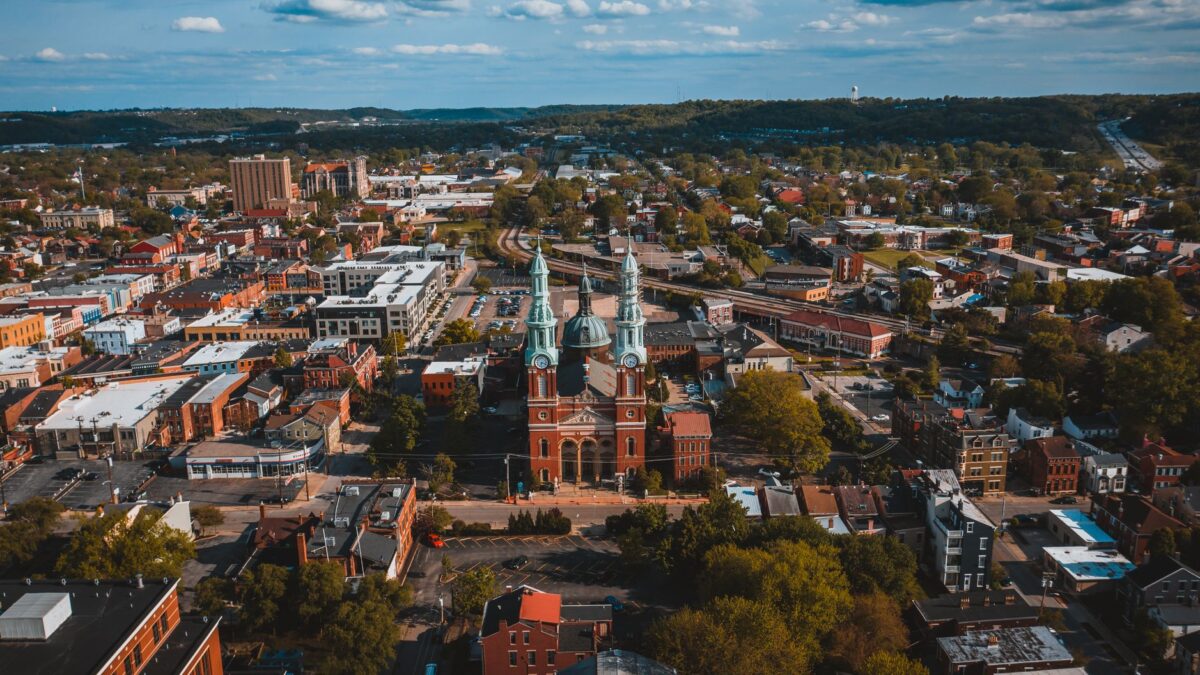
The U.S. Supreme Court has agreed to decide whether a Catholic order in Kentucky can build a shrine to the Virgin Mary on a residential lot next to its church, in a case that could shape how far local governments can go in blocking religious construction projects. The Kentucky church shrine dispute tests whether zoning rules can unconstitutionally burden religious expression. The justices will take up the dispute after the Kentucky Supreme Court ruled against the church’s shrine plan, according to The Associated Press.
For fans of the parish and religious liberty watchers alike, the case centers on a simple but contested question: can a zoning board’s denial of a building variance count as an unconstitutional burden on a church’s faith practice? The answer could affect religious institutions nationwide that want to expand onto residentially zoned property.
What Happened
The Missionaries of Saint John the Baptist, a nonprofit formed by Roman Catholic priests that owns the church, bought a residential plot next to its property in Park Hills, Kentucky, a suburb of Cincinnati, to build a shrine to the Virgin Mary, according to the AP. The local zoning board considered granting the group a variance that would allow the shrine to go up on the residential tract.
A neighborhood family challenged that zoning decision in state court, raising concerns that the shrine project would worsen traffic problems in the area, the AP reported. The family prevailed, and the Kentucky Supreme Court ultimately ruled in December that the zoning board lacked the authority to grant the variance, blocking construction, according to the AP.
The church group is now asking the U.S. Supreme Court to reverse that outcome, arguing in its petition that the Kentucky high court’s decision clashes with the justices’ own precedent and with rulings from other appellate courts, according to the AP. The church’s lawyers wrote that “the conflict among lower courts is deeply entrenched and widely acknowledged,” pointing to inconsistent treatment of religious land-use claims around the country.
Responses
The Missionaries of Saint John the Baptist frame the shrine as central to their work, arguing to the Supreme Court that building it behind their church is integral to their “religious mission,” according to the AP. The group’s legal argument leans on a federal law that can prevent governments from enforcing land-use rules that place a substantial burden on religious expression.
The neighborhood family that opposed the shrine in state court raised concerns that the project would worsen traffic in the area, the AP reported. Their challenge succeeded at the Kentucky Supreme Court, which concluded the zoning board lacked the authority to grant the variance needed for construction.
What It Means
This case lands in a Supreme Court term already crowded with religion-related disputes, including a Colorado case over taxpayer funding for religious schools, according to NPR. A ruling in favor of the Missionaries of Saint John the Baptist could make it harder for local zoning boards to deny religious construction projects on residential land without clearing a higher legal bar tied to federal protections for religious exercise. A ruling against the church would leave local zoning authority largely intact in similar disputes.
What’s Next
The Supreme Court is expected to hear oral arguments in the case in the coming months, according to the AP. A decision would follow sometime after arguments conclude, though no specific argument date or ruling timeline has been set. Readers following the court’s broader religious liberty docket this term can also track the Colorado preschool Supreme Court case, another closely watched dispute over faith-based institutions and government regulation.
Reporting from The Associated Press and NPR contributed to this story.
 Don't stop here
Every Score. Every Story. One Home.
Breaking sports, entertainment and news from across the Total Apex network, updated all day.
Get the Full Story →
Don't stop here
Every Score. Every Story. One Home.
Breaking sports, entertainment and news from across the Total Apex network, updated all day.
Get the Full Story →