
Witcher 3 Remastered specs: Brutal RTX 5080 demand revealed

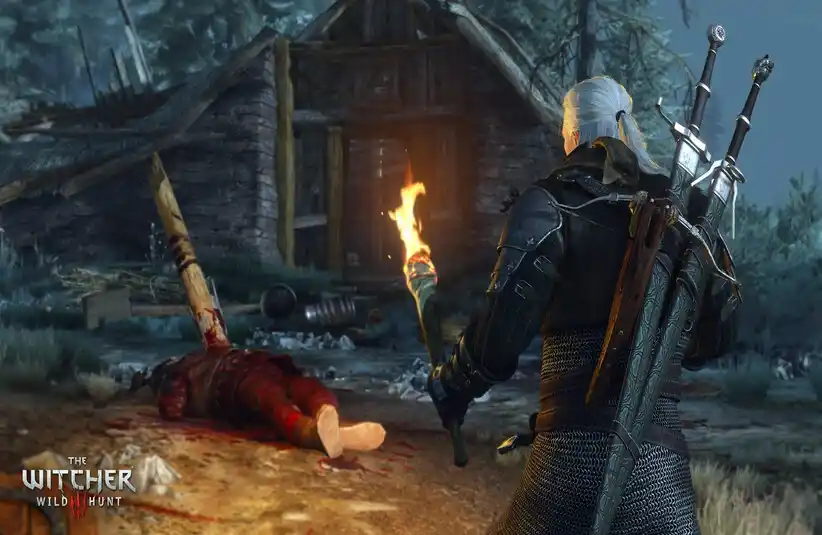
The Witcher 3 Remastered is finally here, and CD Projekt Red has answered the question every PC gamer wanted to ask: What will it take to run this thing at its best? The Witcher 3 Remastered specs, as reported by PC Gamer, call for some seriously high-end hardware if you want the full path-traced experience.
The remaster launched Tuesday, Sept. 29, bringing updated visuals to Geralt’s world more than a decade after the original game hit shelves in 2015. But the headline number is the GPU needed for the top visual mode: an RTX 5080 paired with either a Core i9-13900K or Ryzen 7 9800X3D, just to hit 60 frames per second (fps) at 4K with path tracing enabled.
Witcher 3 Remastered specs for path tracing
Path tracing is the more demanding cousin of ray tracing, a lighting technique that pushes shadows and highlights closer to how light behaves in the real world. CD Projekt Red says it makes the game look more realistic, but that realism comes at a steep hardware price.
To hit that 4K/60 fps target, players need both DLSS and frame generation switched on. DLSS is Nvidia’s upscaling tech that renders at a lower resolution and reconstructs detail to boost performance, while frame generation inserts AI-generated frames to smooth things out further. Neither is optional here.
The path-tracing tier also asks for 24GB of system RAM and a card with 16GB of video memory, numbers that will make plenty of PC builders wince.
Notably absent from that top tier is the RX 9070 XT. AMD’s card shows up in the ray tracing Ultra bracket, but CD Projekt Red doesn’t list it for path tracing at all. It’s a reminder that not every powerful card handles this specific lighting tech equally well.
Witcher 3 Remastered specs at the low end
Not everyone needs to chase 4K path tracing. At the low end of the Witcher 3 Remastered specs, CD Projekt Red lists a GTX 1660, RX 5500 XT or Arc A580 alongside a Core i5-8400 or Ryzen 5 2600 for 1080p at 30 fps on low settings. The GTX 1660 is a seven-year-old midrange card at this point, so it’s notable that it still clears the bar for entry-level play.
For 1080p at 60 fps on high settings, the list calls for an RTX 2060 Super, RX 6600 XT or Arc B580. And for a middle ground with ray tracing, an RTX 4080 or RX 9070 XT covers the ray tracing Ultra preset at 1440p and 60 fps.
Is path tracing worth the upgrade?
Here’s the real question hanging over all these specs: Is the visual upgrade worth building or buying a new rig for? One PC Gamer writer wasn’t entirely convinced, admitting: “I’m not personally sold on even ray tracing’s benefits all of the time, so it would be a tough sell for me, even if I had a rig good enough to run it.”
That skepticism lands at an awkward moment for PC hardware shoppers. An ongoing memory shortage continues to squeeze availability and pricing across the industry, making the 24GB RAM requirement at the top of the Witcher 3 Remastered specs an even tougher pill to swallow.
Owners of the original Witcher 3 do get some good news: The remaster is a free upgrade for anyone who already owns the base game. It’s available on PC, PlayStation 5, Xbox Series X|S and Nintendo Switch 2, with Xbox Play Anywhere support, according to Windows Central.
The Complete Edition is currently 50% off, and CD Projekt Red has confirmed a new paid expansion set in the realm of Letten for 2027. For now, players weighing the Witcher 3 Remastered specs will have to decide how much they’re willing to spend chasing those path-traced shadows.
Source: PC Gamer