
Nier: Automata Costs Less Than Overwatch’s New Nier X Overwatch Bundle


Introduction
Overwatch players and gamers in general have noticed something strange on digital game stores. The 2017 smash hit, NieR: Automata, currently sits at a default price of $39.99 USD on most current or last-gen platforms. The game was released at $59.99 on then current hardware, and would see price drops to its current price when new editions are released, starting in February 2019 with the NieR: Automata Game of the YoHRa Edition.
Price Drop
This type of price drop is typical for games on digital storefronts on 8th-generation consoles, and most copies bought now come with downloadable content (DLC) that was originally priced at $9.99. While NieR: Automata has gotten more affordable over time, the same can not be said for cosmetics in a different game. The Overwatch x NieR: Automata (Project YoRHa) collaboration runs for two weeks, from March 10, 2026, to March 23, 2026.
Bundle Details
The purchasable options feature five legendary skins for Kiriko (2B), Wuyang (9S), Vendetta (A2), Lifeweaver (Adam), and Mercy (Commander White). The bundle also includes themed weapon charms, name cards, and, in some cases, player icons or sprays. Each skin is being sold separately for 2,800 coins (a minimum of 24.98 USD), and the entire pack is being sold for 6,900 coins (a minimum of $69.98 USD). While 6,900 is not a standard direct-purchase bundle size, it is commonly sold as a bundle in third-party key shops for approximately $54.45-$59.99. Similarly, $29.98 is the amount paid based on purchasing the minimum combination of coin packs available. One $19.99 purchase of 2,200 coins, and one $9.99 purchase for another 1,000 coins.
Monetization
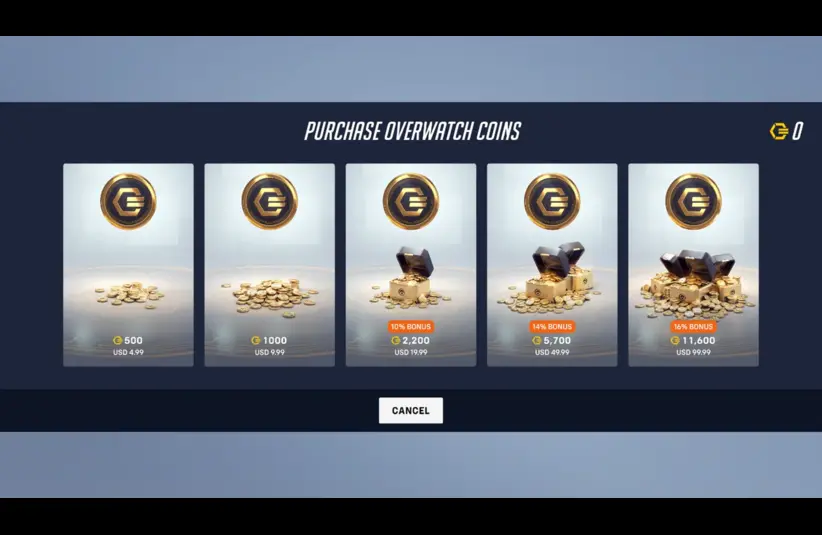
Standard Coin Pack Prices:
500 Coins: $4.99
1,000 Coins: $9.99
2,200 Coins: $19.99
5,700 Coins: $49.99
Gaming Trends
Overwatch launched in 2016 under a paid model. Gamers could pick the game up for $59.99 USD, but could purchase “loot boxes”, which contained a random selection of cosmetics and “credits”, which were an in-game currency that has since been discontinued. In October of 2022, Overwatch became Overwatch 2. The game became free-to-play, and monetization strategies changed. Instead of earning revenue through purchases of the game and microtransactions to earn cosmetics, now players have a paid currency system that prioritizes “whales”, or gamers who will spend an inordinate amount of money on the games they play. With this restructuring, Blizzard began more focused crossover collaborations and charged substantial amounts for limited-time skins and other memorabilia.
Previous Collaborations
One Punch Man (2023)
Diablo IV (2023)
LE SSERAFIM (2023)
Cowboy Bebop (2024)
Transformers (2024)
Avatar: The Last Airbender (2024)
World of Warcraft (2024)
My Hero Academia (2025)
Gundam Wing (2025)
Street Fighter 6 (2025)
G.I. Joe (2025)
Nerf (2025)
Persona 5 (2025)
NieR: Automata (2026)
Pricing Ranges
Individual skins for collaborations usually range between $19-$25, character bundles are $23-$28, and full event bundles are $40-$50. Some larger-scale bundles range between $50-$70, with NieR: Automata’s collaboration bundle only being rivaled by LE SSERAFIM’s. These bundles also range in quantity of items, with at least two skins being available in each one. The number of bundles has increased each year, with 2025 having six limited-time events.
Conclusion
The trend of microtransactions, battle passes, and other monetization schemes continues to be controversial in the gaming community. The game has changed its public face twice now, with Overwatch 2 becoming Overwatch once again in February 2026. This was primarily a branding decision, with the idea of future sequels being scrapped in favor of a perpetual update model for the game. As the team-based shooter continues to reinvent itself, concerns about monetization will continue to divide fans. Games in general have not increased in price at the same rate as other consumer goods, with microtransactions, downloadable content, and battle passes often padding out margins for video game developers and publishers.
