
5 Brutal Reasons Diplomacy Is Not an Option Is the Ultimate Siege‑Survival RTS

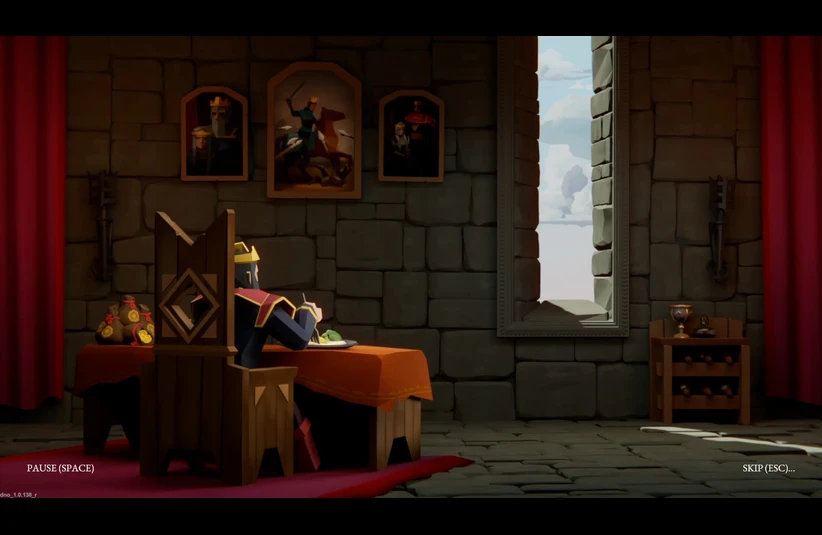
When it comes to surviving an impossible siege, relying on diplomacy is definitely off the table. In this world, diplomacy is a sign of weakness, and raw firepower is your only real language. Developer Door 407 has finally brought its massive real-time strategy game out of Early Access, and the full release is here to aggressively test your gaming sanity.
Diplomacy is Not an Option drops you into the iron-clad boots of a minor, often drunken lord forced to defend his castle from staggering waves of rebellious peasants, undead warriors, and invading knights. If you grew up playing classic castle builders like Stronghold or just love seeing thousands of tiny soldiers clash on your monitor, this is the exact brand of chaotic fun you have been waiting to play.
A Feudal Lord’s Excuse for Total War
The premise of Diplomacy is Not an Option is wonderfully tongue-in-cheek. You play as a bored feudal lord who views a massive peasant rebellion not as a crisis, but as a cure for his immense boredom. As you progress through the campaign, the game practically mocks the concept of peaceful resolution. In fact, if you go into the settings menu to look for a diplomacy option, the game gives you two choices, no and off. It is a hilarious touch that perfectly sets the tone.
The story is packed with surprisingly engaging branching narratives. You can choose to side with a plump, overzealous king or throw your lot in with a bloodthirsty rebel leader. These choices alter the factions you face and the environments you fight in, giving the game a massive boost in replayability.
Defending the Kingdom Against Massive Hordes
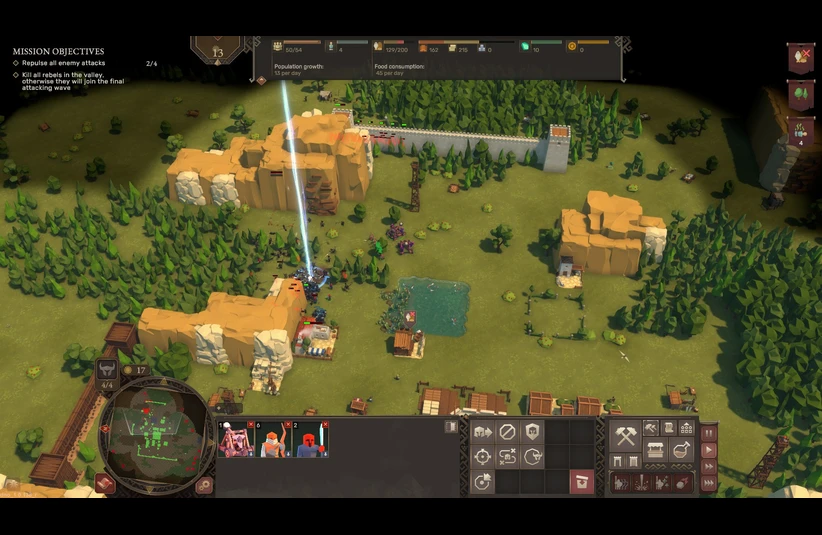
The core loop of Diplomacy is Not an Option relies on a delicate, stressful balance of economic expansion and sheer, desperate survival. The enemy waves start small, deceiving you into a false sense of security, but they quickly escalate into screen-filling armies. To survive these onslaughts, you must rapidly scale your population and military might. You will absolutely not survive with just a few stone walls and Tesla towers, you need a sprawling army of archers, swordsmen, and cavalry ready to die for your royal cause.
There is a deep, soul-crushing agony in spending two hours building a perfectly symmetrical fortress, only to watch it burn because you left a single flank exposed. Yet, the adrenaline rush of holding the line against thousands of foes makes every agonizing defeat completely worthwhile. When things get truly desperate, you can unleash devastating magic spells, and there is nothing quite as satisfying as watching a well-placed meteor strike send dozens of enemy troops ragdolling through the air.
Streamlined City Building and Economy
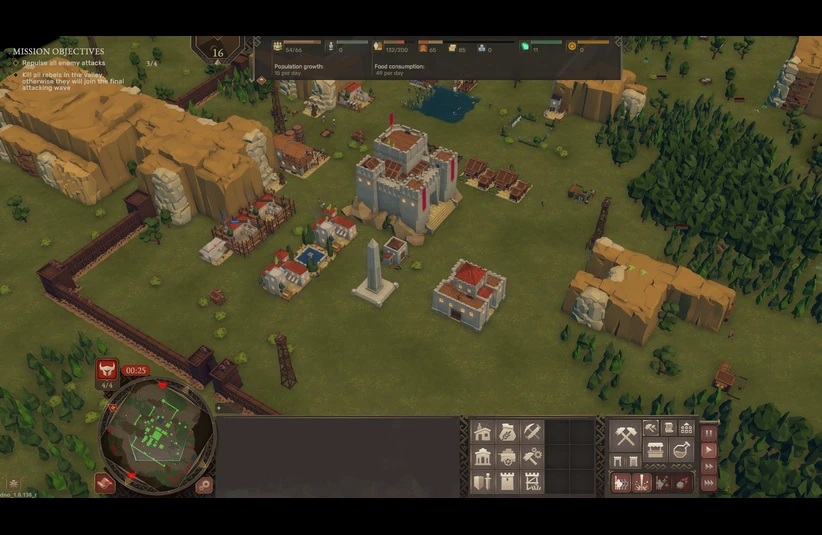
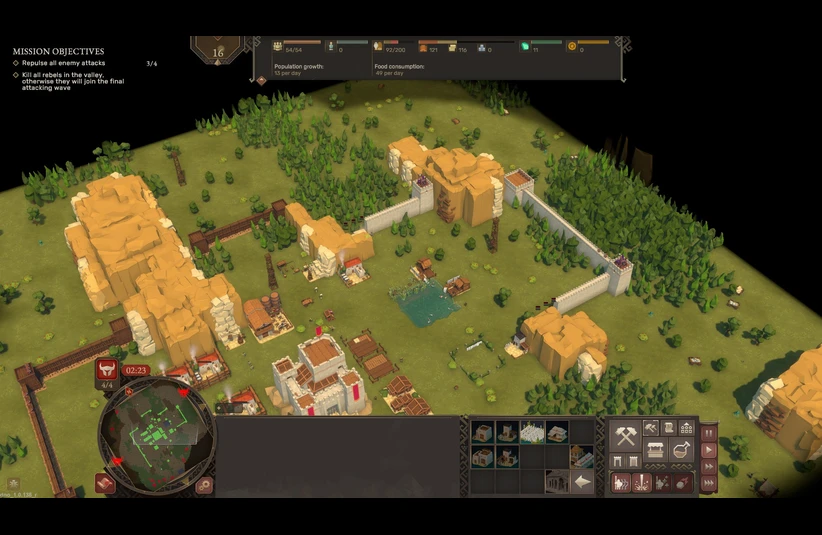
Unlike some of the more granular city builders currently on the market, such as Manor Lords, Diplomacy is Not an Option wisely streamlines its intricate economy. You still need to constantly gather wood, stone, iron, and magic crystals, but your villagers are smart enough to manage the heavy lifting once you place the production buildings and ample storage. This design choice gives you the mental bandwidth to focus on the actual looming threat of war.
The city building mechanics do lack visual variety, meaning your town will not look wildly unique compared to others, but aesthetic cohesion takes a back seat when a thousand angry zombies are actively knocking on your front gates. The focus here is squarely on horde survival and tower defense, echoing titles like They Are Billions, rather than peaceful urban planning.
Exploring Campaign, Endless, and Sandbox Modes
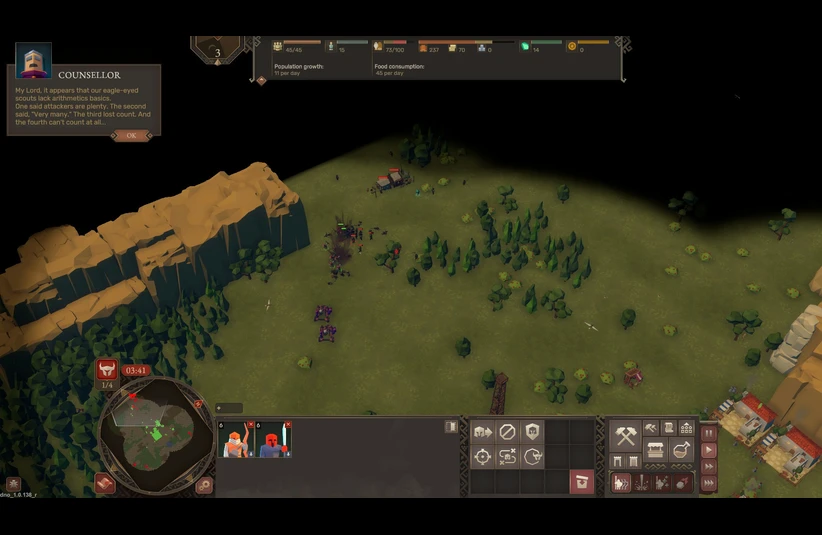
One of the biggest complaints during the Early Access period was a severe lack of content, but this launch completely remedies that issue. The new campaign offers over thirty missions, providing well over a hundred hours of gameplay if you want to see every branching path.
And make no mistake, mastering diplomacy in this game is an incredibly brutal endeavor. You will likely face defeat multiple times as the difficulty curve aggressively ramps up. If the main campaign proves too frustrating, you can always dive into Endless Mode, Challenge Mode, or Sandbox Mode. Challenge Mode is particularly excellent for honing your tactical skills, teaching you the harsh lessons you need to survive the tougher campaign maps.
Performance and Visuals Under Pressure
With so much glorious carnage happening all at once, you might expect your PC to spontaneously melt. Surprisingly, the engine powering Diplomacy is Not an Option runs remarkably well, utilizing a minimalist, almost toy-like visual style to keep the frame rates incredibly stable. When wave fifteen finally hits and you have thousands of individual units colliding on screen, you might experience a minor dip in performance, but the game handles the massive scale beautifully.
The only real frustration is a lack of precise pathing indicators for enemy armies on the mini-map. This can be annoying, leading to moments where a massive horde strolls right through an undefended side gate simply because you guessed their route incorrectly. Thankfully, the active pause feature helps mitigate the overwhelming chaos, letting you issue orders while catching your breath. Door 407 has crafted an unapologetically difficult and wildly entertaining siege simulator, proving once and for all that when you are heavily outnumbered by monsters, engaging in diplomacy is simply a terrible
