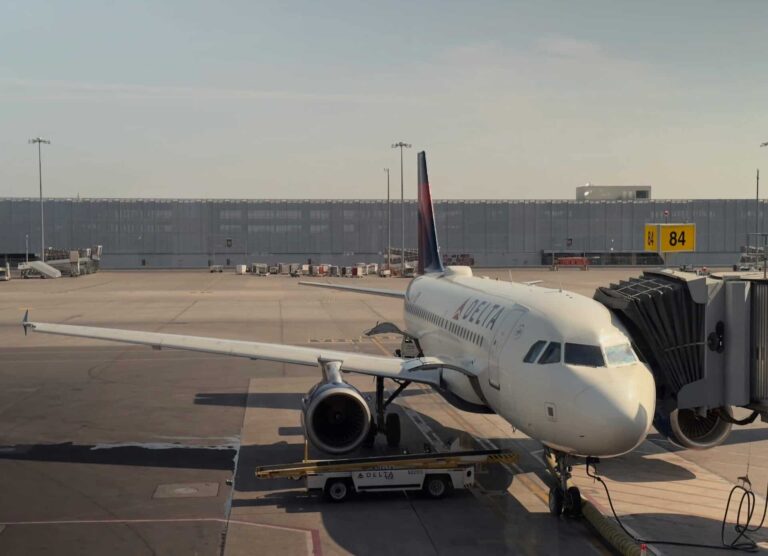
The Federal Trade Commission is investigating how airlines and other major companies use consumer data to set prices and pay, ordering Delta Air Lines, United, JetBlue and six other firms to turn over detailed information on their pricing methods.
The orders, issued Oct. 28, went to Delta, United, JetBlue, Uber, Lyft, DoorDash, Instacart, Target and Walmart, according to the FTC and reporting from The Associated Press. The agency wants to know whether these companies charge different people different prices for the same product or service based on personal data, and whether gig companies pay workers differently based on data such as phone usage or their history of accepting past job offers.
What the FTC Is Asking
FTC Chairman Andrew Ferguson said the agency plans to scrutinize how companies decide what consumers pay and what gig workers earn.
“We intend to scrutinize the opaque methodology that some companies in these industries may be using to determine how much consumers pay or how much gig workers are paid for the same product or service,” Ferguson said.
The orders direct Delta, United and JetBlue to detail whether fares shift from traveler to traveler based on factors like loyalty program status or analysis of an individual shopper’s personal data. Target and Walmart face the same questions about their prices. For Uber, Lyft, DoorDash and Instacart, the FTC is also examining whether worker pay is shaped by data such as how often a driver or courier has accepted past offers.
The FTC said it can ask a federal court to force compliance if any of the companies do not hand over the requested data.
Delta, JetBlue and Instacart Respond
Delta pushed back against the notion that it uses personal data to set individualized fares.
“There is no fare product Delta has ever used, is testing or plans to use that targets customers with individualized offers based on personal data,” the airline said in a statement, adding that it has “zero tolerance for discriminatory or predatory pricing.”
JetBlue also denied the practice, saying it does not use personal information or web browsing history to set individual prices. “Fares are determined by demand and seat availability, and all customers have access to the same fares,” the company said.
Instacart told the AP that its shoppers are paid based on job details such as distance traveled, number of items and expected shopping time, and that it does not use personal information to set consumer prices.
Broader Context on Personalized Pricing
The inquiry lands alongside a separate FTC effort to require clearer disclosure around personalized pricing generally. On Aug. 19, the FTC proposed a policy that would make businesses clearly state when they use personalized pricing and disclose what data they rely on to set prices. The public comment period on that proposal was originally set to close Sept. 18, but the FTC later extended the deadline to Sept. 25.
The agency has been circling this issue since July 2024, when it first ordered eight companies that sell pricing tools to hand over information. Preliminary findings from that study, released in January 2025, described how third-party consultancies help retailers tailor online prices to a shopper’s location, browsing history and other signals, down to the items someone left sitting in an online cart. Ferguson, then a commissioner, dissented from releasing those findings. The FTC now says that study looked only at middlemen, not the businesses actually setting prices, and that the agency “learned nothing about actual pricing decisions” from it.
Lawmakers have taken notice as well. Legislators in at least 30 states considered pricing-related bills in 2026, including proposals that would regulate algorithmic and personalized pricing, according to the National Conference of State Legislatures. New York, Maryland, Connecticut and New Jersey have already put laws on the books. The push comes as consumers grow more uneasy about pricing technology and artificial intelligence tools that can sweep up enormous amounts of personal data.
The FTC’s proposed policy statement also acknowledges a key limitation: Congress has not given the commission authority to prohibit personalized pricing in all circumstances. The proposal is a disclosure requirement, not a ban.
What’s Next
The public comment window on the FTC’s proposed personalized pricing disclosure policy closed Sept. 25, with more than 3,700 comments filed, and the agency has not said when it will finalize that policy. The companies named in the October orders have 45 days from receiving them to respond, but the FTC has not laid out a public timeline for when its study of Delta, United, JetBlue and the others will produce findings. Travelers wondering whether fare prices can vary person to person will likely get their clearest answer once those findings land.
 Don't stop here
Every Score. Every Story. One Home.
Breaking sports, entertainment and news from across the Total Apex network, updated all day.
Get the Full Story →