
Myrient, One of the Internet’s Largest Retro Game Archives, Is Shutting Down


The gaming world has spent the last decade drifting toward an all‑digital future, but the industry still hasn’t figured out how to preserve its past. And now, one of the biggest lifelines for retro games — Myrient — is shutting down. If you’ve ever gone digging for a legally owned copy of a game that simply doesn’t exist on modern storefronts anymore, you know exactly how massive this loss is.
Myrient wasn’t just another archive. It was the archive. And now it’s disappearing.
A 390‑Terabyte Giant Is Going Dark
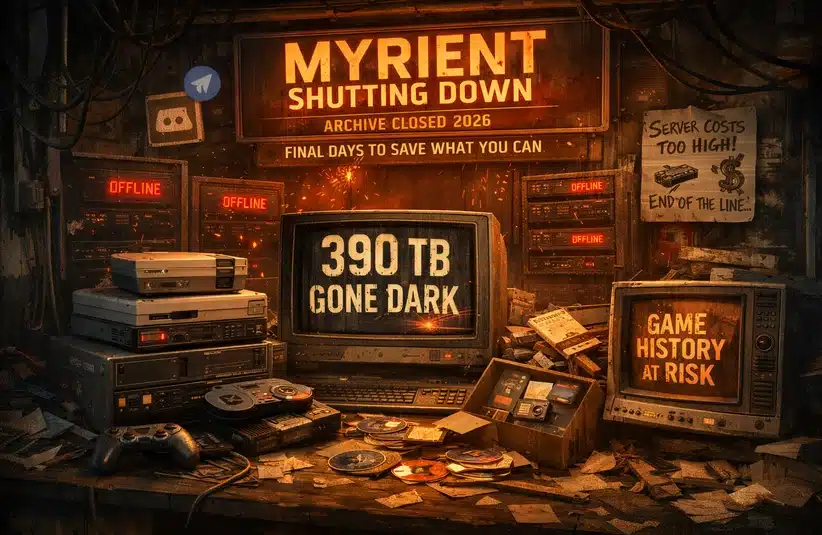
Myrient announced that it will officially shut down on March 31, 2026, ending a three‑year run as one of the most important preservation projects on the internet. The nonprofit hosted over 390 terabytes of organized game data — a staggering amount of material that served everyone from historians to modders to everyday PC players trying to keep their libraries alive.
The announcement came through the site’s Telegram channel, with the team confirming that uploads are already disabled and the full shutdown will happen at the end of the month. The Discord and Telegram communities will remain online, but the archive itself — the heart of the operation — is done.
Why Myrient Is Closing: A Perfect Storm of Costs and Exploitation
Myrient’s founder, Alexey, laid out the reasons behind the shutdown, and none of them are surprising — but all of them are infuriating.
- Server costs have exploded. Donations stayed flat while traffic skyrocketed, leaving Alexey to pay $6,000 a month out of pocket just to keep the archive alive.
- RAM, SSD, and HDD prices have surged. The ongoing global RAM shortage — driven heavily by AI data centers hoarding hardware — has made hosting a massive archive financially impossible.
- Predatory download managers made things worse. Several unauthorized “specialized download managers” bypassed Myrient’s protections and even locked features behind paywalls, directly violating the site’s rules and exploiting its resources.
It’s the kind of slow‑motion collapse you can see coming from a mile away, but it still hits like a gut punch when it finally happens.
The AI Boom Is Quietly Killing Game Preservation
Myrient isn’t the first casualty of the AI hardware boom, and it won’t be the last. As AI companies devour RAM and storage at unprecedented rates, prices have skyrocketed across the board. That ripple effect hits everyone — PC gamers, console manufacturers, and now even preservationists.
The irony is painful: AI, a technology that claims to “preserve” and “enhance” information, is actively destroying the infrastructure needed to preserve gaming history.
And when preservation becomes too expensive, the past disappears.
Why Archives Like Myrient Matter More Than Ever
Studies consistently show that PC players spend more time on older games than any other platform. PC is the last true refuge for retro gaming — the place where titles that never got remasters, ports, or re‑releases can still survive.
But that survival depends on archives like Myrient.
- Publishers can delist games at any time.
- Licensing expires.
- Servers shut down.
- Platforms die.
- And some games simply aren’t profitable enough to save.
Myrient filled the gaps the industry refused to acknowledge. It preserved the weird stuff, the forgotten stuff, the stuff that would never get a glossy remake or a $40 “HD collection.” It preserved the games that matter to someone, even if they don’t matter to shareholders.
A Final Month to Save What You Can

Alexey has asked users to download anything important before March 31, because once the servers go dark, that’s it. No backups. No mirrors. No second chances.
Uploads are already disabled as of February 26, and any donations made from now until shutdown will go solely toward covering the final hosting bill.
It’s a quiet, dignified ending for a project that deserved far more support than it ever received.
The Loss of Myrient Is a Warning Shot
This isn’t just one archive shutting down. It’s a sign of where the industry is heading if nothing changes. Preservation is expensive. Hardware is getting pricier. And the companies with the most resources to protect gaming history are the least interested in doing it.
Myrient was built by one person, funded by a small community, and used by thousands who believed gaming history deserved better than corporate neglect.
Now it’s gone — and the question is who, if anyone, will step up next.
Author
