
Chuck Norris – The Inspiration Behind The Legend


As the news of Chuck Norris’ passing arrived early March 20, 2026, just ten days after his 86th birthday, many are in a state of disbelief. This mythical legend of a man will live on in the hearts and lives of billions of people across the world. Not only was he a prolific actor, but he was considered a downright spectacular example of a human being. After being hospitalized on March 19, 2026, surrounded by loved ones, he let go of life and began the next stage of his journey.
The Legend Off The Big Screen
Chuck Norris, born Carlos Ray Norris, was born to Wilma Lee and Ray Dee Norris on March 10, 1940. He was the eldest of 3 boys. His father passed away after a traffic accident in 1971, a year after his brother Wieland Norris (1943-1970) was killed in action during Vietnam. Dec. 5, 2024, Norris posted on Facebook about his mother’s passing at the age of 103. With Norris’ passing, only his brother Aaron Norris remains.
The legend that is Chuck Norris made frequent remarks about the impact his brother Wieland had on him, describing his brother’s premonition of his own demise when he was only 12, to how he dedicated the film series “Missing in Action” to him as he courageously served his country. Through sacrifice, Wieland had created the single most tragic event of Norris’ life.
In the Beginning

Interview with Chuck Norris – YouTube Channel Full Measure with Sharyl Attkisson
Our action-studded hero had a very modest upbringing, who had said life was an uphill struggle from the start. His autobiography, published by Little, Brown, and Co., starts, “Nothing ever came easy for me, not even being born.” As a youth, it is said he had been a small child, mediocre scholastically, not particularly athletic, and incredibly shy. Somehow, this young, spindly child went from Carlos Ray Norris to the infamous legend that is Chuck Norris.
“Remember I was a non-athlete. I jumped into the karate world, but I didn’t have the natural attributes that so many of the fighters had. And because I didn’t have those natural attributes, I had to train a lot harder than anybody else. But I knew I had to in order to win.”
- Chuck Norris, 47, Interview with Karen Young for Los Angeles Times, Published Sept 2, 1988
He attributed positive thinking and being able to face challenges as major co-pilots to his life, lessons his mother imparted on him, and themes for his book. Stardom wasn’t on his agenda, his first wish was to be a policeman. After his graduation at North Torrance High School, he wasn’t of age yet to join, which led him down the path of joining the Air Force to become a Military Police.
A Spanish airman had given him the nickname, Chuck, having asked if he knew what his name, Carlos, meant in English. He had responded in the affirmative, noting that Carlos translated to Charles, with the airman shortening it to Chuck. The beginning of Chuck Norris had arrived. He married his highschool sweetheart, Dianne Holechek, shortly before being sent abroad.
How It All Began To Unfold
As an Air Policeman for the United States Air Force between 1958 and 1962, he was stationed for 13 months at Osan Air Base, South Korea, before returning home. It was during his stay at Osan that Norris would begin honing who he would become. According to his autobiography, he began studying martial arts instead of doing what other enlisted members were doing. He wasn’t interested in being around the barracks or playing cards, and he wasn’t interested in alcohol or taking part in education classes either.
This was how he broke out of his shell, leaving behind his insecurities and building confidence. He was becoming assertive and strong, more willing to have conversations. This led to him finally believing in himself, a driving force to do more. He attributed his newfound success and indeed the new him to his Korean Martial Arts Masters. In Aug. 1962, he was discharged from the Air Force with the rank of Airman First Class.
The Martial Arts Expert
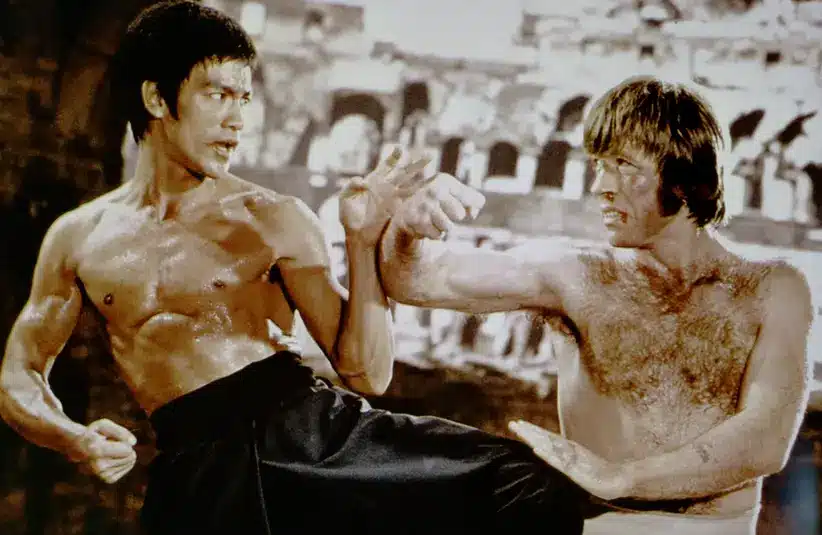
Norris didn’t start out landing on his feet after being discharged, his first few tournaments saw him defeated. As he continued to train, he was improving and building himself as well as his speed. He became so prolific that even his opponents had glowing remarks. In an issue of Black Belt Feb 1969, one of his opponents, Ted Wong, underscored his technique, which had been called unnecessarily rough. His opponent said it was not, but it was a good fighting spirit, a core tenet of martial arts.
Shortly after his foray into martial arts, from running his own schools to his tournament wins, he retired fully in 1974 when he stopped defending his titles. He had already begun his to-be extensive filmography that would span over 30 titles, not counting TV show appearances and cameos.
March 19, 2026 marks a sad day in history as we say goodbye to Chuck Norris, but the impact his life had has been amazing.
Author
