
The Evolution of the Chuck Norris Persona


Chuck Norris didn’t just become a household name — he became a cultural constant. A myth wrapped in denim and roundhouse kicks. But that larger‑than‑life persona didn’t appear overnight. It evolved, shifted and eventually outgrew the man himself, becoming one of the most recognizable pop‑culture constructs of the last half‑century.
Tracing that evolution is like watching American entertainment slowly build its own folklore hero and then hand him over to the internet for further enhancement.
Chuck Norris — The Fighter, Where the Legend Actually Begins
Before he was the subject of exaggerated one‑liners and internet hyperbole, Chuck Norris was simply Carlos Ray Norris — a disciplined martial artist with a competitive streak sharp enough to cut through a stack of regulation‑grade boards.
His credentials weren’t just for show. Norris won the Professional Middleweight Karate Championship in 1968 and held the title for six straight years before retiring undefeated. Add multiple black belts and a reputation for relentless training and you get a foundation sturdy enough to support the myth that would eventually grow on top of it.
The early persona was straightforward — stoic, serious and undeniably capable.
Chuck Norris — The Action Hero Who Redefined Hollywood Toughness
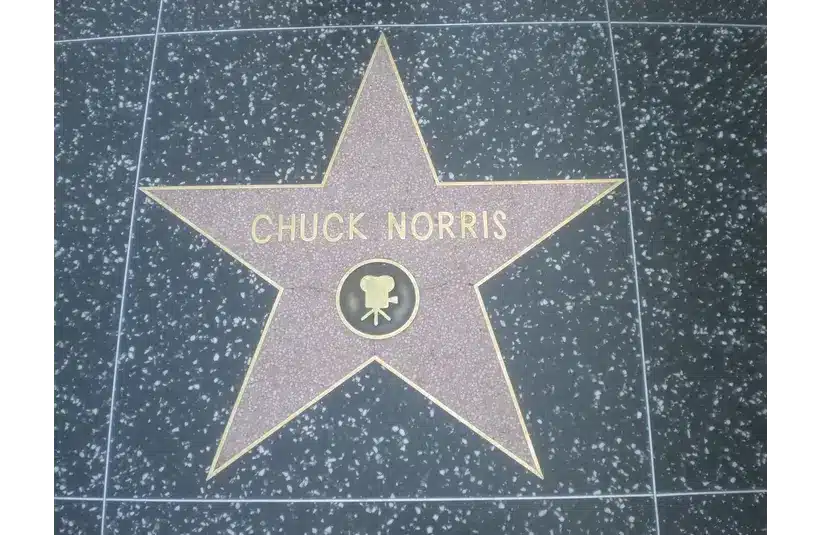
Then came the movies, and Hollywood did what it always does when it finds someone with genuine physical talent: it amplified him.
Suddenly, Norris wasn’t just a fighter. He was the fighter. The man who could take down an entire criminal operation without breaking stride. The hero who walked through explosions as if they were mild inconveniences. The embodiment of a certain brand of American toughness that dominated the action genre for decades.
And then “Walker, Texas Ranger” arrived. That show didn’t just cement his persona — it fossilized it. Walker wasn’t merely enforcing the law; he was enforcing the idea that justice could be delivered with absolute certainty and a perfectly timed spinning kick.
Hollywood didn’t just put him on screen. It made him the default setting for toughness.
The Meme Era: Chuck Norris Facts Rewrite the Rules
Then the internet got involved — and everything changed.
In the mid‑2000s, “Chuck Norris Facts” spread across early social platforms with the speed of a cultural lightning strike, but the origin story is more precise than most people remember. The jokes began on the Something Awful forums in 2005, where users tried to top one another with increasingly absurd feats, and they spread widely after appearing on CollegeHumor, which pushed them into mainstream internet culture. When Conan O’Brien later referenced them on air, the phenomenon went national and cemented Chuck Norris as an online folk hero.
Overnight, Norris became a symbol of exaggerated strength, impossible feats and deadpan absurdity. He wasn’t just tough; he was a force of nature. A man who could divide by zero or stare down the laws of physics until they apologized.
What made it work was the tone: completely straight‑faced, wildly impossible, and delivered with the kind of confidence that made the jokes feel almost plausible.
This was the birth of Chuck Norris as a full‑blown cultural myth.
The Self‑Aware Icon: When the Persona Learns to Wink
Once the meme wave crested, Norris did something smart — he embraced it.
Commercials, cameos, public appearances — all with a subtle wink that acknowledged the joke without diminishing it. He didn’t fight the persona; he collaborated with it. And that collaboration kept the myth alive far longer than it would have survived on irony alone.
This era marked the moment when the persona became self‑aware, and Norris himself became a willing participant in the ongoing exaggeration.
The Legacy: Why the Persona Endures
Here’s the analytical truth: Chuck Norris endures because he occupies a rare cultural space. He’s both sincere and absurd. Both grounded and mythic. Both a real martial artist and a fictionalized superhuman.
He appeals to nostalgia, humor, and a certain timeless idea of rugged competence. The persona works because it’s flexible — it can be funny, serious, heroic, or ironic, depending on what the moment calls for.
And in a culture that loves reinvention, Norris has managed to evolve without losing the core of what made him iconic.
The Man Behind the Myth

Strip away the jokes, the exaggerations and the internet’s collective imagination, and you’re left with a man who built a career on discipline, authenticity and a very specific brand of stoic charm.
The persona may be larger than life, but the man behind it is the reason it exists at all.
Chuck Norris didn’t just evolve — he adapted, expanded, and ultimately became a cultural archetype. And very few people can say they watched themselves transform into a modern myth while still being around to appreciate the spectacle.
