
Inside “The Year of the French”: Thomas Flanagan’s Epic Story of Ireland’s 1798 Uprising


“The Year of the French,” by Thomas Flanagan, is about a furtive French invasion of Ireland in 1798. This was one of several failed attempts at Irish independence. One of the things that is good about the book is the sense the reader gets of the anticipation among the Irish people.
The book does a great job of looking inside the restive Irish populace in the eighteenth century. It turns out, the hope of a successful rebellion was ever-present among the Irish populace. In this specific case, the focus is on the peasants, who were spoiling for a rebellion. They hoped the French, who were enemies of their British masters, would invade and help them throw off the yoke of the English’s illegitimate rule. Do you think the Irish prized their freedom when they got it?
“The Year of the French” Summary
This is a well-written and well-received book. It is highly recommended. The main event of the book, and hence the title, was the arrival of the French fleet to help the Irish. There are around 100 pages of buildup in the book. The peasants in Ireland had a history of revolt, which is detailed in the book. This was the only time the French helped the Irish, despite rumors that they might.
The protagonist in the book, McCarthy, is a schoolmaster, not a revolutionary or peasant. He is valuable because he can write and read English. He was originally recruited to write a letter of protest about the awful conditions. But it is that letter that started it all, displayed prominently. The letter caught the attention of both the British and the French.
There were many causes of revolt in 1798. This is why the revolt continued, and what sociologists call reinforcing cleavages. There was Catholic vs. Protestant, rich vs. poor, landowner vs. worker. Catholics were poor workers. Protestants were rich and landowning. However, the main cause of this revolt was poverty, the poor conditions of the peasants in County Mayo, Ireland.
There were mud huts, and they ate potatoes, if they were lucky (many went hungry). Most had absentee landlords. The poor conditions and starvation made conditions ripe for a revolt. A French fleet arrived in Kilcummin Bay. Ireland to help a revolt.
The French and the Rebellion
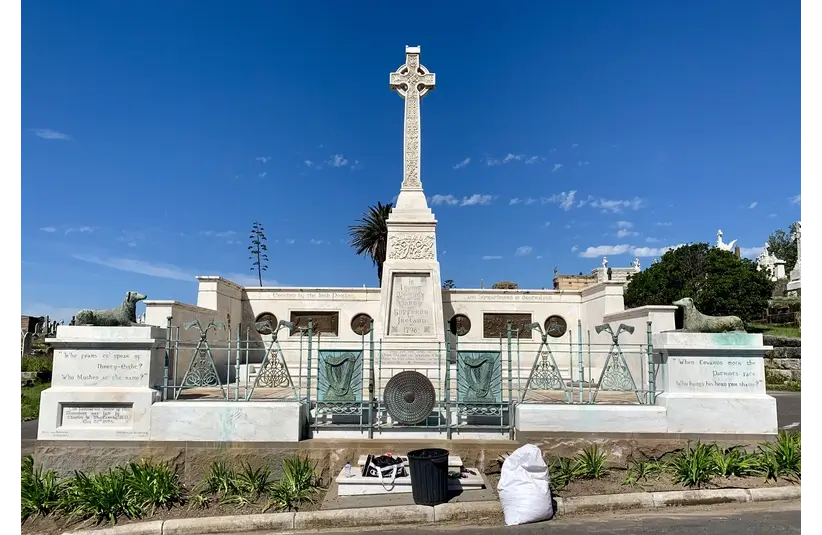
Any opportunity to stick it to England was a French motto around this time. The United States benefited from that. The eloquence of the letter McCarthy wrote and their desire to aid liberty around the world ultimately drew the attention of the French, who helped the peasants. In 1798, the French sent a fleet and about 1,000 troops to Ireland.
Ultimately, after initial success, the revolt failed. There were too few French and too many English. The French strategy was to build an army out of the peasants. The peasants did not like this strategy, as they recognized they were not prepared to fight the English. It was Lord Cornwallis who led the English to victory. The same Lord Cornwallis who lost to the Americans at Yorktown, Virginia, in in the year 1783.
Why You Should Read This Book
People should read this book because it is well-written. People who like Irish history will like this book because it tells of an interesting period. History buffs need to know that the French once supported the Irish against the British. It is important to know the extent to which French antipathy for the British drove their actions. The geopolitical situation drove these fascinating local events that took place in 1798.
