
“Freakonomics” Book Review: The Hidden Side, 21 Years Later

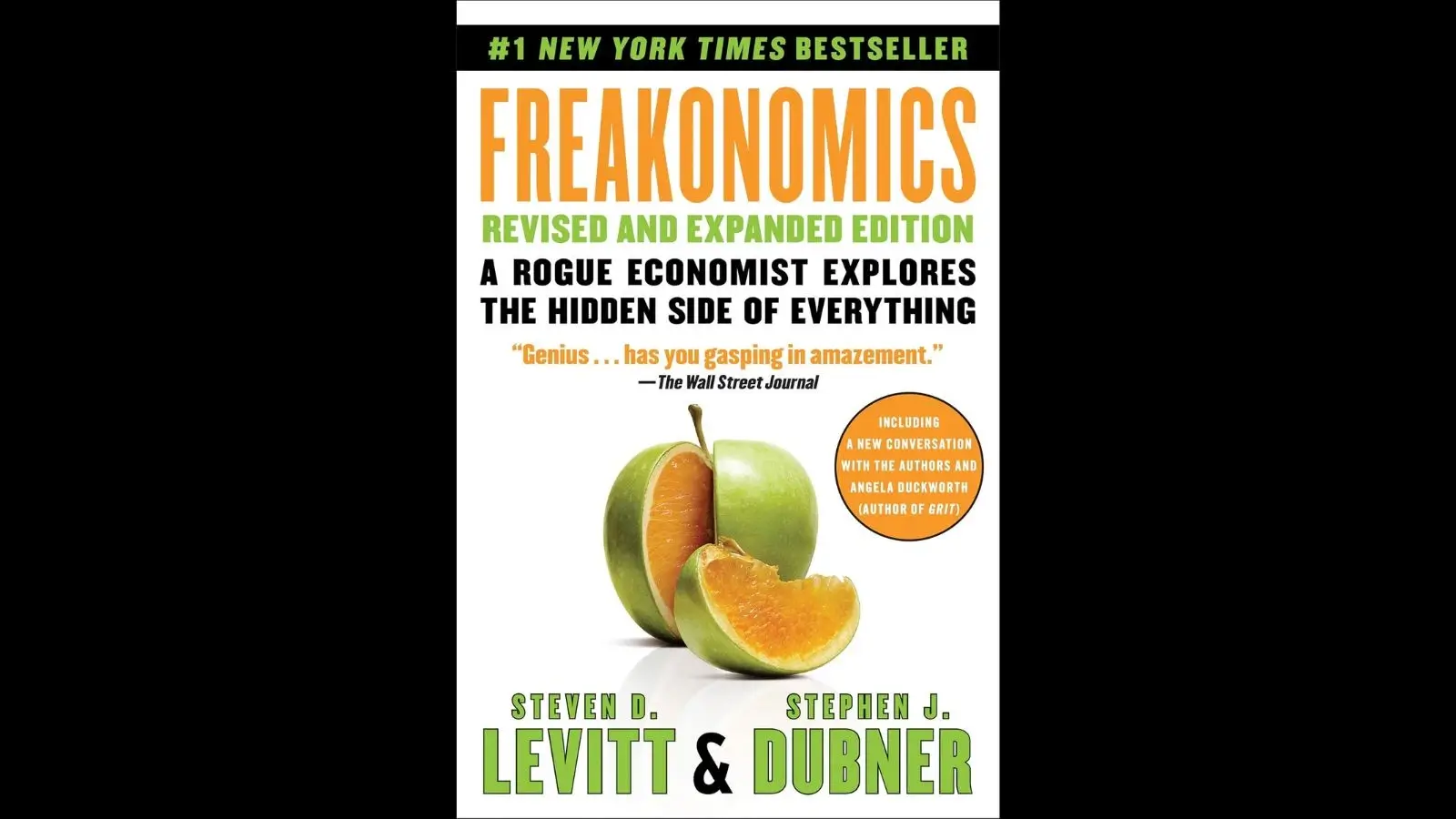
“Freakonomics: A Rogue Economist Explores the Hidden Side of Everything” is a 2005 book by Steven Levitt and Stephen Dubner. Dubner is a journalist with an MFA in writing from Columbia University. Levitt has a BA from Harvard University and a PHD from MIT. Dubner has turned the book into a successful weekly podcast of the same name. Levitt is a frequent guest.
When the book says they explore the hidden side of everything, they mean it. The book explores several interesting topics in counterintuitive ways that only economists can think of. Do you think they thought of making a successful podcast from the book?
“Freakonomics: A Rogue Economist Explores the Hidden Side of Everything” Summary
The first topic in “Freakonomics,” getting off to a strong start, is entitled “What do Schoolteachers and Sumo Wrestlers Have in Common?” The main argument of this chapter is that both of these groups have an incentive to cheat. It is interesting that this chapter also includes an example from the Washington, DC area bagel salesmen.
The second chapter is an interesting look at how the Ku Klux Klan is like a group of real estate agents. The authors argue that information is important to both groups. Next, the authors explore why drug dealers still live with their mothers. The argument is that the most low-level dealers earn less than minimum wage, so they cannot afford to move out. There is also an interesting examination in this chapter as to whether crack cocaine was a setback for Black Americans.
The fourth chapter asks where all the criminals have gone. Among other things, the authors cite the passing of Roe v. Wade (1973) for the nationwide drop in crime that started in the early 1990s. The authors then ask what makes a perfect parent. This question affects most of us, and the economists examine it from several angles.
Sixth, there is another chapter dedicated to the idea of perfect parenting. There is a critique of what they refer to as “obsessive parenting,” which sounds like the so-called helicopter parenting in here, and the authors investigate baby names. Freakonomics ends by examining the two paths to Harvard. The two-page epilogue mentions economist Roland Fryer and Ted Kaczynski (the Unabomber), who both went to Harvard.
Why You Should Read This Book
“Freakonomics” should be read because it is interesting and thought-provoking. The authors have a light and airy style of writing that draws readers in and makes the book easy to read. It is the type of book that makes for good bedtime reading and will also enable readers to start interesting and counterintuitive conversations with their friends and family.
A Cottage Industry

Another reason to read this book is the considerable cottage industry that has grown up around it. There is a podcast with the same name that is still being produced (in fact, they are examining betting now, in Sept. 2026). Because a new podcast episode is released every Friday, it is a little like the book, which was written more than 20 years ago, continues to live on.
Famously, the podcast, which is put together by one of the authors of the book, Stephen Dubner. He ends the podcast with, “Take care of yourself—and, if you can, someone else too.” If that is not enough, there is a blog as well. Nowadays, that blog is most closely related to the podcast, but the topics are related to Freakonomics.
