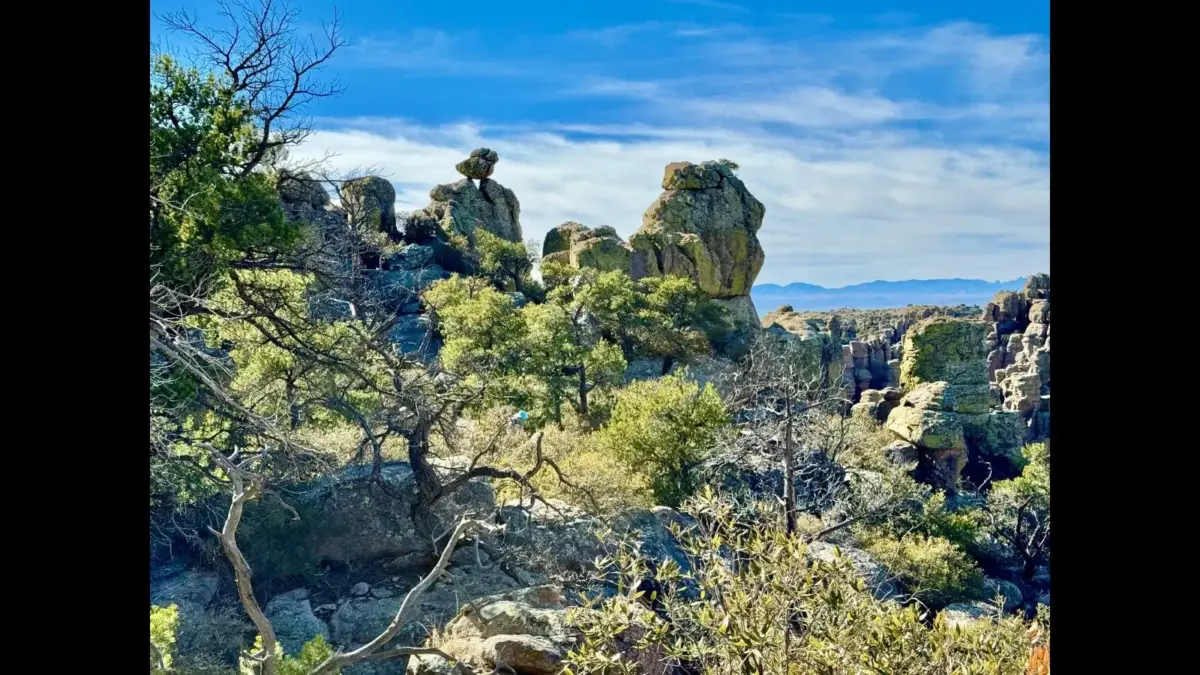
Chiricahua (pronounced cheery-COW-ah), long known for its volcanic rock spires in southeastern Arizona, is officially the 64th national park in the United States and the fourth in Arizona. President Donald Trump signed the bill elevating Chiricahua National Monument to Chiricahua National Park on Oct. 20, according to USA Today. The change gives the site known as the “Wonderland of Rocks” the same federal designation held by Yellowstone and Yosemite.
The House passed the legislation, sponsored by Rep. Juan Ciscomani, R-Ariz., in March, and the Senate approved it Sept. 30. The upgrade caps a path that started more than a century ago, when the site was first protected as a national monument, and a push for park status that Sen. Mark Kelly, D-Ariz., first launched in 2021.
From monument to national park
Chiricahua was established as a national monument in 1924 specifically to safeguard its “Wonderland of Rocks,” a landscape of balanced boulders, spires and pinnacles that formed roughly 27 million years ago during volcanic eruptions, according to USA Today. The new Chiricahua National Park Act also protects cultural and religious sites tied to the Chiricahua Apache, who lived in the region for centuries before being forcibly removed to Florida and later relocated to other states by the U.S. government.
The law preserves tribal access for traditional ceremonies and customary uses, and it allows temporary closures of parts of the park to protect those uses, The Associated Press reported.
What it means for visitors to the Wonderland of Rocks
For travelers, the new Chiricahua National Park status does not change what is on the ground so much as how the destination gets noticed. The park already offers hiking trails through its rock formations, horseback riding, scenic drives and camping at the Bonita Canyon Campground, according to USA Today. The National Park Service lists about 17 miles of trails and an 8-mile paved scenic drive up to Massai Point.
Emily Burns, program director at the Sky Island Alliance, described the draw in vivid terms. “It has spectacular vistas. It has a beautiful canyon and then these rock formations that are a little mind-boggling to understand how they formed over geologic history,” Burns told USA Today.
Matthew Nelson, executive director of the Arizona Trail Association, said the setting offers a rare kind of quiet. “Being able to immerse yourself in a place that seems relatively unchanged over the millennia is just such a break from modern-day technology and the pace of our lives,” Nelson told USA Today. “Being in the rocks in Chiricahua encourages people to just slow down and to listen to the wind, and to study the rock features, and to be reminded of the beauty that exists in nature.”
Background and the infrastructure question
At roughly 12,000 acres, Chiricahua ranks among the smallest of the nation’s national parks, and Nelson pointed to a gap between its natural credentials and its facilities. “Chiricahua has all of the natural wonders that make it worthy of being a national park. There is no question about that,” Nelson said. “It’s got everything within the natural and cultural resource realm to be a national park, but it does not have the infrastructure.”
That shortfall raises questions about how the park will handle any increase in visitors now that it carries the national park label, which tends to draw more attention than monument status. The National Park Service declined to say whether the Department of the Interior would add funding or staffing for Chiricahua, citing the pending legislation at the time it was asked, according to USA Today. Park service officials told the AP before the signing that they would evaluate those matters “consistent with the law, available funding and applicable planning requirements.” On Oct. 21, the Interior Department referred USA Today to a press release that made no mention of funding, the outlet reported.
What’s next
The new law keeps the monument’s existing boundaries and does not add land, roads or campsites, so the trails and campground visitors know are staying the same. The park service had not announced any changes to entrance fees, hours or visitor rules as of Oct. 21. Travelers planning a trip to see the Wonderland of Rocks in person should check the park’s official National Park Service page for current conditions before heading out.
 Don't stop here
Every Score. Every Story. One Home.
Breaking sports, entertainment and news from across the Total Apex network, updated all day.
Get the Full Story →