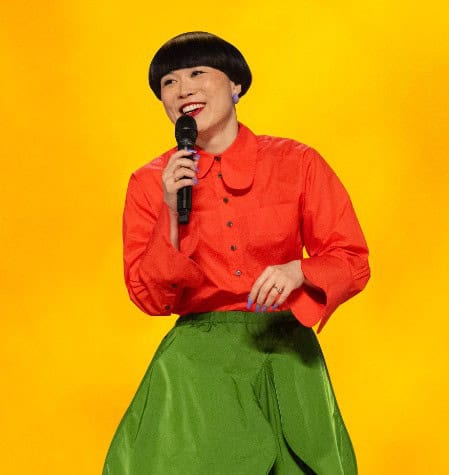
Laughter may be universal — but in Riyadh this fall, even comedians are subject to limits. As the inaugural Riyadh Comedy Festival kicks off in Saudi Arabia, the event has drawn both star power and fierce criticism. Among those speaking out is comedian Atsuko Okatsuka, who turned down an offer to perform and publicly exposed the harsh constraints she was asked to accept.
The Festival’s Lofty Ambitions, and Its Critics
The first-ever Riyadh Comedy Festival, running September 26 to October 9 in Boulevard City, Riyadh, is positioned by its organizers as a cultural landmark: part of Saudi Arabia’s broader Vision 2030 drive to rebrand itself as a hub for entertainment and the arts.
Yet the festival’s appeal is already complicated by controversy. Critics view it as a calculated PR maneuver: a way for a regime with serious human rights and free-speech concerns to sanitize its international image under a veneer of humor. Several high-profile comedians have declined to attend, citing ethical concerns about performing under state control.
Okatsuka’s Rejection and the Offer She Shared
Atsuko Okatsuka was among the comedians who rejected the festival’s invitation — but she didn’t go quietly. She published a copy of the offer she reportedly received, shining a light on the restrictions the organizers demanded. In an article on The Hollywood Reporter, Atsuko Okatsuka shared a screenshot with the following information:
“ARTIST shall not prepare or perform any material that may be considered to degrade, defame, or bring into public disrepute, contempt, scandal, embarrassment, or ridicule” (a) the Kingdom of Saudi Arabia, its leadership, culture or people; (b) the Saudi royal family, government or legal system; or (c) any religion or religious tradition.”
Okatsuka seized on the irony, writing on Threads, “The money is coming straight from the Crown Prince, who actively executes journalists, ppl with nonlethal drug offenses, bloggers, etc without due process… A lot of the ‘you can’t say anything anymore!’ comedians are doing the festival… they had to adhere to censorship rules about the types of jokes they can make.”
The Hypocrisy Debate Among Comedians
Atsuko Okatsuka’s critique hit at a tension many comedians have already sensed: those who decry “cancel culture” or oversensitive audiences often insist on artistic freedom — but here, they would be preemptively silenced by contract. She called attention to the paradox, especially given that several participants have built careers around provocative or politically charged material.
Some comics have defended their participation by pointing to large payouts or arguing that bringing comedy into new cultural contexts is itself a kind of engagement. Others, like Okatsuka, see the required self-censorship as incompatible with the values many in comedy claim to uphold.
Power, Free Speech, and the Global Stage
This situation underscores a deeper question: what happens when creative expression collides with authoritarian control? A state-sponsored comedy festival in a country deeply criticized for suppressing dissent creates a stark contradiction. Performers who agree to these terms risk participation in what critics call “culture laundering” or “comedy whitewashing.”
In a sense, Atsuko Okatsuka, by declining and speaking out, turned her refusal into a punchline — one aimed not at a regime, but at complicity. Whether others will follow and how the festival will navigate backlash remain to be seen. But her move confirms that for some comedians, the joke doesn’t land unless it’s told on their own terms.
 Don't stop here
Every Score. Every Story. One Home.
Breaking sports, entertainment and news from across the Total Apex network, updated all day.
Get the Full Story →
Don't stop here
Every Score. Every Story. One Home.
Breaking sports, entertainment and news from across the Total Apex network, updated all day.
Get the Full Story →