
Crafting a Kwanzaa Alter: Kinara, Symbols, and Significance

Kwanzaa is slowly approaching, but you still have time to learn how to set up your family’s Kwanzaa altar. Kwanzaa is celebrated for seven days, starting December 26 and ending on January 1. Each day, a different one of the seven principles, known as the Nguzo Saba, is celebrated. The mkeka or your altar display is vital for celebrating, as it is a visual representation of the foundation of the holiday and is used every day for the family to gather.
Creating a Sacred Kwanzaa Space
First, before setting up your mkeka display, find a suitable area to place it. The Kwanzaa altar is a sacred space that honors African heritage and culture, and serves as a place for families to reflect and celebrate each day. The alter as a whole represents unity, self-determination, and collective responsibility. The space can be a table or on the floor. Select a location where the display can sit without being disturbed.
After choosing a space, lay your mkeka down. A mkeka is a mat that represents the foundation and history of African traditions. The mat can be made from fabric, woven straw, or even paper.
Building the Kinara Display
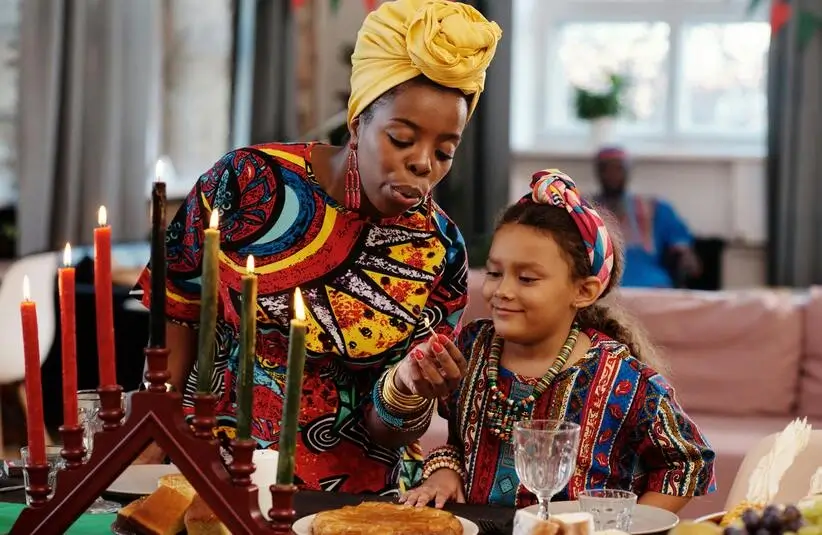
The centerpiece symbol for your altar is the kinara, the candle holder, that represents the roots and ancestry of Africa. The kinara is placed at the center and holds the seven candles.
Next, insert mishumaa saba or the seven candles into the kinara, one black candle and three red and three green. The black candle is placed in the middle and represents the people. The black candle is lit on the first day of Kwanzaa. Place the three red candles on the left, representing struggle, and the remaining three candles on the right, symbolizing the future and hope. Each candle represents a distinct principle and is lit on its corresponding day.
Now is the time to place the mazao and muhindi on the mkeka around the kinara. Mazao, fruits and vegetables represent the crops, and muhindi, the corn, symbolizes the future and represents the children of the house. According to housely.com, the mazao represents, “Mazao celebrates the results of collective effort and shared purpose. It recalls African harvest traditions and honors those who worked the land.”
A stalk of corn is placed on the mat to represent each child living in the house. A house with no children can put two on the Kwanzaa altar. Examples of fruits and vegetables to use include those natives to Africa, as well as nuts.
Honoring Unity and Tradition
Next, place the Kikombe cha Umoja, which translates to “unity cup,” near the front. The unity cup represents family and unity and will be used to honor ancestors. The unity cup can be used anytime the family gathers together and reflects on a principle. Still, it is typically used on the first day to celebrate unity and on the sixth day to commemorate the Karamu feast.
Lastly, the gifts for the children, or zawadi, are placed near the altar and are reserved for bringing out on the last day of Kwanzaa. The official Kwanzaa website states the gifts represent, “the labor and love of parents and the commitments made and kept by the children.”
Suppose you like to decorate your table with African cloth and art, traditional family items, and card placements for each of the seven principles, explaining the meaning and significance. When adding the final touches, less is more, as you do not want to overshadow the traditional items.
Beginning Your Kwanzaa Journey
This year, start a new family tradition and celebrate Kwanzaa. The holiday is not focused on religion, but instead on culture. Before officially starting your family celebration, take the time to research the holiday and its meaning, as well as your own family roots.
