Samhain “officially” begins Oct. 31 in the evening, then continues through Nov. 1, marking what ancient Celtic pagans treated as their new year. The festival is the ancient precursor to Halloween, and understanding where the historical record ends and present-day reinterpretation begins is the first step toward observing it with care.
For readers new to the holiday, or looking to mark it more intentionally this year, the steps below move from pronunciation and meaning through the ritual elements many modern Pagans use, drawing only on what Reuters, Learnreligions and the BBC document about the festival’s past and present.
Step 1: Learn The Name And When It Falls
Samhain is pronounced “sow-en” according to Learnreligions, while the BBC renders it “sow’inn.” Both describe the same word, which comes from the Gaelic “Samhuin.” Scholars disagree on whether the term translates to the end of summer or the beginning of it, Learnreligions reported, so there is no single settled definition to repeat as fact.
The festival centers on Nov. 1, and for modern Pagans it is considered the start of the Celtic New Year beginning at sunset Oct. 31. Many Pagans treat Samhain as the old Celtic New Year, though some Pagans instead mark the new year at Imbolc, a separate festival on the Wheel of the Year. That distinction matters: not every Pagan tradition agrees on which holiday opens the yearly cycle.
Step 2: Understand The Historical Roots Before Observing
Samhain has origins in Pagan Celtic tradition and has been celebrated in Britain for centuries. Ancient Celtic pagans used the date to mark their own new year, and the festival later fed into the Halloween traditions that followed. When Christians adopted the date, they recast it as All Hallows Eve followed by All Saints’ Day on Nov. 1, while keeping elements of honoring and remembering the dead.
Irish immigrants carried Samhain-linked traditions to the United States in the 19th century, which is part of how the festival’s imagery became woven into American Halloween. Readers should treat the ancient Celtic observance and today’s Pagan Sabbat as related but not identical.
Step 3: Set The Right Tone, Honoring The Dead Without Fear
To modern Pagans, Samhain centers on death and the dead but is not treated as a morbid occasion. Pagans use the day to show respect for those who have died rather than to dwell on fear or grief. The BBC described the holiday as the Feast of the Dead and called it one of the most important dates on the Pagan calendar.
Ancient Celts believed the boundary between the world of the living and the Otherworld dissolved at Samhain, and that spirits helped priests make predictions about the future. Samhain is a time when the veils between this world and the Otherworld were believed to be at their thinnest, allowing spirits of the dead to mingle with the living. Anyone marking the day in this spirit can set aside time to think of departed loved ones rather than approach the holiday as simply a spooky theme night.
Step 4: Reflect On Endings As Part Of The Ritual
Because death at Samhain symbolizes endings, many Pagans use the day to reflect on mortality and on other significant changes, including the end of relationships or jobs. Building quiet reflection time into a Samhain observance, whether through journaling, meditation, or simply sitting with the year’s changes, follows directly from the holiday’s purpose.
Step 5: Light A Bonfire Or Gather Around One
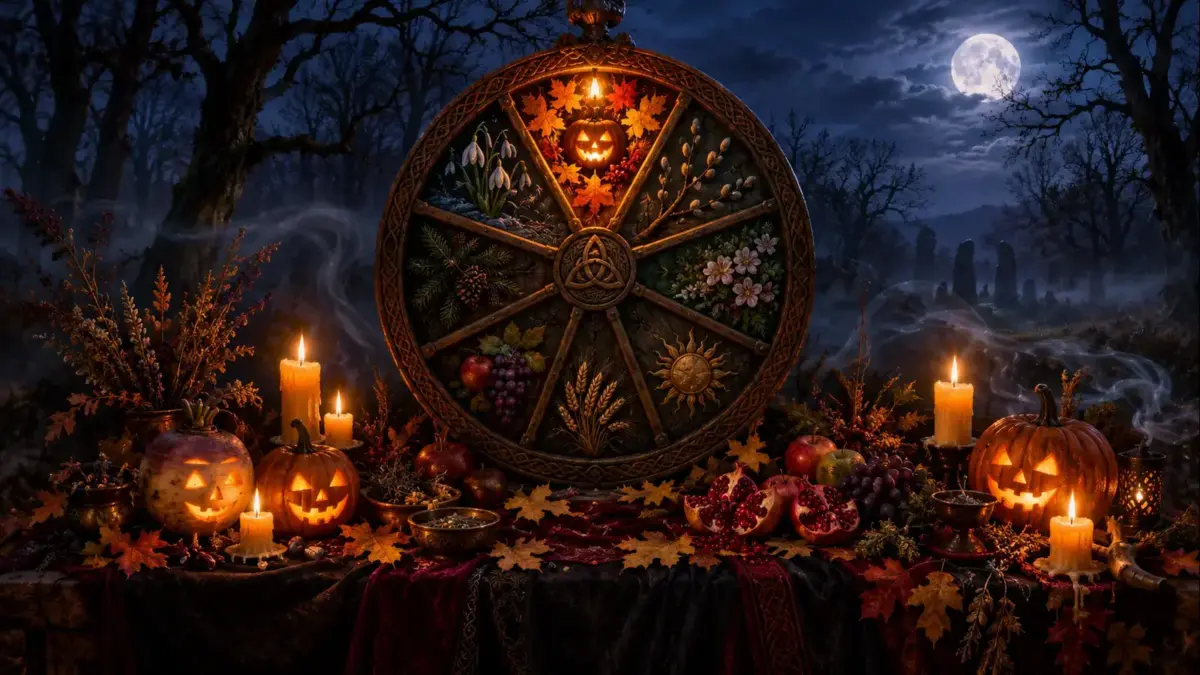
Druids historically built large sacred bonfires for Samhain, with participants bringing harvest food and sacrificing animals to share in a communal dinner. That bonfire element has carried into modern public observances. On Oct. 31, 2018, modern Irish pagans gathered at the Hill of Tlachtga for the Flame of Samhain festival, marking the ancient site with bonfires and a procession to honor the dead, according to Reuters.
Readers who want to include fire in a home observance can build a small, safe fire or light candles as a modern substitute, in keeping with the bonfire’s symbolic role of marking the turning of the season and honoring the dead.
Step 6: Share A Feast And Traditional Games
Feasting is a documented part of Samhain observance. Pagans may also celebrate the day with traditional games such as apple-dooking, better known as bobbing for apples. Preparing a harvest-themed meal and including a game like this connects a modern celebration to ancient practices, rather than relying on generic Halloween party traditions.
Step 7: Consider Extending The Observance Over Three Days
In Celtic tradition, some Pagans spread Samhain festivities across three consecutive days rather than treating it as a single night. Readers drawn to a fuller observance can use that three-day window to separate the reflection, the feast and the fire ritual into distinct moments instead of compressing everything into one evening.
Common Mistakes To Avoid
One common mistake is treating Samhain as interchangeable with every other seasonal Pagan holiday. Some Pagans mark the new year at Imbolc rather than Samhain, so the two should not be conflated. Another mistake is assuming modern Pagan ritual is a verified recreation of ancient Celtic practice. The sources describe what ancient Celts are believed to have done and what modern Pagans do today, but they do not document a direct, unbroken line between the two, so claims of exact historical reenactment go beyond what is documented.
Those planning a Samhain observance this year can treat Nov. 1 as the anchor date, with some traditions extending the marking across three days, according to Learnreligions, while using a bonfire or candle, a shared meal and quiet reflection on loss and change as the core elements documented across these sources.
For more reading about Samhain:
- Embracing the Spirit of Samhain: When the Veil Thins
- What Is Samhain? The Origins and Meaning of the Pagan New Year
- Destination Spotlight: Salem in October—What to Do Beyond Just the Witch Tours
 Don't stop here
Every Score. Every Story. One Home.
Breaking sports, entertainment and news from across the Total Apex network, updated all day.
Get the Full Story →