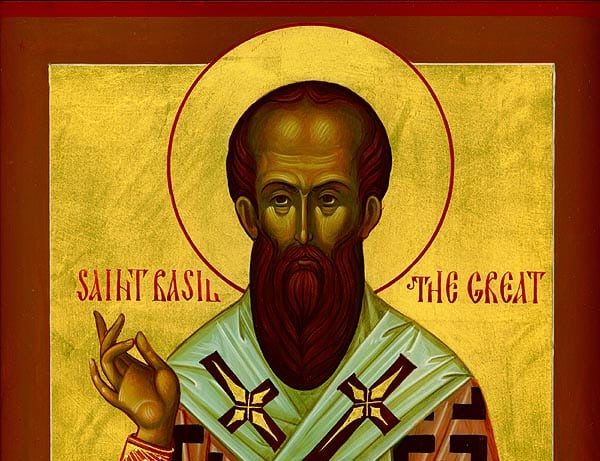
Saint Maximus the Confessor was born in Constantinople about 580, and he died on August 13, 662. He was a Christian monk, theologian, and scholar. Interestingly, Saint Maximus the Confessor was a civil servant and an aide to the Byzantine Emperor Heraclius. He gave up this life in the political sphere to enter the monastic life. He was then exiled and died on 13 August 662, in Tsageri in present-day Georgia. Saint Maximus the Confessor was drawn into the controversy, in which he supported an interpretation of the Chalcedonian formula on the basis of which it was asserted that Jesus had both a human and a divine will. Would you give up your career to be a monk?
Saint Maximus the Confessor Biography
Very little is known about the details of Maximus’ life before his involvement in the theological and political conflicts of the Monothelite controversy. He did work for the Byzantine Emperor. It was said he was born in Palestine, but Saint Maximus the Confessor probably was not. That was a common 7th-century way to discredit somebody. He was most likely well-educated in Constantinople.
massimiliano-morosinotto-FXSKFNcSwQU-unsplash (1)When the Persians conquered Anatolia, Saint Maximus the Confessor was forced to flee to a monastery near Carthage. It was there that he came under the tutelage of Saint Sophronius and began studying the writings of Gregory of Nazianzus in detail with him. Maximus continued his career as a writer during his stay in Carthage, which was lengthy. Maximus was also liked by the exarch Gregory and the eparch George.
While Saint Maximus the Confessor was in Carthage, a controversy arose regarding the interpretation of the relationship between the human and divine natures within the person of Jesus. This Christological debate was the latest development in disagreements that began following the First Council of Nicaea in 325 and were intensified following the Council of Chalcedon in 451. The Monothelite believed Christ was one person. The Monothelites believed that two natures, one divine and one human, were united in the person of Christ.
Saint Maximus the Confessor and the deposed Patriarch Pyrrhus held a public debate on the issue of Monothelitism. In the debate, which was attended by many North African bishops, Maximus took the position that Jesus possessed both a human and a divine will. The result of the debate was that Pyrrhus admitted the error of the Monothelite position, and Maximus accompanied him to Rome in 645.
Saint Maximus the Confessor probably remained in Rome as he was there when the newly elected Pope Martin, I convened the Lateran Council of 649 at the Lateran Basilica in Rome. The 105 bishops present condemned Monothelitism, which some believe may have been written by Maximus. It was in Rome that Pope Martin and Maximus were arrested in 653 under orders from Constans II, who supported the Monothelite doctrine.
Maximus’ refusal to accept Monothelitism caused him to be brought to the imperial capital of Constantinople to be tried as a heretic in 658. In Constantinople, Monothelitism had gained the favor of both the Emperor and the Patriarch of Constantinople. In 662, Saint Maximus the Confessor was placed on trial again, and again more convicted of heresy. Following the trial he was tortured, having his tongue cut out, so he could no longer speak his rebellion, and his right hand cut off, so that he could no longer write letters. He was then exiled to modern-day Georgia. He died soon thereafter, on August 13, 662.
Conclusion
Saint Maximus the Confessor’s title of “Confessor” means that he suffered for the Christian faith but was not directly martyred, though his punishment seems harsh and led to his death. In modern day, it is believed that Jesus is both divine and human, Maximus’s position. So, he was essentially ahead of his time. It was a shame he was ahead of his time and punished for it. In his time the debate over relationship between the human and divine natures within the person of Jesus was very high profile, in modern day it is resolved, and he was at the center of the right side of the debate.
 Don't stop here
Every Score. Every Story. One Home.
Breaking sports, entertainment and news from across the Total Apex network, updated all day.
Get the Full Story →