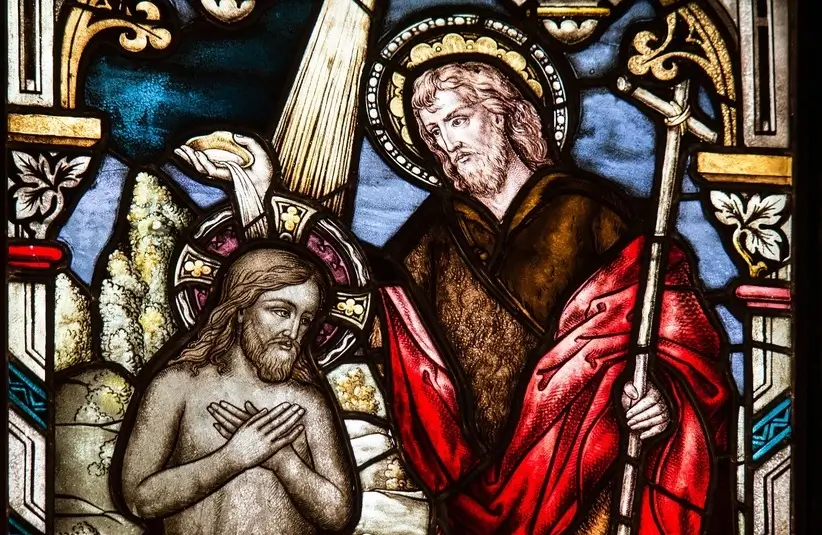
John the Baptist: Prophet, Preacher, and Forerunner of Jesus Christ

John the Baptist was a Jewish preacher active along the Jordan River in the early first century. John the Baptist baptized many people in that river. He is mentioned by the Roman Jewish historian Josephus and he is revered as a major religious figure in Christianity, Islam, the Baháʼí Faith, the Druze faith, and Mandaeism; in the last of these, he is considered to be the final and most vital prophet. Now is the season when John the Baptist is revered worldwide. According to the New Testament, John anticipated a messianic figure greater than himself; in the Gospels, he is portrayed as the precursor or forerunner of Jesus. Is John the Baptist your favorite biblical character?
John the Baptist Biography
John the Baptist appears in the Bible before he was born. When Mary, the mother of Jesus, visited Elizabeth, the mother of John the Baptist, while both were pregnant, the baby John leaped in the womb of Elizabeth. We do not know much about the childhood of John the Baptist, but we know a lot about his later life and death.
Some scholars think that John the Baptist belonged to the Essenes, a semi-ascetic Jewish sect that expected a messiah and practised ritual baptism. Most biblical scholars agree that John baptized Jesus, and several New Testament accounts report that some of Jesus’s followers were John’s followers. According to the New Testament, John was sentenced to death and beheaded by Herod Antipas around 30 after he rebuked him for divorcing his wife and then unlawfully marrying Herodias, the wife of his brother Herod Philip I. John the Baptist’s head was delivered to Herodias’s daughter on a platter.
Followers of John existed into the second century, and some proclaimed him to be the Messiah awaited by Jews. In modern times, the followers of John the Baptist are the Mandaeans, an ancient ethnoreligious group who believe that he is their greatest and final prophet. In the Roman martyrology, John is the only saint whose birth and death are both commemorated.
John the Baptist is mentioned in all four Gospels, but perhaps the best account of his life is in the Gospel of Mark. The Gospel of Mark introduces John as a fulfillment of a prophecy from the Book of Isaiah, which is a conflation of texts from Isaiah, Malachi, and Exodus, both write about a messenger being sent ahead, and a voice crying out in the wilderness.
John the Baptist is described as wearing clothes of camel’s hair, and living on locusts and wild honey. John proclaims baptism of repentance for the forgiveness of sin, and says another will come after him who will not baptize with water, but with the Holy Spirit. Jesus comes to John and is baptized by him in the river Jordan. The account describes how, as he emerges from the water, Jesus sees the heavens open and the Holy Spirit descends on him “like a dove.’ and he hears a voice from heaven that says, “You are my Son, the Beloved; with you I am well pleased.”
Later in the gospel, there is an account of John’s death. It is introduced by an incident where Herod Antipas, hearing stories about Jesus, imagines that this is John the Baptist raised from the dead. It then explains that John had rebuked Herod for marrying Herodias, the ex-wife of his brother, named here as Philip. Herodias demands his execution, but Herod, who “liked to listen” to John, is reluctant to do so because he fears him, knowing he is a “righteous and holy man”.
What Became Of the Head of John the Baptist?
There are a lot of things we could say about John the Baptist, but perhaps the most interesting fact is answering the question, what became of John’s Head? Ancient historians Josephus and Symeon Metaphrastes assumed that Herodias had it buried in the fortress of Machaerus.
An Eastern Orthodox tradition holds that, after being buried, the head was discovered by John’s followers and was taken to the Mount of Olives, where it was twice buried and discovered, the latter events giving rise to the Orthodox feast of the First and Second Finding of the Head of St. John the Baptist. Other writers say that it was interred in Herod’s palace in Jerusalem; there it was found during the reign of Constantine, and thence secretly taken to Homs, in Syria, where it was concealed, the place remaining unknown for years, until it was manifested by revelation in 452.
Shrine of John the Baptist in the Umayyad Mosque in, which purportedly houses John the Baptist’s head
Two Catholic churches and one mosque claim to have the head of John the Baptist: the Umayyad Mosque, in Damascus (Syria); the church of San Silvestro in Capite, in Rome; and Amiens Cathedral, in France (the French king would have had it brought from Constantinople after the Fourth Crusade). A fourth claim is made by the Residenz Museum in Munich, Germany, which keeps a reliquary containing what the Wittelsbach rulers of Bavaria believed to be the head of Saint J
The Shrine of John the Baptist in the Umayyad Mosque in Damascus purportedly houses John the Baptist’s head. The Catholic church of San Silvestro in Capite, in Rome, and the Amiens Cathedral, in France, both claim to have the head of John the Baptist. A fourth claim is made by the Residenz Museum in Munich, Germany.
Conclusion
John the Baptist is probably the most colorful figure in the Bible. After all, he was clothed in camel’s hair and ate locusts and wild honey. Plus, his death, by beheading, is fascinating. John is revered by 2 billion modern Christians as the immediate forerunner of Jesus Christ. He is remembered at this time of year, before Christmas.