
The Hidden Cinematic Legacy of Tom Stoppard

The recent death of Sir Tom Stoppard marks the loss of a giant in the world of modern theatre, yet his influence extends far beyond the stage. While he was celebrated for his intellectual wit and complex plays, many film fans remain unaware of the significant, often uncredited, work he did for some of the biggest blockbusters in history. From polishing dialogue for George Lucas to redefining Shakespeare for a modern audience, the career of Tom Stoppard remains a testament to the power of the written word.
The Early Life of Tom Stoppard
Born Tomáš Sträussler in Zlín, Czechoslovakia, the early years of Tom Stoppard were defined by upheaval. With the threat of Nazi occupation looming, his family fled to Singapore in 1939. It was a childhood marked by movement and tragedy. His father, Eugen Sträussler, stayed behind in Singapore as a doctor and sadly died during the war. Stoppard, along with his mother and brother, eventually found safety in British India.
In 1946, his mother remarried Kenneth Stoppard, and the family relocated to England. This transition was pivotal for the young writer. He was educated in Nottingham and Yorkshire, later describing himself as an “honorary Englishman.” This unique perspective of being an outsider on the inside would later fuel the themes of identity and belonging found in his most famous works.
Tom Stoppard and His Rise in Theatre
Before he was a knighted playwright, Tom Stoppard began his professional life as a journalist. He worked for the “Western Daily Press” in Bristol and later the “Bristol Evening World” as a drama critic. This exposure to the world of theatre sparked a desire to write plays himself.
His breakthrough came with the production of “Rosencrantz and Guildenstern Are Dead” in 1966. Premiering at the Edinburgh Festival Fringe, the play reimagined “Hamlet” through the eyes of two minor characters. It was an instant sensation, establishing the signature style of Tom Stoppard: a blend of philosophical depth, verbal dexterity, and theatrical daring. Following this success, he produced a string of hits including “Jumpers”, “Travesties”, and “The Real Thing”, cementing his status as a literary heavyweight.
The Hidden Lucasfilm Contributions
While his theatre work garnered Tony Awards and critical acclaim, Tom Stoppard became a secret weapon for Hollywood studios. One of the most fascinating aspects of his career is his uncredited work on the “Indiana Jones” and “Star Wars” franchises.
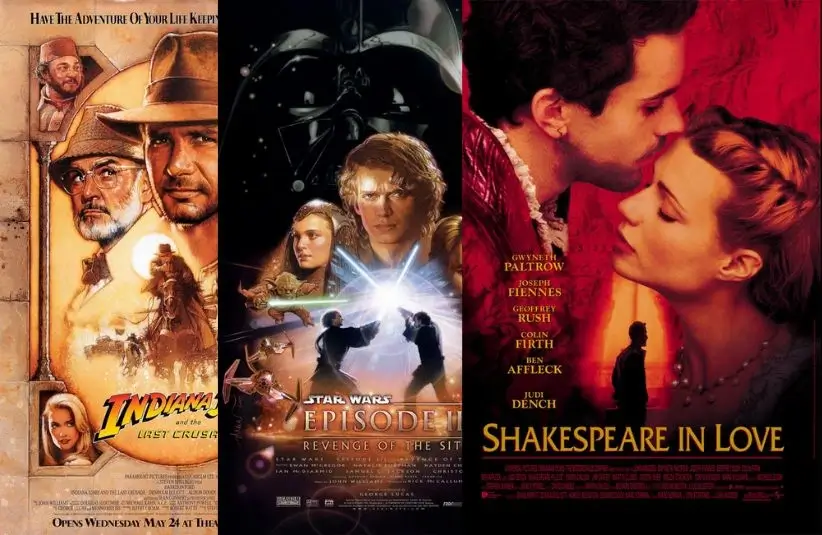
Writing under the pseudonym “Barry Watson,” Tom Stoppard performed extensive rewrites on “Indiana Jones and the Last Crusade“. It is estimated that he changed nearly 80% of the dialogue, injecting the film with the character-driven humor that fans adore. Without the input of Tom Stoppard, we likely would not have the memorable comedic moments involving Marcus Brody, played by Denholm Elliot. The scene where Indy claims Brody will “blend in” and “disappear,” only for the film to cut to Brody bumbling around a foreign city, is a classic Stoppard gag.
His influence also reached a galaxy far, far away. Tom Stoppard provided dialogue polishing for “Star Wars: Episode III – Revenge of the Sith“. The operatic and crucial scene where Palpatine seduces Anakin Skywalker to the dark side with the tragedy of “Darth Plagueis the wise” is largely attributed to Stoppard’s pen. These contributions highlight his versatility, proving he could move from existential stage plays to space operas with ease.
Screenwriting Success and “Shakespeare in Love”
Outside of uncredited polishes, Tom Stoppard achieved massive official success as a screenwriter. In 1998, he co-authored “Shakespeare in Love” with Marc Norman. The film was a critical and commercial triumph, earning Stoppard an Academy Award for Best Original Screenplay. It was a project that perfectly suited his talents, allowing him to mix historical fact with witty fiction.
His screenwriting credits are extensive and varied. He wrote the screenplay for “Empire of the Sun” in 1987 and adapted the John le Carré novel “The Russia House” in 1990. Later in his career, he tackled literary adaptations such as “Anna Karenina” and “Parade’s End” for television. Each script showcased the distinct ability of Tom Stoppard to handle complex narratives and dense dialogue.
Themes and Style
The work of Tom Stoppard is often characterized by its linguistic playfulness and exploration of heavy philosophical concepts. He was never afraid to ask big questions about reality, freedom, and the nature of art. In his later years, his work also took on a strong human rights dimension, addressing issues of censorship and political repression, influenced by his involvement with organizations like Amnesty International.
Final Thoughts
From his escape from Nazi-occupied Europe to his knighthood in 1997, the life of Tom Stoppard was as dramatic and varied as his plays. With his recent passing, the world has lost a true visionary. Whether through the absurdism of “Rosencrantz and Guildenstern Are Dead” or the hidden dialogue of “Indiana Jones”, his legacy as a master of the English language remains secure.
